
Tesla puts ‘gigacasting’ on hold
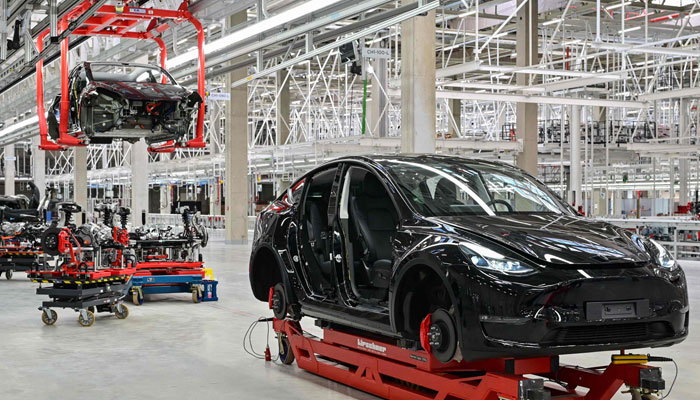
AUSTIN: Tesla has backed away from an ambitious plan for innovations in gigacasting, its pioneering manufacturing process, according to two sources familiar with the matter, in another sign that the electric-vehicle maker is retrenching amid falling sales and rising competition.
Tesla has been a leader in gigacasting, a cutting-edge technique that uses huge presses with thousands of tons of clamping pressure to die-cast large sections of the car’s underbody. On a typical vehicle, the underbody can consist of hundreds of individual parts.
Last year, as Tesla developed a new small-vehicle platform, it aimed to punch out the underbody in a single piece. The long-term goal was to radically simplify manufacturing and slash costs.
But Tesla has since halted the effort, opting to stick with its more proven method of casting vehicle underbodies in three pieces: two gigacasted front and rear sections and a midsection made of aluminum and steel frames to store batteries, according to the two sources familiar with the matter. That is largely the same three-piece method the company has used for its last two new models, the Model Y crossover SUV and the Cybertruck pickup.
The decision to hold off on the potential manufacturing breakthrough marks another example of Tesla slashing short-term spending as it adjusts to falling sales and profit margins, softening EV demand globally, and intensifying competition from rival EV makers such as China’s BYD. Tesla last month laid off more than 10 percent of its global workforce. A handful of senior executives have also resigned or been pushed out.
It reported a pre tax deficit of $138 million for the three months to the end of March.
Such moves also reflect a fundamental strategy shift, with Tesla now focusing more on developing self-driving vehicles than on pushing for huge growth in EV sales volume, which many investors had been counting on. The step-back on gigacasting occurred last autumn, the people said, before Tesla decided in late February to halt development of an all-new affordable car, often called the Model 2, which would have been the first vehicle it built with one-piece gigacasting.
On April 23, as it released earnings that missed Wall Street expectations, Tesla said it had a simpler, faster plan for producing “more affordable” cars after shelving plans for the Model 2, which was expected to cost $25,000 and be released in the second half of 2025.
Instead, Tesla officials said, it would produce affordable models using a current platform and production lines. On an investor call, Chief Executive Elon Musk declined to provide details on the planned new offerings or their target prices.
Tesla has not entirely abandoned the small-vehicle platform it had planned for the Model 2. Instead, it will move forward in developing a self-driving robotaxi on the same platform, Reuters reported in the April 5 story.







-
 Noah Wyle 'on Cloud Nine' After Receiving Hollywood Walk Of Fame Star
 -
 US Trade Court Reviews Legality Of Trump’s 10% Global Tariff
 -
 Khaby Lame’s $975 Million Deal Faces Collapse
 -
 YouTube Premium Gets More Expensive In US—Here’s What Changed
 -
 Prince William Turning To Therapy To Become A ‘true Diplomat’
 -
 Elizabeth Olsen Prepares To Enter New Chapter In Life
 -
 Senior Royals Fear Prince Andrew’s Exile May Be Affecting His Wellbeing
 -
 Love Island's Laura Anderson Takes Cryptic Swipe At Ex Clark Robertson After Split
 -
 Nicola Peltz Snubs Brooklyn Beckham On Wedding Anniversary In Huge Blow
 -
 NASA Artemis II Splashdown: What Could Go Wrong On Mission’s Final Stage
 -
 Meghan Markle Retreat Under Fire After Supporter’s Remarks About Kate Middleton Resurface
 -
 Jack White Announces Official Tour Dates
 -
 Trump Administration Clashes With EU Over Tech Fines
 -
 Dax Shepard Tells Truth About Kristen Bell's Role During His Father's Painful Cancer Battle
 -
 What Happens To Human Body In Deep Space? NASA Artemis II Will Find Out
 -
 Demi Lovato's Husband Jutes Makes Sad Announcement About Their First Wedding Anniversary