
Experts identify coordination gaps in urban planning
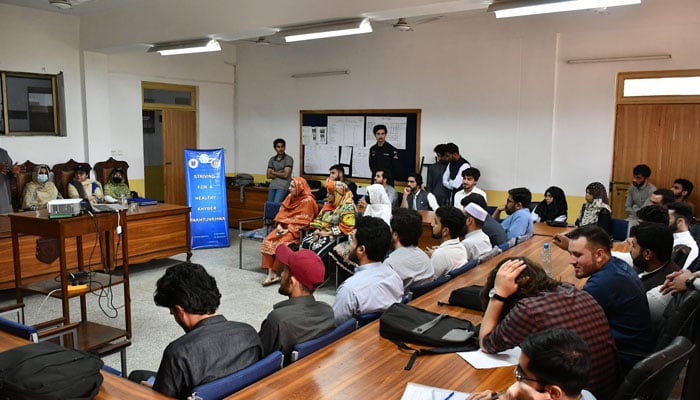
PESHAWAR: Experts and students from various universities from across the country gathered at the University of Peshawar (UoP) on Monday to take part in a table talk on public policy and advocacy for climate change.
The event was jointly organized by the Centre for Disaster Preparedness and Management University (CDPM) of Peshawar and Islamic Relief Pakistan, a non-governmental organization. The students of various universities shared their perspectives and ideas about addressing the climate crisis.
The speakers included experts, climate scientists, policymakers, and activists, who shared their insights on the current state of climate change in the country and the role of public policy and advocacy in driving change.
The discussion focused on sustainable development, environmental conservation, and climate justice. Students were encouraged to share their thoughts on how to raise awareness, build community engagement, and influence policy decisions to address the climate crisis.
Director CDPM Prof Dr Zulfiqar Ali highlighted the critical gaps in coordination and collaboration in urban planning, disaster risk reduction, and climate change adaptation. He said, “The urgency to tackle climate change requires a collaborative effort from various sectors, including governmental agencies, non-governmental organizations, academia, and the private sector.”
However, the current public policy-making process often suffers from coordination gaps that hinder the development and implementation of efficient and integrated climate change solutions, he added.
The expert urged the government, civil society, private sector, academia, and individuals to work together to reduce greenhouse gas emissions, enhance adaptation efforts, and build resilience.
“The climate crisis is a ticking time bomb for Pakistan, and we need immediate action to mitigate its effects,” said Dr Mushatq Ahamd Jan, a CDPM faculty member. He said that several barriers prevent youth from participating in adaptation interventions. “Youth will be exposed longer and more harshly to climate change impacts than older generations.
“It increases their risk factors at several levels, from individual, community, local and national level, and their role as agents of change. Therefore, they should be involved in climate action and adaptation,” he added.
Dr Arsalan Aslam from the Excise Police Department said that the interest of youth in tackling the climate challenge was commendable. Empowering the next generation of leaders is crucial in creating a sustainable future for the planet, he added.
Adnan Iqbal from Islamic Relief was of the view that through events like the Table Talk discussion, young leaders would be inspired and empowered to become active stakeholders in shaping public policies and advocacy efforts for a greener Pakistan.







-
 18-month Old On Life-saving Medication Returned To ICE Detention
 -
 Cardi B Says THIS About Bad Bunny's Grammy Statement
 -
 Major Hollywood Stars Descend On 2026 Super Bowl's Exclusive Party
 -
 Sarah Ferguson's Silence A 'weakness Or Strategy'
 -
 Garrett Morris Raves About His '2 Broke Girls' Co-star Jennifer Coolidge
 -
 Winter Olympics 2026: When & Where To Watch The Iconic Ice Dance ?
 -
 Melissa Joan Hart Reflects On Social Challenges As A Child Actor
 -
 'Gossip Girl' Star Reveals Why She'll Never Return To Acting
 -
 Chicago Child, 8, Dead After 'months Of Abuse, Starvation', Two Arrested
 -
 Travis Kelce's True Feelings About Taylor Swift's Pal Ryan Reynolds Revealed
 -
 Michael Keaton Recalls Working With Catherine O'Hara In 'Beetlejuice'
 -
 King Charles, Princess Anne, Prince Edward Still Shield Andrew From Police
 -
 Anthropic Targets OpenAI Ads With New Claude Homepage Messaging
 -
 US Set To Block Chinese Software From Smart And Connected Cars
 -
 Carmen Electra Says THIS Taught Her Romance
 -
 Leonardo DiCaprio's Co-star Reflects On His Viral Moment At Golden Globes