
Inter exam results reveal significant decline in students’ performance
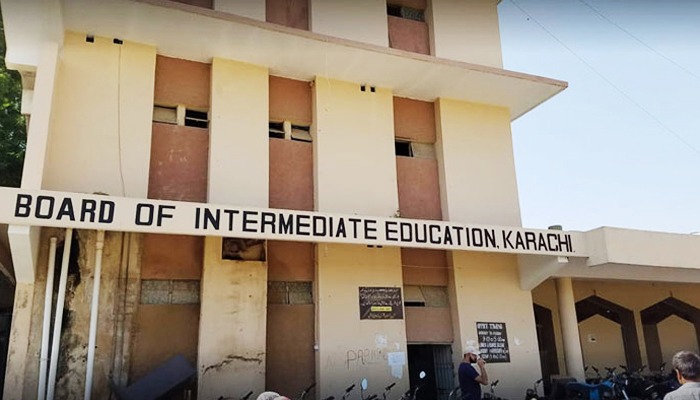
The Board of Intermediate Education Karachi (BIEK) released on Tuesday the results for Part-I (first year) of the examination, revealing a concerning decline in the students’ performance.
The statistics indicate that 80 percent of candidates failed in Arts (Regular), 72 percent failed in Arts (Private) and 63 percent failed in Commerce (Private) groups.
Earlier in the results released last week, only 36.51 percent of candidates were successful in Pre-Medical, 34.79 percent in Pre-Engineering and 38.69 percent in Computers Science groups.
This trend is alarming, particularly as most students who passed their matriculation exams with lower marks now face potential challenges in securing admissions to professional universities and colleges, given that admissions are typically based on Inter Part-I marks.
The situation is compounded by the absence of key officials, including the chairman, controller, and secretary, in the BIEK. The interim leadership structure lacks stability, with the Karachi commissioner holding the post of chairman but being notably absent from the board.
The commissioner has rarely visited the board since assuming the charge, overseeing operations remotely. Furthermore, the deputy controller, appointed by the commissioner, assumes the role of the controlling authority in the absence of a dedicated controller.
The positions of secretary and controller are held by individuals who were formerly employed as clerks in the board, raising concerns about their qualifications for these crucial roles.
It is important to note that the search committee, headed by Prof Dr Tariq Rafi, who is also the chairman of Sindh Higher Education Commission (SHEC), recommended caretaker Sindh chief minister (CM) Justice (retd) Maqbool Baqar to appoint Dr Muhammad Memon and Muhammad Hussain Syed for the recruitment of chairman, secretaries, examination supervisors and audit officers in the provincial education boards.
However, this summary was rejected, and instead two bureaucrats, Anwar Haider and Mukhtiar Soomro, were appointed. Both individuals lack relevant experience in education boards, unlike the candidates proposed by the SHEC. Syed has previously served as the secretary of boards and universities, while Memon has held the position of Hyderabad board chairman.
Sources reveal that the recruitment process for officers in education boards is under the control of health secretary Mansoor Abbas, who is said to be close to the caretaker CM. This deviation from the search committee or the secretary of boards and universities recommendations raises questions about the transparency and merit-based selection of officials responsible for crucial roles in education boards.


