
Japan’s price trend gauge hits record
TOKYO: A key measure of Japan's trend inflation accelerated to 2.2 percent in October, data showed on Tuesday, marking a fresh record high in a sign of broadening price pressure that heightens the case for the central bank to dial back its massive monetary stimulus.
The data adds to recent growing signs that prospects of sustained wage increases are prodding firms to hike prices for their services, a trend the central bank sees as a prerequisite for ending ultra-low interest rates.
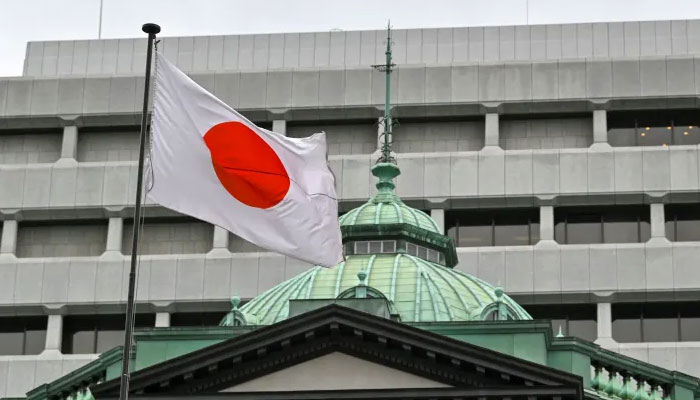
The 2.2 percent year-on-year increase in the weighted median inflation rate, which is closely watched as an indicator on whether price rises are broadening, followed a 2.0 percent gain in September.
It was the fastest rise since comparable data became available in 2001, Bank of Japan (BOJ) data showed. The data will be among the factors the BOJ will scrutinise at its next policy-setting meeting on Dec. 18-19.
The BOJ remains a global dovish outlier, having maintained ultra-loose policy even as major central banks elsewhere raised interest rates aggressively to fight rampant inflation.
While core consumer inflation has exceeded its target for more than a year, the BOJ has pledged to keep super-low interest rates until its 2 percent inflation target can be achieved on a sustained manner, backed by solid consumption and wage increases.
"We're seeing some positive signs in wages and inflation. But there's high uncertainty on whether this cycle will strengthen," BOJ Governor Kazuo Ueda told parliament on Monday.
There has been other signs that conditions for an exit from current policy are falling in place. Indications from businesses, unions and economists suggest that labour market tightness and cost pressures that had set the stage for this year's pay hikes -- the largest in more than three decades -- will persist heading into next year's key spring wage talks.
The weighted median is the inflation rate of items at the middle of the price changes, or around the 50th percentile point of the distribution. After hovering around zero for the past two decades, it began creeping up last year reflecting a wave of price hikes by companies passing on surging raw material costs.
Unlike the consumer price index (CPI), which is swayed by fuel and energy costs, the weighted median inflation rate is useful to trace how widely prices are rising.







-
 Paul McCartney Talks 'very Emotional' Footage Of Late Wife Linda In New Doc
 -
 Princess Beatrice, Princess Eugenie's Response To Andrew's Arrest Revealed
 -
 King Charles And Princess Anne Bestow Honours At Windsor Castle
 -
 King Charles 'worried' As Buckingham Palace, Royal Family Facing 'biggest Crisis'
 -
 Milo Ventimiglia Recalls First Meeting With Arielle Kebbel On The Sets Of 'Gilmore Girls' Amid New Project
 -
 Eric Dane Infuriated After ALS Diagnosis As He Feared The Disease Would Take Him Away From His Girls
 -
 It's A Boy! Luke Combs, Wife Nicole Welcome Third Child
 -
 Leading Astrophysicist Shot Dead At Southern California Home
 -
 Johnny Depp's Kind Gesture Towards Late 'Grey's Anatomy' Actor Eric Dane Before Death Laid Bare
 -
 How Princess Eugenie, Beatrice React To Andrew Arrest?
 -
 Kylie Jenner 'convinced' Gwyneth Paltrow Is 'crushing' On Timothee Chalamet: 'It's Disrespectful'
 -
 Gemma Chan Reflects On 'difficult Subject Matter' Portrayed In 'Josephine'
 -
 Blood Falls In Antarctica? What Causes The Mysterious Red Waterfall Hidden In Ice
 -
 AI Power Play: Nvidia Moves To Invest $30 Billion In OpenAI
 -
 Will Savannah Guthrie Ever Return To 'Today' Show? Here's What Insiders Predict
 -
 Andrew Mountbatten-Windsor In A Fix Over New Disturbing TMZ Photos