
Review blues again
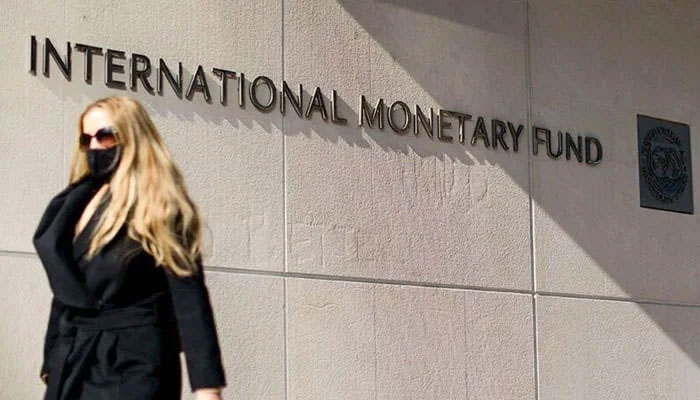
We have arrived at that juncture again: the IMF all set to field a mission for a review of Pakistan’s economic reform programme. Pakistani authorities are sharing data on their performance with the IMF officials, who will feed it to their economic models to crunch their own numbers to arrive at future benchmarks in time for the review talks, scheduled to commence as of November 2. Looking at its timing and the structure of the SBA, the review is essentially an assessment of the first quarter performance of the government. Riding on the success of the review is a $710 million tranche, to be formally approved by the IMF executive board in December. This will be the second tranche of three tranches of financing under the SBA, the first of which, to the tune of $1.2 billion, was disbursed in July right after the IMF board approved the programme. The third tranche, of about $1.09 billion, will be disbursed after the next quarterly review.
It is heartening to note that the caretaker government has delivered on almost every benchmark, keeping the economic reform programme. This is a clear departure from the past tradition of leaders getting too squeamish to follow through with action on performance criteria they agreed to meet. Perhaps it is because the caretaker government is relatively sheltered from public expectations or approval. Or does it have something to do with a system-wide resolve by Pakistan to clean up its act and get the economy on an even keel once and for all? We will know soon enough which it is. Meanwhile, there is no harm in acknowledging the caretaker government’s vigilance in keeping its nose to the grindstone. The tight-fisted approach taken by the government has helped it stay on budget, as no supplementary grants have been made and direct borrowing from commercial banks by ministries and departments have been disallowed. The notorious power sector circular debt has been kept in check largely through timely hikes in energy prices. Sovereign guarantees have returned below the agreed Rs4 trillion ceiling after additional debt retirement.
However, when the two sides sit across the table on November 2, there is no doubt that a lot many issues will come up for discussion. The government’s progress on the implementation of treasury single account (TSA) and renegotiation of deals with Chinese power producers has been slow. On the fiscal side, Pakistan was committed to returning a positive primary balance last fiscal, but that could not be achieved, and the target was put on the to do list for the current fiscal. The government has achieved that target for Q1 by curbing spending but keeping development and social safety spending throttled throughout the fiscal looks like an unrealistic – and undesirable – scenario. Then, too, there is the matter of a delay in the hike of gas prices and the power sector circular debt too will continue to rankle for the foreseeable future.
These and other needs for more revenue will inevitably lead the IMF staff to ask Pakistan to find new revenue streams, and they may well nudge the authorities’ towards the much debated but never implemented fixed tax on retailers. The government may well find the proposal – promising to mint 3.5 million spanking new taxpayers – attractive also because it can be implemented based on an enabling provision already adopted by the parliament without recourse to fresh legislation. Then there is the perennial sinkhole of Pakistan’s external sector financing needs. Conservative estimates put Pakistan’s outstanding external financing needs for the current fiscal north of $5 billion. The Fund staff is likely to ask the government to raise anywhere between $5 billion and $7 billion in external financing from other sources before calling the review a success. While this may be an uphill task for the caretaker government, there is no reason why Pakistan’s traditional friends should not rise to the occasion and help Prime Minister Anwar-ul-Haq Kakar negotiate this hump. Meanwhile, the IMF will do well not to lose sight of the fact that the caretaker government, being unelected and interim, can only do so much for long-term economic reform and real work will recommence once Pakistan is through the general election.







-
 Lana Del Rey Announces New Single Co-written With Husband Jeremy Dufrene
 -
 Ukraine-Russia Talks Heat Up As Zelenskyy Warns Of US Pressure Before Elections
 -
 Lil Nas X Spotted Buying Used Refrigerator After Backlash Over Nude Public Meltdown
 -
 Caleb McLaughlin Shares His Resume For This Major Role
 -
 King Charles Carries With ‘dignity’ As Andrew Lets Down
 -
 Brooklyn Beckham Covers Up More Tattoos Linked To His Family Amid Rift
 -
 Shamed Andrew Agreed To ‘go Quietly’ If King Protects Daughters
 -
 Candace Cameron Bure Says She’s Supporting Lori Loughlin After Separation From Mossimo Giannulli
 -
 Princess Beatrice, Eugenie Are ‘not Innocent’ In Epstein Drama
 -
 Reese Witherspoon Goes 'boss' Mode On 'Legally Blonde' Prequel
 -
 Chris Hemsworth And Elsa Pataky Open Up About Raising Their Three Children In Australia
 -
 Record Set Straight On King Charles’ Reason For Financially Supporting Andrew And Not Harry
 -
 Michael Douglas Breaks Silence On Jack Nicholson's Constant Teasing
 -
 How Prince Edward Was ‘bullied’ By Brother Andrew Mountbatten Windsor
 -
 'Kryptonite' Singer Brad Arnold Loses Battle With Cancer
 -
 Gabourey Sidibe Gets Candid About Balancing Motherhood And Career