
Pakistan sees ‘alarming’ rise in consumption of antibiotics
Consumption of antibiotics was up by 17% in 2022 as compared to 2021 when antibacterial medicines of Rs115.2bn were consumed, say officials
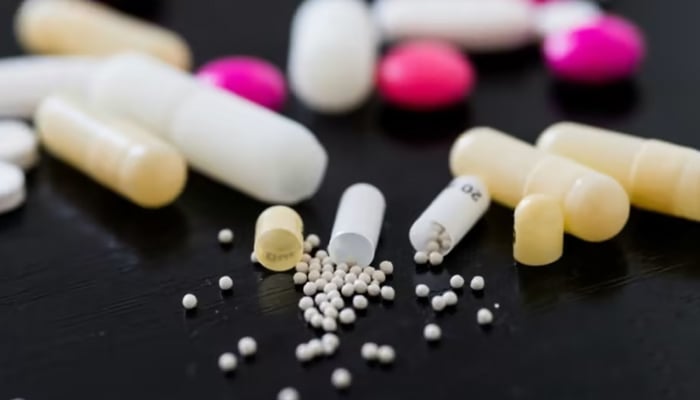
ISLAMABAD: An alarming increase in consumption of antibiotic medicines has been observed in Pakistan where antibacterial medicines of Rs134.5 billion were consumed in 2022 alone, federal health officials revealed.
The consumption of antibiotics was up by 17 percent in 2022 as compared to 2021 when antibacterial medicines of 115.2 billion rupees were consumed, said health officials while citing the data by IQVIA, a global provider of advanced analytics, technology solutions, and clinical research services.
Excessive use of antibiotics has resulted in Anti-Microbial Resistance (AMR) or emergence of bacteria which are resistant to most of the antibiotics available in Pakistan, experts warned, saying extensively drug resistant (XDR) Typhoid was one of the classic examples which could not be treated with most of the third-generation antibiotic medicines in the country.
“From January to July 2023, antibiotic medicines worth Rs80.3 billion have been consumed so far, which indicates a how easily these medicines are being abused in Pakistan,” an official of the National Health Services, Regulations and Coordination (NHS,R&C) told The News.
The health ministry official claimed that 12 percent increase in the number of antibiotic units was witnessed in 2022 when 595,512,239 units of all the available antibiotics were sold as compared to 530,595,459 units of antibiotics in 2021.
“With a 21 percent increase in value, Ceftriaxone, a class of cephalosporin antibiotics was the most sold antibiotic medicine in 2022. People consumed this antibacterial medicine worth Rs60 billion in 2022 as compared to Rs49 billion in 2021,” the official said adding that over 274,212,150 units of cephalosporin antibiotics were sold in the country last year.
Broad-spectrum penicillin antibiotics were the second most widely used antibiotics. Its consumption increased by 12 percent when people consumed Amoxicillin with Clavulanic Acid worth Rs22 billion as compared to consumption of the same class of antibiotic medicines worth Rs19.6 billion in 2021.
Ciprofloxacin, a class of fluoroquinolones antibiotics, saw a 15 percent increase in the consumption in terms of medicines as these medicines worth Rs21 billion were consumed last year as compared to Rs18.3 billion in 2021, the official said.
The fourth most widely used antibiotic in Pakistan was Azithromycin, a highly potent and reserved-class medicines, which is used along with another antibiotic medicine to treat XDR Typhoid and to kill other drug resistant bacteria, the official said and added that Azithromycin worth Rs17 billion was recorded in 2022 as compared to Rs14.3 billion in 2021.
“Around 250,000 kilograms of raw material for the production of Azithromycin was imported in 2022 while over 237,000 kilograms of raw material for the production of Ceftriaxone was imported last year,” the official added.
Other highly sold antibiotic medicines include Meropenem, Linezolid, Sulfamethoxazole with Trimethoprim, Amikacin, Doxycycline, Clavulanic Acid Ticarcillin, Pennicillin G and Chloramphenicol, he added.
Commenting on the abuse and misuse of antibiotics in Pakistan, Abdul Lateef Shaikh, president, Pakistan Society of Health System Pharmacists said over-the-counter-sale, self-medication and irrational prescription by the healthcare professionals are some of the major causes for such a huge consumption of antibiotic medicines in the country.
“Self-medication and irrational and unethical prescription by healthcare professionals are the major reasons behind such a huge consumption of these medicines, which is resulting in development of resistance among bacteria against most of the medicines.”
He maintained that Pakistan was among the top three highest antibiotic consuming countries in the low and middle income countries but added that consumption of antibiotics could easily be reduced by 25-30 percent by taking some simple steps, including banning over the counter sale and increasing awareness.
On the other hand, caretaker Sindh health minister Dr Saad Khalid Niaz directed the provincial drug administration not to allow sale of antibiotic medicines in Sindh without prescription, saying pharmacies selling antibiotics and controlled medicines without prescription should be sealed immediately.
“Drug resistant microbes are emerging and treating them is becoming a serious health concern for the healthcare professionals. If current trend of antibiotics abuse continues, we would have no antibiotic left to treat infections and people will be dying from ordinary infectious diseases,” he warned.







-
 USCIS Finalises H-1B FY2027 Selection, Petitions Filing Begins
 -
 Oil Spikes And Shares Drop Following Trump Iran Address: Here’s Why
 -
 Is Alien Hybrid Breeding Program Real? Matt Gaetz’s Shocking Claims Spark Debate
 -
 'The Masked Singer' Crowns Its Winner For Season 14
 -
 Zendaya Expresses Her True Feelings About Tom Holland: 'My Person'
 -
 Prince Harry, Meghan Markle Mocked Over ‘out Of Touch’ Netflix Project
 -
 Vancouver Canucks Call Up Ty Mueller From Abbotsford As Season Nears End
 -
 Trump Vows To Hit Iran ‘extremely Hard’ In Next Three Weeks As Conflict Scales Up
 -
 NASA Artemis II Historic Rocket Launch: Spacecraft Successfully Enters Earth Orbit
 -
 Is Somber In A Relationship Or Single? The Singer Reveals
 -
 NASA Artemis II Lifts Off, Sending Cubesats Into Deep Space Study
 -
 Avalanche Star Nathan MacKinnon Reaches 50 Goals Milestone As Canucks Win Thriller
 -
 Vanessa Trump Remains Loyal To Tiger Woods After DUI Arrest: Report
 -
 Colorado Avalanche Injury Update: Cale Makar To Miss Time With Upper-body Injury Ahead Of Playoffs
 -
 Beatrice, Eugenie To Miss Easter Service Because Of Prince William, Kate?
 -
 Pink Moon 2026: When To See April’s Full Moon And Why It Won’t Look Pink In The Sky