
Credit default swap hits 13-year high on ratings downgrades, default worries
"You have a can of worms we currently face that elevates rumours of a potential default," says a former SBP governor
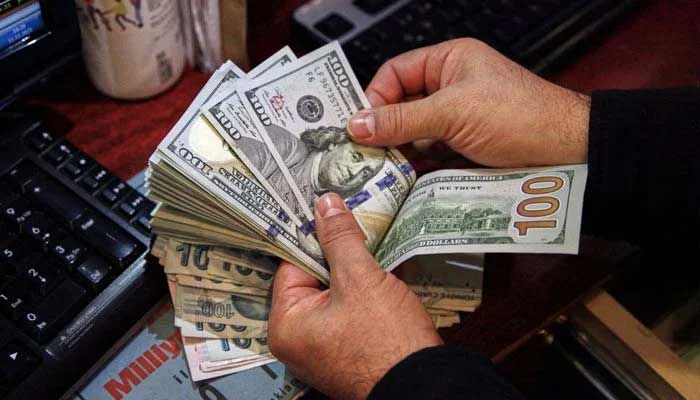
KARACHI: The cost of insuring Pakistan’s sovereign debt against default climbed to a 13-year high as ratings downgrades and speculations of debt restructuring raised concerns among international investors about Pakistan’s ability to meet its bond obligations.
On October 24 (Monday), Pakistan’s benchmark five-year credit default swap (CDS) increased by 3,071 basis points day-on-day to 52.8 percent—the highest level since November 2009, according to the data from Arif Habib Limited.
The yields on Pakistan’s dollar-denominated bonds continued to rise. This showed that the investors were worried that the nation would miss its obligation to repay credit holders $1 billion because the Sukuk is due to mature on December 5, 2022.
Explaining the reasons for a surge in the CDS and bonds’ yields, a former central bank governor, who declined to be named, said there were a number of factors responsible for this.
“The country is facing a serious balance of payments situation with the State Bank of Pakistan’s reserves covering less than one month’s imports. Besides, there is not only the economic ‘uncertainty’ but also domestic instability and uncertainty, which are not liked by the capital markets,” he said.
Other factors include the recent downgrades by Moody’s and Fitch, global rise in interest rates, particularly the Federal Reserve that strengthens the US dollar and weakens the rupee, and the overall geopolitical turbulence and supply chain disruptions that hit the commodity futures market and put more pressure on our import bill.
“Put all this together and you have a can of worms we currently face that elevates rumours of a potential default......that I personally believe will not happen,” he added.
To a query about the government repurchasing sovereign bonds, he said, “I doubt that will occur as I am not sure it would be wise to use the shoestring FX liquidity we have towards mixing our reserves with low investment grade debt.”
He said that it was not a good idea to manage reserves this way. “Not a good idea for reserve management. Risky to buy at a deep discount unless you are certain of future FX inflows that will cushion the reserves,” he noted.
Yield on the five-year third Pakistan International Sukuk Company Limited increased by 75bps to 139.74 percent on Tuesday.
On a 10-year Eurobond, maturing on April 15, 2024, the yield jumped to 92.93 percent from 89.58 percent. Yield on a 10-year Eurobond, maturing on September 30, 2025, increased to 59.07 percent from 57.63 percent.
Fahad Rauf, head of research at Ismail Iqbal Securities believes that if Pakistan manages to smoothly repay the amount of upcoming maturity, it would give some confidence to the market.
“Moreover, if China and Saudi offer some additional funds/rollovers, it would also help in improving the sentiment,” Rauf said.
Pakistan owes 42 percent of its debt to multilateral sources, 40 percent to bilateral creditors, 7 percent to the global bond market, and 7 percent to commercial banks, according to analysts.
Pakistan’s Finance Minister Ishaq Dar on many occasions ruled out the possibility of a default on the country’s debt and an extension of the maturity date on bonds due in December. He has assured about the country’s commitment to meet all its bond obligations on time.
The government would seek rescheduling of some $27 billion worth of non-Paris Club debt, according to reports.
As part of its overall strategy to raise $34 billion in the current fiscal year to meet its debt and foreign trade-related obligations, Pakistan has asked China to roll over its $6.3 billion debt that is due to mature in the next eight months. The flood-related inflows approved by the multilateral creditors are expected to come into the country soon.
The ninth review of the International Monetary Fund’s Extended Fund Facility is expected to take place in November, which on successful completion would pave the way for releasing the next disbursement from the Fund.
The IMF and the Ministry of Finance have assessed Pakistan’s gross external finance requirements for the current fiscal year to be in the range of $32 billion to $34 billion.
As of October 14, the forex reserves held by the State Bank of Pakistan stood at $7.59 billion.
Last week, the global ratings agency Fitch cut Pakistan’s sovereign credit rating by a notch to ‘CCC+’ from ‘B-’, citing a further deterioration in the country’s external liquidity and funding conditions and a decline in foreign exchange reserves. The decrease comes three months after Fitch downgraded the country's outlook from “stable” to “negative” and revised down the ranking to B-.


