
LHC takes up plea against conviction of Nawaz, Maryam today
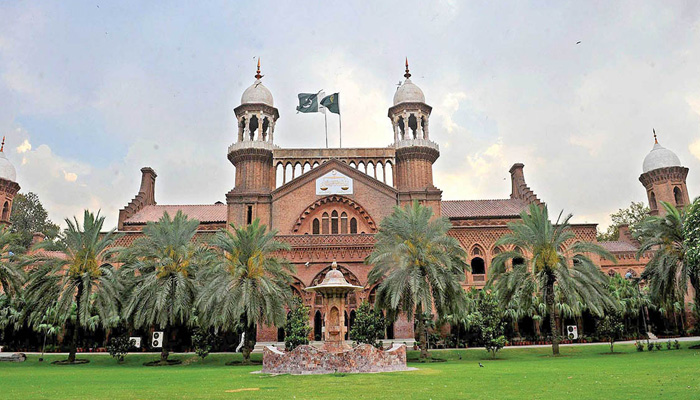
LAHORE: The Lahore High Court will take up on Thursday (today) an application challenging conviction of former prime minister Nawaz Sharif, his daughter Maryam Safdar and Muhammad Safdar in Avenfield case on the basis that the NAB law lapsed and the conviction under it was not sustainable in the eye of law.
Justice Abid Ali Qureshi will hear the application moved by Lawyers’ Foundation for Justice through Advocate AK Dogar. Previously, Justice Abid Aziz Sheikh asked the lawyer-petitioner to affix the NAB court’s verdict with his plea against conviction of Nawaz Sharif, Maryam Safdar and Captain (retd) Muhammad Safdar.
Advocate Dogar in his main petition had questioned the NAB Ordinance 1999 and functioning of the courts under the law. He said the NAB court which convicted former prime minister Nawaz Sharif had no jurisdiction to decide the matter as the law under which it had been functioning had lapsed long ago. He pleaded the high court to suspend the operation of the accountability court’s decision as the court had been functioning under a non-extent law.
Former military dictator retired Gen Pervez Musharraf promulgated the NAB ordinance to arrest the politicians. He said Musharraf took the charge in October while the NAB law came in November—just one month—in order to curb the politicians. The lawyer argued Under Article 270-AA of the Constitution through 18th amendment, the PCO No.1 of 1999 was declared without lawful authority and of no legal effect. He contended that the NAB ordinance 1999 contends that the ordinance was promulgated by then military dictator/president retired Gen Pervez Musharraf under Provisional Constitutional Order (PCO) No.1 of 1999 as well as order No.9 of 1999.
Order No.9, he said, was promulgated only to amend PCO No.1 of 1999 with the insertion of section 5A (1) in it to the effect that limitation of 120 days prescribed under Article 89 of the Constitution to any ordinance by the president will not be applicable to the laws made under PCO No.1 of 1999. The lawyer contended that as the PCO No.1 was declared without lawful authority and of no legal effect, the amendments in it made under-order No.9 of 1999 would also lapse and therefore, the limitation period of 120 days prescribed under Article 89 would be applicable to the NAB ordinance.
The lawyer said certain laws which were still enforced, shall continue to remain enforced unless amended by the competent legislation under sub-article 2 of Article 270-AA of the Constitution.
He prayed to the court to the NAB ordinance ceased to be the law and had become non-existent and a dead letter. He also prayed to the court to set aside all those proceedings being carried out by the NAB courts under the dead law of NAB ordinance.




-
 Alan Cumming Shares Plans With 2026 Bafta Film Awards
 -
 OpenClaw Founder Peter Steinberger Hired By OpenAI As AI Agent Race Heats Up
 -
 Kate Middleton's Reaction To Harry Stepping Back From Royal Duties Laid Bare
 -
 Rose Byrne Continues Winning Streak After Golden Globe Awards Victory
 -
 Ice Hockey Olympics Update: Canada Stays Unbeaten With Dominant Win Over France
 -
 Brooklyn Beckham Makes This Promise To Nicola Peltz Amid Family Feud
 -
 Chinese New Year Explained: All You Need To Know About The Year Of The Horse
 -
 Canadian Passport Holders Can Now Travel To China Visa-free: Here's How
 -
 Maya Hawke Marries Christian Lee Hutson In New York Ceremony
 -
 Glen Powell Reveals Wild Prank That Left Sister Hunting Jail Cells
 -
 Edmonton Weather Warning: Up To 30 Cm Of Snow Possible In Parts Of Alberta
 -
 'A Knight Of The Seven Kingdoms' Episode 5: What Time It Airs And Where To Stream
 -
 Amy Schumer Drops Cryptic Message On First Valentine Amid Divorce
 -
 Savannah Guthrie Sends Desperate Plea To Mom Nancy Kidnapper
 -
 NBA All-Star 2026 Shake-up: Inside The New USA Vs World Tournament Format
 -
 Warner Bros Consider Reopening Deal Talks With Paramount, Says Reports