
Satellite attack: the mounting arms race in space
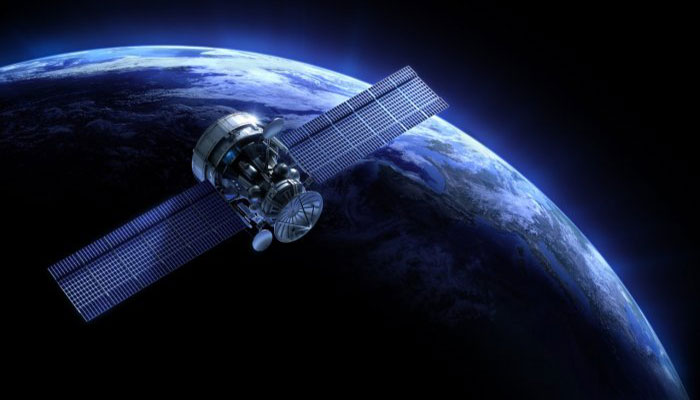
Washington: Last year a US general made an ominous revelation: two Russian satellites in orbit were stalking a US spy satellite high above the earth.
It wasn’t clear if the Cosmos satellites could attack USA-245, an American surveillance spacecraft. "It has the potential to create a dangerous situation in space," said General Jay Raymond, head of the Pentagon’s Space Command.
The incident passed, but it marked a new stage in the mounting arms race in space, where potentially bomb-armed satellites, laser-shooting spacecraft and other technologies have moved from science fiction to reality.
The stakes were made clear Monday when Russia launched a missile from Earth and blasted to pieces one of its satellites in a show of force. Nato Secretary General Jens Stoltenberg called the act "reckless."
"It demonstrates that Russia is now developing new weapons systems that can shoot down satellites," he said at a meeting on Tuesday with EU defence ministers. The militarisation of space is as old as the space race itself -- as soon as Sputnik was launched into orbit in 1957, Washington and Moscow began exploring ways to both arm and destroy satellites.
In the beginning, the biggest worry was nuclear weapons in space. In 1967 the superpowers and other countries signed the Outer Space Treaty, banning weapons of mass destruction in orbit. Since then, Russia, the United States, China and even India have explored ways to fight in space outside of the treaty.
That competition today focuses on destroying a rival’s satellites, which are increasingly essential to every advanced military for communications, surveillance and navigation. In 1970, Moscow successfully tested a satellite loaded with explosives that could destroy another satellite in orbit.
The US answered back in 1983, when then-president Ronald Reagan announced his ambitious Strategic Defense Initiative -- the "Star Wars" program promising precision-guided anti-missile missiles and satellites emitting laser beams or microwaves -- to make the US militarily superior.
Much of the technology envisioned was unfeasible. But in a landmark move, the Pentagon used a missile to destroy a failed satellite in a 1985 test. Since then, rivals have sought to show they had the same targeting skills: China in 2007 and India in 2019.
After trying for some time, Russia’s successful shoot-down on Monday was unsurprising for many experts. "The Russians did not need to detonate the satellite to demonstrate that they had the ability to do so," said Isabelle Sourbes-Verger, a space expert at France’s National Centre for Scientific Research.
It was a demonstration "that if necessary in asymmetric responses, Russia will not permit the United States to be the only one in control of space," she said. Countries are intensely secretive about their military space activities, and because many of the technologies involved are dual-use -- useful for both civilian and defence purposes -- their capabilities are not fully clear.
But the race is such that by 2019, the year the Pentagon established its Space Force, it believed that Russia and China had the potential to surpass the US. "Maintaining American dominance in that domain is now the mission of the United States Space Force," said then-Secretary of Defense Mark Esper.







-
 David Beckham Calls Victoria 'best Mom' After Brooklyn Snub
 -
 Oscars 2026: Will Conan O'Brien Roast Timothée Chalamet In His Monologue?
 -
 ‘I’m Dead For Coffee’: Netanyahu Appears In Video Addressing Rumours Declaring Him 'dead'
 -
 Kris Jenner Admits She Was Terrified For Kylie Jenner: Here’s Why
 -
 Prince Harry, Meghan Markle Snub Royal ‘melodrama’ From Critic
 -
 Colin Jost Fires Back At Joke About Scarlett Johansson ‘carrying’ Him
 -
 The Oscars: Jessie Buckley Shares What The Enemy Of Cinema Impact Is
 -
 Shamed Andrew, Princess Beatrice Wanted To Establish ‘power Dynamic’ Within Royal Family
 -
 'Devil Wears Prada' Actor Adrian Grenier Shares Surprising Update About Anne Hathaway Bond
 -
 The Kardashians Planning Britney Spears' Big Comeback With Major Offer Post DUI Arrest
 -
 Humanoid Robots Completed First Test Run For Half Marathon 2026
 -
 Life On Mars: Scientists Discover Hidden Water Beneath Planet That May Have Supported Life
 -
 Millions Of Kids Take Melatonin For Good Sleep, But Here's Why Doctors Warn
 -
 Hugh Jackman Willing To Take 'big Risk' As He Is Gaga For Lady Love Sutton Foster
 -
 Paris Jackson, Colman Domingo Make Amends Over ‘Michael’ Biopic Mishap
 -
 Oscars 2026: Teyana Taylor Chances Of Winning Best Supporting Actress Drop Hours Before Ceremony