
Ensure freedom of expression, media, demands lawyers’ convention
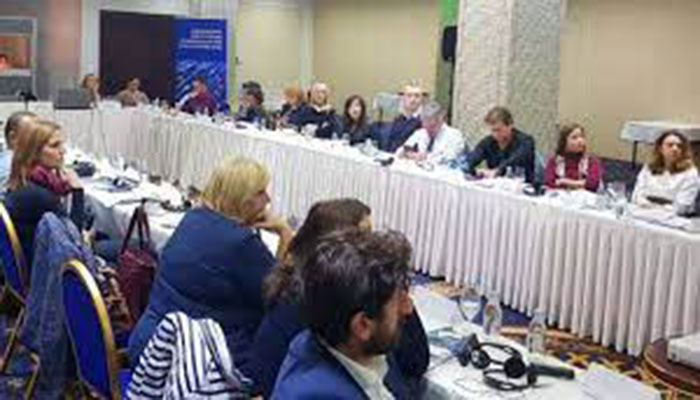
ISLAMABAD: The legal and journalist fraternities, civil society members, human rights activists and political leaders Thursday demanded ensuring freedom of expression and the media in the country.
Speakers addressing participants in a convention demanded that all institutions should work within their ambits. They stressed unity among lawyers, media, civil society, political parties and all other factions of the country for running the country in accordance with the Constitution of Pakistan.
They resolved to resist persistent attacks on the media and judiciary by above-the-law perpetrators. The all Pakistan lawyers’ convention on ‘Assault on Judiciary and Media’ was organised here by the Supreme Court Bar Association (SCBA), in collaboration with the Pakistan Bar Council, the Human Rights Commission of Pakistan (HRCP), Pakistan Federal Union of Journalists (PFUJ) and the South Asian Free Media Association (Safma).
The focus of the convention was on a so-called civil-establishment relationship, which was extra-constitutional and undermined the will of the people, independence of judiciary, free media and above all, flouted fundamental rights of citizens.
The convention was addressed by Hamid Mir, Senator Raza Rabbani, MNA Mohsin Dawar, Chairperson HRCP Hina Jillani, former chairman HRCP and leader of Awami National Party Afrasiab Khattak, Senator Farhatullah Babar, Syed Talat Hussain, former vice chairmen PBC Abid Saqi, Syed Amjid Ali Shah and others.
They condemned “systematic manipulations of judiciary, appointment of judges, victimisation and vilification of independent judges, suppression of fundamental rights” and took exception to “so-called hybrid warfare against our own people, dissenting voices, curbs on freedom of expression, blanket censorship across all media platforms, introduction of black laws to curb all forms of media”.
Later, the convention announced a unanimous declaration and resolved to resist persistent attacks on the media and judiciary. The declaration also resolved to uphold the Constitution in letter and spirit, bar the arbitrary amendments introduced by the dictators, and check tampering with the spirit of fundamental rights with antithetical caveats and adverse laws. The declaration resolved to uphold sovereignty of people, undiluted democracy with democratic governments, elected through free and fair elections, without any political engineering by the powers-that-be. The declaration vowed not to compromise on sovereignty of bicameral parliament, and the independence of judiciary without any external manipulation.
The convention stressed unity among all democratic forces, who believe in civilian supremacy under the Constitution, civil society organisations striving for people's rights, trade unions struggling for the economic rights of the working class, and media organisations asserting freedom of expression.
“All democratic parties will join hands to fight in unison against an authoritarian establishment for a republican Pakistan and the supremacy of the Constitution and a freely and fairly elected Parliament, a participatory and equitable federation, independent judiciary, a free media and empowerment of the people through an effective devolution of powers to the grassroots level,” said the declaration. The convention resolved that the superior judiciary of Pakistan must protect its independence, thwart executive's interference in its functioning, guard all the fundamental rights of citizens, equality of federating units and citizens, ensure rule of law, right to fair trial, address people's grievances, drastically improve judicial performance in dispensing justice, and recover the missing persons.
It asked the parliamentarians to shun the current wave of animosity, rise above their partisan interests and join hands to make parliament a sovereign legislative body and the sole representative of the will of the people, make executive and all its departments and institutions answerable to the public representatives; strengthen democratic process and ensure its uninterrupted continuity, bring electoral reforms, ensure free and fair elections, avoid playing into the hands of autocratic forces. It demanded that the civil-establishment, the executive-judiciary and media-establishment relations be reset in accordance with the imperatives of the Constitution and all interference in the civil affairs must come to an end; all institutions of the state must strictly adhere to their constitutional mandate and stop interfering in the business of other state institutions.
“Interference in judicial functions, manipulation of juridical processes, vilification of valiant judges by the government and the powers-that-be must be stopped forthwith and those involved in such detestable activities must be brought to book,” added the declaration.
It also demanded that the judiciary must rise to the occasion, guard its independence by shunning external pressures, rationalise its suo motu powers without overlapping the functions of the civilian executive, play a proactive role in safeguarding the fundamental rights of people, missing persons and dissenting voices in particular.
The convention demanded the visible and invisible interference by the government and some others in the free functioning of media must be stopped, freedom of expression and the right to know must be respected and strengthened, access to information and free flow of information must be guaranteed.
Similarly, it resolved to bring an end to reverse-application of hybrid warfare against the media and civil society, dissenting and critical voices in particular; withdrawal of all kinds of curbs on 'freedom of opinion and expression without interference and to seek, receive and impart information and ideas through any media and regardless of frontiers' (Article-19), stop censorship and avoid self-censorship, stop subjugating media industry; restore most distinguished journalists sidelined under coercion, stop interfering in editorial policy. Ensure prompt release of all missing persons and bring them into the purview of law, pay reparations to the families and bring the abductors to justice.
It demanded that in view of a statement, made by Justice Shaukat Aziz Siddiqui before the SC regarding the role of some elements in influencing him in judicial matter, an independent and high level commission should be constituted to inquire into this matter.







-
 'Elderly' Nanny Arrested By ICE Outside Employer's Home, Freed After Judge's Order
 -
 Keke Palmer On Managing Growing Career With 2-year-old Son: 'It's A Lot'
 -
 Key Details From Germany's Multimillion-euro Heist Revealed
 -
 David E. Kelley Breaks Vow To Cast Wife Michelle Pfeiffer In 'Margo's Got Money Troubles'
 -
 AI-powered Police Robots To Fight Crime By 2028: Report
 -
 Everything We Know About Jessie J's Breast Cancer Journey
 -
 Winter Olympics 2026: What To Watch In Men’s Hockey Today
 -
 Winnie Harlow Breaks Vitiligo Stereotypes: 'I'm Not A Sufferer'
 -
 Apple Martin Opens Up About Getting 'crazy' Lip Filler
 -
 Why Did OpenAI Remove One Crucial Word From Its Mission Statement?
 -
 Prince William Warned His Future Reign Will Be Affected By Andrew Scandal
 -
 Amy Madigan Reflects On Husband Ed Harris' Support After Oscar Nomination
 -
 Is Studying Medicine Useless? Elon Musk’s Claim That AI Will Outperform Surgeons Sparks Debate
 -
 Margot Robbie Gushes Over 'Wuthering Heights' Director: 'I'd Follow Her Anywhere'
 -
 'The Muppet Show' Star Miss Piggy Gives Fans THIS Advice
 -
 Sarah Ferguson Concerned For Princess Eugenie, Beatrice Amid Epstein Scandal