
Rupee may remain stable
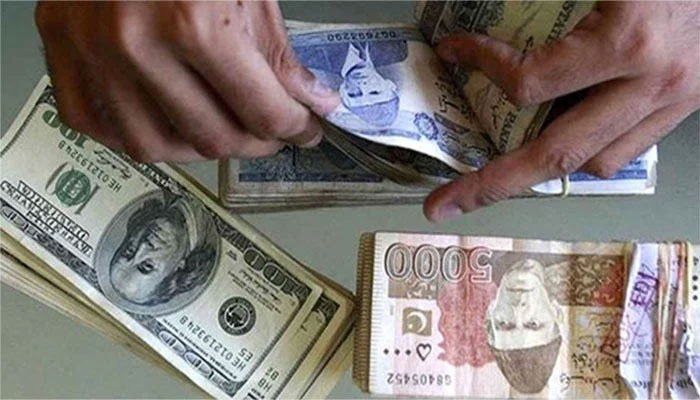
KARACHI: The rupee is expected to remain stable against the dollar next week, with inflows from remittances and Roshan Digital Account (RDA) expected to meet importers’ demand, traders said on Saturday.
“We foresee a stable rupee in the coming week helped by strong remittances, and increased inflows into RDA. Strong foreign exchange reserves and persistent recovery in exports will help hold the rupee steady against the greenback,” a forex dealer with a commercial bank said.
“The rupee is likely to trade in the band of 152.60 and 152.80 to the dollar in the coming week,” he added.
The local unit followed a range-bound trading pattern, hovering at 152.75 to 152.81 against the dollar in the interbank market during the outgoing week. It has been supported by a higher foreign exchange reserves.
“We don’t see any downside pressure on the rupee in the near-term because of the large increase in Pakistan’s forex reserves amid continued foreign inflows and workers’ remittances,” another trader said.
The country’s foreign exchange reserves reached a five-year high of $23.22 billion as of April 9; following $2.5 billion worth of inflows from the issuance of Eurobonds in the international capital markets.
The forex reserves held by the State Bank of Pakistan (SBP) rose to $16.106 billion — last seen in July 2017. With the $2.579 billion increase in the central bank’s reserves, import cover has now been improved to 3.5 months.
The Ramazan-related surge in remittances is also expected to bode well for the rupee in the coming days.
Remittances remained above $2 billion for the 10th consecutive month in March. At $2.7 billion, they went up 20 percent, compared with February, and 43 percent, compared with March 2020.
Cumulatively, they have risen to $21.5 billion during July-March FY2021, up 26 percent over the same period last year.
The IMF is going to discuss the issuance of additional SDRs (Special Drawing Rights) to the extent of 460 billion (SDR), which is equivalent to USD650 billion.
The proposal is planned to be presented in an executive board meeting in June 2021 for formal approval.
The allocation of new SDRs would benefit all member countries, including Pakistan for the support of global economic recovery from the COVID-19 crisis and vaccination programmes.
This could be the highest SDR issuance by the IMF since its inception. During the global financial crisis of 2009, SDR182.6 billion was allocated for member countries to provide liquidity to the global economic system, and to supplement official reserves of member countries.
Earlier, during the pandemic IMF had disbursed $107 billion to support poor/middle-income countries, including Pakistan, which faced a twin deficit and got $1.4 billion under this relief.
As per the quota under IMF, Pakistan holds 0.426 percent share in total SDR. The above development can fetch benefits of up to $2.5-3 billion, which would provide the much-needed relief for efficient management of external payments (imports and debt repayments).


