
Nawaz Sharif’s request to extend release for treatment
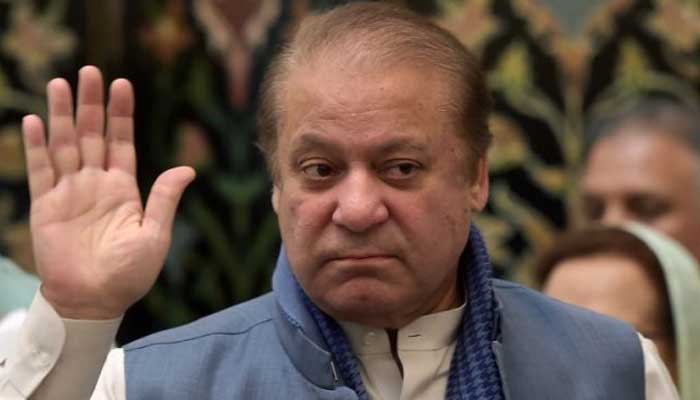
ISLAMABAD: The Islamabad High Court (IHC) judgment that awarded eight-week bail to deposed Prime Minister Nawaz Sharif on medical grounds will serve as the guiding force for a four-member Punjab government committee while deciding about his request to extend his release for treatment.
“The decision will be taken in the light of the Pakistan Prison Rules (PPR) and other laws keeping in view the IHC verdict,” a Punjab government official told The News. He did not specify the timeline within which the forum will take the decision. However, the committee would keep in mind the medical specialists’ reports of the former prime minister and his overall health conditions, he said.
Before the expiration of the eight weeks’ release ordered by the IHC, Nawaz Sharif has filed a plea with the Punjab home secretary, Nawaz Sharif seeking extension in his foreign stay not limited to a specific period as he doesn’t know how long his treatment will take. The provincial government has formed a committee led by Law Minister Basharat Raja to decide the request.
Meanwhile, the four-week bail granted to Nawaz Sharif by the Lahore High Court (LHC), which ran parallel to the similar facility accorded by the IHC to him, exhausted on Wednesday. Before that, the former prime minister deposited his medical reports with the LHC as per its order and the commitment made by him and Shahbaz Sharif in their undertakings submitted to it. The LHC verdict said that the ex-premier will come back to Pakistan “when certified by [foreign] doctors that he has regained his health and is fit to return.” The court order is time-bound but at the same time open-ended, in the sense of being subject to change in his foreign stay in view of his health condition.
As per the IHC decision, Nawaz Sharif doesn’t require to approach this high court for extension of his bail as it had ordered the Punjab government to decide such request from him.
The IHC ruled on Oct 29 that the ex-premier can knock at the doors of court for appropriate remedy in case of non-exercise of duty by the Punjab government or misuse of the discretion or its exercise in an arbitrary and whimsical manner in extending his release on health grounds.
It “noted with dismay” that despite its “observations” regarding different provisions of the Criminal Procedure Code (CrPC) and PPR, the Kot Lakhpat Jail Lahore superintendent “never initiated or referred” the health matter for Nawaz Sharif’s release in spite of “his severe medical condition.”
The judgment said that since the jail superintendent was under Punjab government, the inspector general, prisons, could have made recommendations to it for Nawaz Sharif’s release on account of indisposition, and the government, on its own, could have suspended the sentence if it was believed that the circumstances so warranted.
According to the order, under Section 401 of the CrPC, the Punjab government/ executive authority has ample power to suspend the sentence of any prisoner on any ground.
The judgment said that in case Nawaz Sharif’s health does not improve and he needs further medical attention, the Punjab government may, on its own, decide the issue regarding suspension of the sentence. Even otherwise, he may approach the provincial government under Section 401(2) CrPC.
The verdict said that the executive/ jail authorities do have powers to release a prisoner who is critically ill under Rules 143 and 164 of the PPR. Another aspect of the matter is that the PPR prescribes procedure for release of prisoners on bail suffering from disease, it said and added that the jail superintendent may recommend a prisoner for premature release who owing to old age, infirmity or illness is permanently incapacitated from the commission of further crime of the nature of that for which he has been convicted.
“The case shall be submitted to the government through the inspector general. It shall be accompanied by the recommendations of the medical officer. The inspector general will, in all such cases, obtain the medical opinion of the medical board which will be convened by the Director of Health Services.”
The IHC also said this judgment may be taken as an eye-opener for the federal and provincial governments to rescue the inmates suffering from serious illness by exercising powers under Section 401 of CrPC and to relieve them of their plight.







-
 Meghan Markle 'terrified' Over Possible UK Return
 -
 Did Opiate Restrictions Lead To Blake Garrett's Death?
 -
 Royal Expert Reflects On Princess Eugenie, Beatrice 'priorities' Amid Strained Relationship With Sarah, Andrew
 -
 Prince William's 'concerning' Statement About Andrew Is Not Enough?
 -
 50 Cent Gets Called Out Over Using Slur For Cardi B
 -
 Scientists Discover Rare Form Of 'magnets' That Might Surprise You
 -
 Nancy Guthrie’s Kidnapper Will Be Caught Soon: Here’s Why
 -
 AI Innovation Could Make Trade Secrets More Valuable Than Patents, Says Billionaire Investor
 -
 King Charles Heckling: Calls For 10 BAFTAs And A Knighthood For Sign Language Interpreter
 -
 Kim Kardashian Leaves Meghan Markle 'upset' With Latest 'cheap Shot'
 -
 Royal Expert On Andrew, Sarah Ferguson’s ‘entitled’ Behaviour Since Marriage
 -
 Instagram And YouTube Accused Of Engineering Addiction In Children’s Brains
 -
 Trump Reached Out To Police Chief Investigating Epstein In 2006, Records Show
 -
 Keke Palmer Praises Actor Who Inspired 'The Burbs' Role
 -
 Humans May Have 33 Senses, Not 5: New Study Challenges Long-held Science
 -
 Kim Kardashian Prepared To Have Child With Lewis Hamilton: 'Baby Using A Surrogate'