
1965 War: An overview
The 1965 war, as is known, started when India crossed Pakistan’s international border on September 6, 1965. It ended on September 22 on the intervention of the United Nations. Accordingly, September 6 is known as Defence of Pakistan Day when much smaller and poorly equipped Pakistan armed forces successfully fought off a much larger adversary and denied its war aims.
The day reminds us of the untold sacrifices rendered by the Pakistani armed forces while the nation showed an unprecedented spirit of unity and determination to repulse the attack and safeguard the territorial integrity of the homeland.
It was a war that was intensely fought on the ground and air. It also saw the biggest tank battle since the Second World War. Much has been written about the war, some narratives criticizing Pakistan and others India. Following is a brief list of some of repercussions/ developments that emerged from the war.
First, the 1965 war was a stern test of the people of the newly-created country. It brought them together on one platform, thereby, proving without any doubt the prowess of the people and the spirit that they showed during that period.
Second, the war launched by India confirmed that New Delhi had not accepted the creation of Pakistan as had been suspected by many people in the country at that time. A full-fledged attack on Pakistan and declarations to capture Lahore and dismember the country by the top Indian military leadership are eloquent reminders in this regard. Even today it is evident that some Indians have still not reconciled to Pakistan.
Third, the US embargo on arms and spares immediately after the war broke out proved that the US was an unreliable partner though Pakistan was a member of Seato and Cento.
Fourth, the war allowed Pakistan armed forces to test their operational doctrines and rectify shortcomings.
Fifth, it created mistrust between the two countries that still continues till today.
Sixth, it changed the security environment with Pakistan looking towards China and also the Soviet Union. President Ayub described it as a triangular tightrope.
Seventh, the war generated efforts towards self reliance in weapon systems and ammunition. The efforts bore fruit in the Seventies with setting up of the POF Wah and PAC Kamra among others.
Eighth, despite limited resources and weapons, Pakistan armed forces were able to inflict much heavy losses on a larger adversary and able to stop the Indian onslaught.
Finally, the war made it clear to Pakistani policymakers that India had planned to annex Kashmir by force and was not interested in a just and peaceful solution to the dispute. As a result, peace between the two neighbouring countries remains elusive to this day.







-
 Instagram Instants Explained: New Disappearing Photo Feature Sparks Snapchat 2.0 Reactions
 -
 Cardi B, Stefon Diggs' Reunion Takes Unexpected Turn In Heated Public Exchange
 -
 Chino Hills Grand Fire: Immediate Evacuation Orders As Bush Fire Explodes To 30 Acres
 -
 King Charles Is Dying: Cancer Takes Away Something Big But No One Can Risk Saying It Yet
 -
 Kylie Jenner Reflects On Her Pre-fame Life: 'It Felt Pretty Natural'
 -
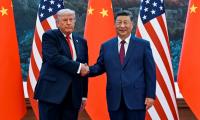 Xi Warns Taiwan Issue Could Push US-China Ties Into Conflict As Trump Praises Chinese Leader
 -
 Margaret Cho Finally Reveals Why She Turned Down 'Heated Rivalry' Role
 -
 Hailey Bieber Melts Hearts With Sweet Video Of Son Jack Blue
 -
 Mauricio Umansky Addresses Lala Kent's Claim He Slid Into Her DMs: 'She's A Liar'
 -
 Xi, Trump Hold Friendly Talks As US-China Summit Begins
 -
 Jennifer Lopez Makes Rare Remark About 'Office Romance' Co-star Brett Goldstein
 -
 Late 'Storage Wars' Star Darrell Sheets Receives Emotional Birthday Tribute From Son Brandon
 -
 Kate Middleton Gets Lauded To ‘international Stage’ Representation
 -
 Kate Middleton Shares ‘storytelling’ Glimpses From Time In Italy
 -
 Prince Harry Breaks Silence On Anti Semitic Attacks In Britain
 -
 FIFA World Cup: US Waives Visa Bonds Of Up To $15,000 For Ticket Holders