
PMDC rules out disadvantaging older MDCAT candidates
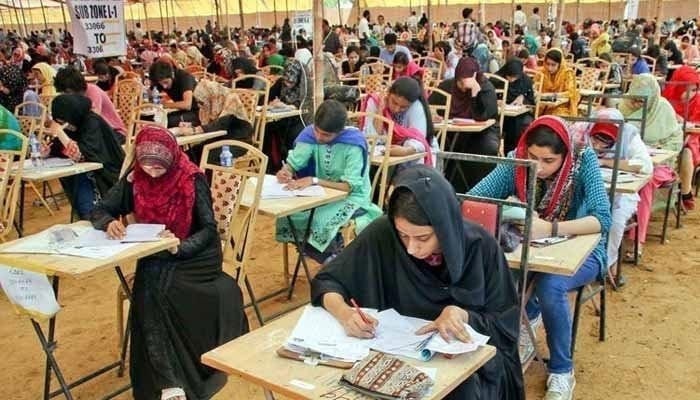
ISLAMABAD: The Pakistan Medical and Dental Council (PMDC) has stated that it cannot “legally disadvantage or discourage” MDCAT 2024 candidates from participating in this year’s admissions.
The Council issued the clarification amid growing demands from some legislators calling for a relative marking or equivalence formula to reduce the competitiveness of last year’s students. The Council emphasised that, under the PMDC Act, an MDCAT result remains valid for three years. It added that any change to this rule can only be made by Parliament and cannot be introduced during an active admission cycle. This stance was presented during a high-level meeting held at PMDC headquarters. Chairman of the National Assembly’s Standing Committee on Health, Dr Mahesh Kumar Malani, attended the meeting as a special invitee. Dr Malani and some committee members argued that candidates from the 2024 MDCAT should be discouraged from competing this year and proposed an equivalence mechanism to adjust their scores, citing an alleged imbalance between the two batches. The PMDC members firmly stated that such proposals were neither legally permissible nor academically defensible, explaining that the two MDCAT papers had entirely different difficulty patterns and could not be fairly compared. According to the PMDC, the 2024 exam comprised 20 per cent easy, 60 per cent moderate, and 20 per cent difficult questions, whereas the 2025 paper consisted of 15 per cent easy, 70 per cent moderate, and 15 per cent very difficult questions. Owing to these differences, the PMDC maintained that no relative marking or equivalence formula could be applied without compromising fairness and that any such attempt would invite legal challenges from affected students. The Council said any attempt to introduce a new formula at this stage would create confusion and trigger litigation. It also reiterated that any future change may be considered for the next academic session. Dr Malani referenced a similar situation under the former Pakistan Medical Commission (PMC) in 2021 and suggested revisiting the formula applied at that time. He pointed out that 42,000 candidates appeared in this year’s MDCAT and urged the Council to provide clarity before the courts, where three petitions on the matter are currently pending. The PMDC members responded that all suggestions from students, universities, and parliamentary representatives had been thoroughly reviewed. They stressed that the Council is bound by constitutional limits and cannot exceed its statutory authority. They assured the meeting that all possible options will be placed before the High Court with complete transparency and that whatever decision the Court issues will be final and binding on all institutions and candidates. The special meeting was convened after the Council took notice of media reports and acknowledged the uncertainty faced by students.


