
Global security initiative in world
It idealizes hegemony over equality, confrontation over dialogue, and self-interest over win-win cooperation
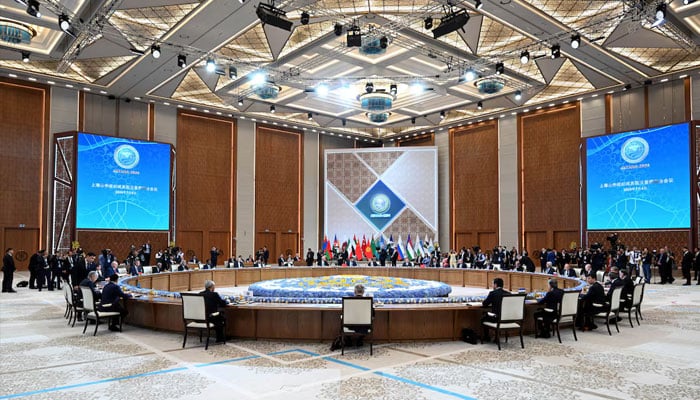
The declining Holy Roman Empire was neither holy, nor Roman, nor an empire, said Voltaire. The same applies to the declining liberal global order. It is not liberal, as it promotes the universality of economic, social, and political systems. It does not permit diversity and insists on the superiority of the Western model. It adheres to the philosophies of the End of History and the Clash of Civilizations. It is not global, as it only safeguards the interests of a few at the expense of many. It is not orderly, as it thrives on conflict, wars, agitation, and forced colour revolutions. It idealizes hegemony over equality, confrontation over dialogue, and self-interest over win-win cooperation. In summary, it is neither liberal, nor global, nor orderly.
It has led the world into chaos, conflicts, and stark divisions. The block mentality and hegemonic ambitions have further complicated the situation. It spawned alliances that safeguard the interests of a select few while exploiting others, such as the North Atlantic Treaty Organization (NATO) and others. These alliances have been formed in the name of stability and fairness, yet they have become the main source of instability, injustice, conflict, and war. The self-assumed righteousness, greatness, and superiority complex of the Western powers have sparked numerous conflicts around the globe. They have undermined the security and development needs of weaker, less-developed nations, jeopardizing their sovereignty. They compel weak nations to endure bullying from the powerful or face new forms of colonization, such as economic and technological colonization.
In this context, the world—especially weaker nations—sought a new system to ensure safety and promote sustainable security. As a major power, China took on this responsibility, and President Xi Jinping introduced the Global Security Initiative, which is founded on four pillars: 1) common, 2) comprehensive, 3) cooperative, and 4) sustainable security. President Xi presented the GSI to help the world address contemporary issues and emerging security challenges, ultimately aiming for sustainable peace. The analysis of the four pillars, discussed below, further reinforces this argument.
The Common Security Pillar of GSI views security as a shared responsibility and a right for all countries, regardless of their development status or military strength. It discourages an alliance mentality and encourages collaboration among all nations. No country is superior or inferior. This concept reinforces the belief that all are equal, and no one’s security is more important than anyone else’s. Therefore, all countries must unite to secure peace that addresses the legitimate needs of all on a sustainable basis.
The second pillar of GSI is particularly interesting; it not only addresses the current security needs of the world but also focuses on future requirements. This is the first time any global security initiative has given equal weight to traditional and non-traditional security challenges. China understands that without securing people’s basic needs, peace can never be achieved. Consequently, China considers food security, poverty alleviation, energy security, health, and safe water to be equally vital. Additionally, climate change, technology, artificial intelligence, and pandemics also require serious and dedicated attention to ensure a safe and prosperous planet for future generations. Therefore, China proposed that traditional and non-traditional security must work in tandem to achieve sustainable peace. China believes the world should focus more on these areas than on investing in weapons of mass destruction.
The third pillar of the GSI, which promotes a cooperative approach and methodology to devise instruments of peace and security, is extremely important. This pillar has been designed to address the challenges of exclusivity and segregation among countries.
The fourth pillar of GSI is sustainable security. The idea is not only to discuss symptoms but also to take appropriate steps to address root causes and underlying issues. The sustainable security pillar places equal importance on people’s social and developmental needs. To accomplish this, the world must place greater emphasis on the Sustainable Development Goals (SDGs) and the Global Development Initiative goals and take practical steps to create a fairer world.
However, China believes that any initiative or program is worthless without action. Therefore, since the launch of the GSI, China, under President Xi’s leadership, has been working tirelessly to fulfill the GSI vision. China has taken multiple steps to demonstrate its commitment to global peace and sustainable development. It initiated a campaign to promote world peace by adhering to the principles of dialogue and development, with shared interests at the forefront of all its actions. Additionally, it adopted a comprehensive and coordinated approach to ensure transparency and a win-win outcome.
First, China launched a campaign to make development accessible to everyone, which is a fundamental requirement for building a peaceful society.
Second, China is making efforts to resolve conflicts by applying the principles of dialogue, development, and non-interference policy. The policy is working, and the KSA-Iran agreement is one of the most prominent success stories on this front. Third, China is applying the same formula to resolve the Russia-Ukraine conflict. Fourth, President Xi has proposed three actions to resolve the Palestine issue, which include ensuring the establishment of a sovereign state of Palestine, the historical status quo of the holy sites, and addressing the needs of the people.
In conclusion, the GSI possesses all the necessary ingredients and instruments to assist the world in combating contemporary and persistent issues such as those related to Palestine and Kashmir, as well as emerging security challenges like climate change and food insecurity, ultimately aiming for sustainable peace.






-
 King Charles Charity Ends Chelsea Flower Show
 -
 'The Mandalorian And Grogu' Face Limits Of Force At Box Office
 -
 Prince William Reveals Name Of Princess Charlotte's Favorite Football Team
 -
 Prince William And Harry’s Uncle Gets Beloved Painting Back After Wedding
 -
 CDC Expands Mandatory Ebola Screening To Atlanta’s Hartsfield-Jackson International Airport
 -
 Idris Elba Gets Candid About James Bond Casting Rumours
 -
 Miley Cyrus Fiancé Maxx Morando Mocked Over Walk Of Fame Photoshoot
 -
 Kyle Busch's Family Reveals NASCAR Racer's Cause Of Death
 -
 China’s DeepSeek Restructures Pricing With A Permanent 75% Cut On V4-Pro AI Model
 -
 Whereabouts Of Katie Price's Husband Lee Andrews Confirmed By His Father
 -
 UK Dog Owners Could Regret It For Life If They Ignore These Heatwave Rules
 -
 Ella Bleu Travolta Talks About Famous Parents John Travolta, Kelly Preston's Support
 -
 Princess Diana's Brother Shares Good News After Marriage
 -
 How AI Is Fast-tracking Search For Drugs To Treat Brain Conditions
 -
 UFOs Damage Human Brains? Stanford Scientist Makes Chilling Claims
 -
 Paul Simon Says One Classic Hit Could Still Be Around In 100 Years