
Data of Pakistan’s $3.2m HIV survey under fire for ‘fabrication’
Survey teams reportedly ignore faint HIV test results recognised as potentially positive by WHO standards
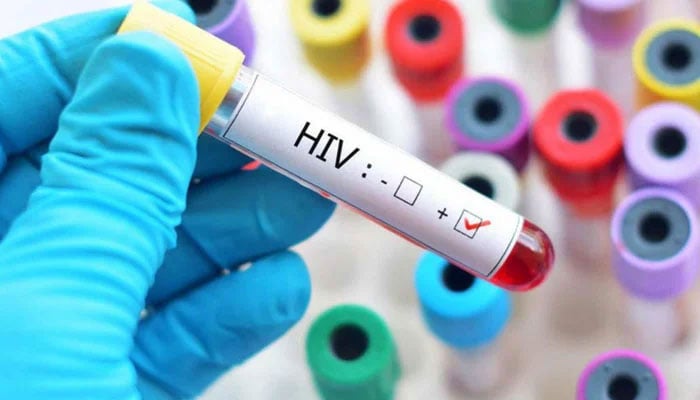
ISLAMABAD: A major controversy has erupted over the credibility and validity of Pakistan’s 6th round of the Integrated Biological and Behavioral Surveillance (IBBS) on HIV, with global health agencies, the Ministry of National Health Services, and civil society groups alleging serious data manipulation, raising fears that the country’s HIV epidemic may be significantly misreported.
The $3.2 million exercise, led by a consortium including a public sector university, Progressive Development Initiative (PDI), and the WHO Collaborating Center on HIV Surveillance (HIVHUB Iran), is facing accusations of ignoring critical diagnostic findings and fabricating key data points.
The IBBS Round-6 aimed to assess HIV prevalence among key populations (KPs), including people who inject drugs (PWID), men who have sex with men (MSM), transgender persons (TGs), female sex workers (FSWs), and prisoners across 31 districts.
However, multiple emails, presentations, and official correspondence reviewed by The News reveal that key international and national stakeholders—including WHO, UNAIDS, MSM community and the Khawaja Sara Society—have expressed grave concerns about the survey’s methodology, reliability of data, and exclusion of critical test results that could have significantly raised prevalence figures.
At the center of the controversy is the failure of survey teams to retest thousands of individuals whose rapid diagnostic test (RDT) kits showed faint reactive lines—an indicator recognized by WHO and test manufacturers as potentially HIV positive.
According to internal review documents, out of 1,025 previously reviewed images, over 723 showed faint reactive lines—up from only 82 initially identified.
“Cross-referencing with gradient intensity templates has helped me better detect faint lines, and I now understand the visual cues better,” stated Norah Hoddidi, a reviewer involved in the image assessment, in a formal communication dated April 2025.
Yet despite repeated instructions, including meeting minutes from June 2024 advising that all faint-line cases be considered reactive and subject to confirmatory testing, IBBS implementers failed to follow protocols. This omission, stakeholders fear, could amount to deliberate downplaying of Pakistan’s HIV burden to meet pre-set targets or avoid negative publicity.
According to Ministry of National Health Services, Regulations and Coordination, Dr. Shabana Saleem, Director General Health at the Ministry of National Health Services, urged colleagues to thoroughly review and discuss the Round-6 data before finalization, citing mounting concerns.
The Common Management Unit (CMU) for AIDS, TB, and Malaria also recommended an “independent, transparent third-party review” to restore credibility.
Preliminary IBBS results had reported a rise in HIV prevalence among TGs (10%), MSM (7%), and FSWs (3.8%), while showing a decline among PWID to 27%. But these numbers are now being challenged by internal data, which reveal thousands of cases with faint reactive results that were never retested.
Community groups have also condemned the findings. In a strongly worded response, Moon Ali (Hassan Amjad), Director of Programmes at the Khawaja Sara Society, highlighted discrepancies in condom use reporting and safer sex practices, especially among TG communities in Lahore, stating:
“These figures contradict ground realities and past IBBS data. Our CBOs’ data shows much higher intervention coverage.”
Further criticism was leveled at the definition of MSM used in the survey, which limited inclusion to individuals reporting risk behavior in the past 30 days—significantly reducing the estimated size of the population.
WHO’s Eastern Mediterranean Regional Office (EMRO) recommended using a broader definition based on a 12-month recall period, which would yield higher and more realistic estimates.
According to UNAIDS’ response dated 22 May, 2025, the organization acknowledged the importance of the IBBS for HIV programming but refrained from endorsing the current draft due to the multiple unresolved issues.
This unfolding scandal has implications far beyond statistical errors. Health experts warn that underreporting HIV cases can result in reduced international funding, inadequate service provision, and dangerously misinformed public health policies.
A senior CMU official, requesting anonymity, told The News: “What’s most alarming is that despite clear WHO guidelines and internal flags, key evidence was excluded. Whether this was intentional or incompetence, it puts the entire national response at risk.”
The Iranian WHO Collaborating Center (HIVHUB) was reportedly sidelined during critical stages of implementation, and leading national institutions such as the University of Health Sciences (UHS) and Institute of Management Sciences (IMS) Peshawar were not taken on board.
Email evidences show Simon Nazariah from PDI allegedly played a central role in coordinating, approving, and overlooking key elements of the controversial exercise—raising questions over conflict of interest and lack of oversight.
The Ministry of National Health Services is now considering commissioning an independent third-party audit to verify the IBBS Round-6 data and ensure future surveys are community-inclusive, scientifically sound, and transparent, officials said.






-
 Rita Ora Reveals Decision Her Husband Is Thankful For Today
 -
 Trump Administration Faces Lawsuit Over Cancelled Clean Energy Grants
 -
 Vehicle Crashes Into Crowd At Berlin Pride, Killing One
 -
 Meghan Markle Not ‘comfortable’ King Charles Wants To Heal Relationship Privately
 -
 Prince William Once Compared Prince George To Prince Harry: 'A Little Bit Of A Rascal'
 -
 Kelly Clarkson Talks About Making Single Life ‘magical’ In Fresh Confession
 -
 'Strictly Come Dancing' Unveils Five New Pros After Major Cast Shake-up: Watch
 -
 Prince Harry Hates Attending Public Gatherings Due To Meghan Markle After UK Visit?
 -
 Rosie O'Donnell Reveals Her Most Surprising Guest
 -
 Juventus Beat Standard Liege 1-0 For First Pre-season Win Under Luciano Spalletti
 -
 Suki Waterhouse Sees Herself Leaving US One Day
 -
 Matt Damon Unveils Driving Force Behind 'Good Will Hunting'
 -
 Lewis Hamilton Drops To Fifth After Hungarian Grand Prix Grid Penalty
 -
 Pamela Anderson Goes Unfiltered About Missing Upcoming 'Baywatch' Reboot
 -
 Dr. Courtney Shah, Seven-time 'Jeopardy!' Champion, Dies At 52
 -
 Arsenal Consider Move For Vinícius Júnior Amid Real Madrid Contract Uncertainty