
Punjab set to establish centre of excellence to counter extremism
Punjab is seen as a key battleground for shaping the country’s long-term resilience to extremist threats
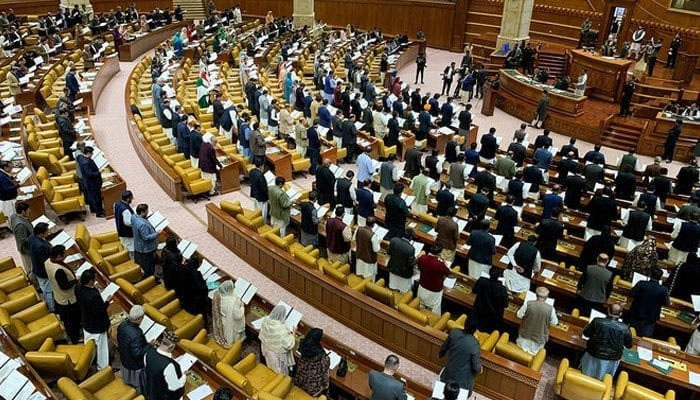
LAHORE: The Punjab Assembly has referred an important bill proposing the establishment of a Punjab Center of Excellence on Countering Violent Extremism to the Standing Committee on Home Department for final review, in what is being described by experts and officials alike as a critical step towards institutionalizing a comprehensive response to violent extremism, radicalization, and terrorist narratives in the province.
Reliable sources told The News that the provincial government earlier moved the proposed Punjab Center of Excellence on Countering Violent Extremism Bill 2025 seeks to create a specialised research and policy body that would spearhead efforts to understand, prevent, and counter the multifaceted threats of violent extremism and its enablers. The draft was referred to the Standing Committee chaired by MPA Safdar Hussain Sahi, with the committee now tasked to deliberate on the nearly-finalized text and propose refinements where deemed necessary.
The introduction of the bill comes at a time when policymakers across the country face mounting challenges from evolving forms of extremism that exploit new digital platforms, sectarian divides, political disaffection, and transnational networks. Punjab, home to Pakistan’s largest population, is seen as a key battleground for shaping the country’s long-term resilience to extremist threats.
The bill’s statement of objects and reasons underlines the urgency of the measure, citing terrorism, subversive activities, online radicalization, the misuse of charities, and the glorification of terrorist organizations as persistent dangers undermining national security and societal harmony. The proposed Center aims to counter such narratives through evidence-based policy research, strategic coordination, and capacity building.
According to the draft legislation, the Center will undertake a broad array of functions. These include conducting cutting-edge research on violent extremism and its root causes; developing comprehensive counter-extremism strategies and action plans; drafting policy recommendations for the provincial government; and supporting frontline institutions such as law enforcement and regulatory bodies with technical expertise. In addition, the Center will serve as a hub for data collection, threat analysis, intelligence coordination, and dissemination of best practices to stakeholders at multiple levels.
Of particular significance is the Center’s envisioned role in supporting the work of the Financial Action Task Force (FATF) working groups, including analytical inputs on terrorist financing and cyber-enabled radicalization. The bill mandates the Center to maintain liaison with international counterparts and entities to facilitate cross-border cooperation on emerging terrorism and extremism-related challenges.
The proposed governance structure reflects the strategic importance attached to the initiative. A high-powered Board of Governors, chaired by the Chief Minister or his nominee, will provide overall direction and oversight. The Board will include key cabinet ministers, senior civil servants, the Inspector General of Police, the Deputy Inspector General of the Counter Terrorism Department, representatives from academia, and a Chief Coordination Officer who will serve as the operational head.
The Center is also expected to foster collaboration with religious leaders, faith-based organisations, media platforms, and civil society groups to promote a counter-narrative rooted in human rights, constitutional values, and social cohesion. It will organise workshops, symposia, fellowships, and training programs aimed at mainstreaming vulnerable segments, including youth, women, minorities, and rural communities — often viewed as prime targets for extremist recruitment.
Funding for the Center will be drawn from a mix of government grants, contributions from individuals and organisations, and other sources permitted under the Act. In an effort to ensure transparency and accountability, the financial operations of the Center will be subject to annual audits by the Auditor General of Pakistan, with performance reports to be tabled before the Punjab Assembly.
Political observers note that the referral of the bill to the Standing Committee is in line with procedural norms, offering an opportunity for substantive input and possible cross-party consensus.Several legal experts have welcomed the move as “long overdue,” noting that previous counter-extremism efforts in the province were often fragmented and reactive. “What is needed is a permanent institutional mechanism that can undertake continuous research, foster inter-agency collaboration, and inform public policy. The proposed Center offers such a platform,” said one senior legal scholar on condition of anonymity.
Civil society representatives have also cautiously welcomed the initiative, though some have stressed the importance of maintaining the Center’s independence and ensuring that its work is not politicized or co-opted by narrow security agendas. “For the Center to succeed, it must be guided by constitutional principles, respect for human rights, and a genuine commitment to fostering pluralism,” said a representative of a Lahore-based human rights group.
Once the Standing Committee submits its report — expected in the coming weeks — the bill will return to the floor of the Assembly for clause-by-clause debate and a final vote. If enacted, the Punjab Center of Excellence on Countering Violent Extremism will represent one of the most ambitious provincial initiatives in Pakistan’s broader counter-extremism landscape, with potential lessons for other federating units.
The timing of the initiative is also being closely watched by national security stakeholders, as Pakistan navigates a complex regional environment marked by renewed militant threats, ideological polarization, and shifting geopolitical dynamics. Whether the Center will ultimately fulfill its promise depends not only on the quality of the legislation but also on the sustained political will and institutional support that will be required to translate its ambitious mandate into meaningful action.







-
 UK Lawmaker Sues Musk's XAI To Stop Grok Generating Sexualised Images
 -
 King Charles Gets Up Close With UK's F-35B Fighter Jets During Military Visit
 -
 King Charles Turns ‘insane’ With 'madness' For Prince Harry
 -
 Apple Unveils Klarna-powered ‘Apple Upgrade’ Plan For IPhone, Mac And IPad In US
 -
 Andy Burnham Boosts Labour Past Reform As Voters Favor New PM Over Nigel Farage
 -
 Prince Harry Issued Stark Warning Ahead Of Next UK Trip: 'Deeply Betrayed'
 -
 Clive Alderton’s Exit Called Win For 'bring-back-Harry Party'
 -
 Apple Dethrones Nvidia As World's Most Valuable Company: Will It Last?
 -
 King Charles Makes Catastrophic Decision With Harry: ‘Your Son Threw Doggy Doodoo And It’s On Fire!’
 -
 Royal Expert Reflects On Meghan Markle's 'predictable Move', Prince William Is Furious
 -
 Who Will Control Strait Of Hormuz? Oman Proposes Regional Mechanism To Iran
 -
 Tom Holland Praises Wife Zendaya's Acting Skills: 'She Raises The Game'
 -
 Kate Middleton Follows In Meghan Markle Footsteps, Delights Royal Fans
 -
 Expert Exposes More About Prince Harry's Affair: 'He Is His Father's Son He'd Know What Its Like'
 -
 Meghan Markle's Close Friend Reacts As She Distances Herself From Royal Title
 -
 Jen Hamilton Reveals If She Plans To Change Last Name After Exposing Ex's 'double Life'