
Modi’s G7 snub signals a turning tide in India’s global image
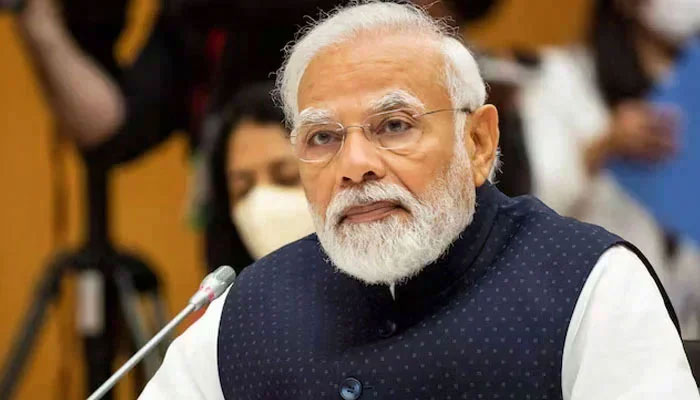
India’s Prime Minister Narendra Modi is expected to skip the upcoming G7 Summit in Canada, marking the first time in six years that he will be absent from the high-profile gathering of the world’s most influential democracies. While officially unconfirmed, Indian media reports, citing sources familiar with the matter, suggest that neither New Delhi nor Ottawa has made any effort to initiate discussions about Modi’s presence. The strained state of diplomatic relations, especially after Canada’s accusation of Indian involvement in the 2022 assassination of Canadian citizen Hardeep Singh Nijjar, casts a long shadow over this year’s summit.
That accusation, made public by Prime Minister Justin Trudeau in September 2023, shocked the international community. Trudeau claimed there were “credible allegations” of Indian state involvement in Nijjar’s killing-a charge backed by intelligence shared within the Five Eyes alliance. Nijjar, a Canadian citizen and prominent Sikh leader, was gunned down outside a gurdwara in British Columbia. The backlash was swift and unprecedented: Canada expelled six Indian diplomats, including the head of India’s intelligence wing in Ottawa, while India retaliated by halting visa services and accusing Canada of harboring extremists. According to BBC News, this marked one of the lowest points in bilateral relations between the two nations.
This was not an isolated episode. In November 2023, the U.S. Department of Justice unsealed an indictment against Indian national Nikhil Gupta, charging him with conspiring to assassinate Sikh-American activist Gurpatwant Singh Pannun on U.S. soil. According to The New York Times, the indictment alleged that Gupta was working under the direction of an Indian intelligence official and had attempted to hire a hitman-who turned out to be an undercover U.S. agent-to carry out the assassination. The U.S. government treated the plot as a serious breach of sovereignty and a grave threat to public safety.
Across the Atlantic, the United Kingdom has also voiced concern over India’s growing international aggression. In early 2024, members of the British Parliament raised alarms about covert Indian operations targeting Sikh diaspora communities. According to The Guardian, lawmakers cited evidence of surveillance, intimidation, and disinformation campaigns orchestrated by Indian operatives in the UK. The debate underscored a bipartisan consensus that British soil must remain a safe space for political expression and dissent-regardless of India’s strategic significance.
India’s covert operations haven’t spared its traditional adversary either. The case of Kulbhushan Jadhav, a former Indian Navy officer arrested in Pakistan’s Balochistan province in 2016, remains a defining moment in India’s regional espionage history. According to the ruling by the International Court of Justice, while India was granted consular access to Jadhav, the court did not dismiss the core charges of espionage and sabotage. Pakistan maintains that Jadhav was sent to destabilize its territory-an allegation that continues to complicate any potential diplomatic thaw between the neighbors.
These incidents form a troubling pattern, now drawing international scrutiny. Modi’s anticipated absence from the G7 Summit is not merely logistical-it reflects growing global discomfort with India’s approach to dissent and diplomacy. Canada’s decision to not extend an invitation to India this year underscores the diplomatic isolation New Delhi faces. For a leader who was once feted in Western capitals as a reformer, this marks a sharp reversal.
It wasn’t always this way. Modi’s early years in office were celebrated as a new dawn for India’s global ambitions. He was seen as a leader capable of marrying economic liberalization with democratic governance. But over time, his government’s authoritarian tendencies have undermined that promise. At home, the crackdown on journalists, human rights defenders, and religious minorities has eroded India’s democratic credentials. Abroad, New Delhi has shifted from dialogue to covert repression.
Even Washington, a key ally in the Indo-Pacific strategy, is showing signs of unease. The 2024 U.S. State Department Human Rights Report noted instances of extrajudicial killings, suppression of religious freedoms, and restrictions on civil society in India. While the Trump administration continues to view India as a strategic bulwark against China, the contradiction between values and interests is becoming harder to ignore.
Canada’s stance at the G7 is part of a larger reckoning. Western nations that once saw India as a natural democratic partner are now confronting the reality of Modi’s foreign and domestic policies. The use of extraterritorial violence, covert repression, and diplomatic strong-arming stands in stark contrast to the liberal democratic order the G7 purports to uphold.
Other countries invited to this year’s summit-including South Africa, Ukraine, and Australia-have confirmed their attendance. India, on the other hand, remains conspicuously absent. This isolation is not the result of geopolitical misfortune, but of deliberate policy choices. A seat at the table of global democracies cannot be earned through trade deals and military alignment alone-it must be accompanied by respect for international law and human rights.
Modi’s likely absence from the G7 is more than symbolic. It’s a signpost on the road to reputational decline. If India continues to pursue policies of suppression abroad and authoritarianism at home, it may soon find itself not only uninvited, but unwelcome.






-
 King Charles ‘worried’ For Prince William As Heir Doesn’t Have Temperament To Be King
 -
 France Records Around 1,000 Excess Deaths During Deadly Heatwave
 -
 Kris Jenner Crowns Khloe Kardashian 'most Amazing Mother' In Birthday Tribute
 -
 David Beckham Melts Hearts With His Unseen Baby Snaps As Celebrated Mom Sandra
 -
 Which Countries Will Ban Grand Theft Auto VI At Launch?
 -
 Prince Harry’s ‘emotional Safe Haven’ In UK Revealed
 -
 North West Debuts Daring New Facial Piercings At Paris Fashion Week
 -
 Why Tech Firms Are Blaming AI For The Massive Surge In Device And Console Prices
 -
 Prince William’s Secret To A Successful Marriage With Kate Middleton Comes To Light
 -
 Google Gemini AI Capacity Shortage Delays Meta's AI Projects: Report
 -
 Holly Madison Reveals Why She Underwent Plastic Surgery After Pregnancies
 -
 Dean McDermott Expresses Gratitude As He Marks Three Years Of Sobriety
 -
 South Korea, Japan Deepen Defense Ties In Major Security Push
 -
 Andrew Mountbatten-Windsor’s Fears Over His Own Life And Life Span Turn Worrying: ‘You Can’t Erase This!’
 -
 Katy Perry's Long-awaited Return Ends In Disappointment
 -
 Eva Green Hospitalized After Injury On ‘Wednesday’ Set