
Trump tax bill poses limited benefits, higher costs for lower-income Americans
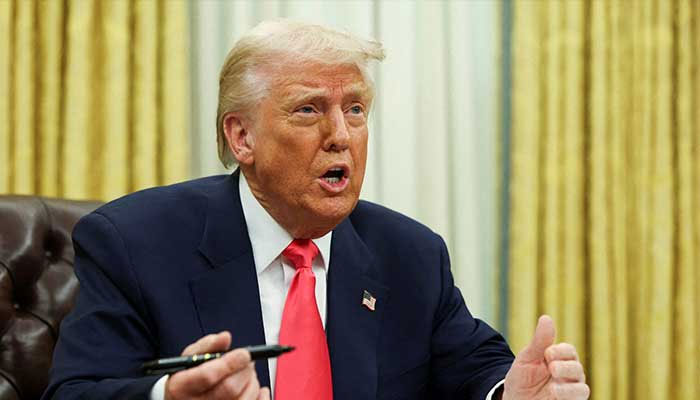
WASHINGTON: US President Donald Trump’s signature tax break on tips promises relatively few upsides for low-income Americans, who face a net loss of income under his massive tax and spending bill in Congress, analysts say.
The new tax break is one of several aimed at helping working-class Americans who are a key bloc in Trump’s political coalition. But experts say it would reach only a fraction of the bartenders, hairdressers and other workers who rely on tips. And those who benefit could see gains outweighed by cuts to healthcare and food assistance.
“If you’re thinking about things that could help low-income workers, ‘no taxes on tips’ would not be high up on my list,” said Martha Gimbel, director of the Budget Lab at Yale University.
Several independent analyses conclude that the bill now before the Senate would effectively transfer money from poor Americans to the rich.The Penn Wharton Budget Model, for example, found it would reduce after-tax income by $1,500 for families earning less than $22,000 per year, and boost income by $104,000 for those earning more than $5.2 million. The nonpartisan Congressional Budget Office reached a similar conclusion.
Still, the idea of making tipped income tax-free has drawn wide support since Trump first floated it last year at a campaign stop in Nevada, a swing state with a large hospitality industry.
The bill that passed the House of Representatives last month allows workers earning up to $160,000 a year to deduct tips from their gross income until 2029, though tips would remain subject to Social Security and Medicare taxes.
House Republicans say the bill would provide the typical family with a $1,300 tax cut and that business tax breaks would lead to higher wages for workers.
“Permanently lower tax rates and a doubled standard deduction, combined with President Trump's no tax on tips, overtime, and auto loan interest, will help workers afford the roof over their head, food for their families, and help build their financial security and wealth,” House Ways and Means Committee Chairman Jason Smith, a Republican, said in a recent statement.
Senate Republicans are likely to seek considerable changes to the bill, which also would make Trump’s 2017 tax cuts permanent and implement other top priorities, like a crackdown on immigration.
MANY WOULDN’T QUALIFY
But the deduction for tip income would not help the 37 per cent of tipped workers who already earn too little to pay any income tax, according to the Yale Budget Lab. Tipped employees account for only about 2.5 per cent of all US workers.
The tax break would cost the US government nearly $40 billion in lost revenue through 2028, according to the congressional Joint Tax Committee.
Other benefits for working families face similar limits, including deductions on overtime pay and interest on auto loans. In each case, the greatest benefits accrue to people with higher incomes.
“All of those will only benefit someone if they have enough income that they are paying a positive tax liability,” said Brandon DeBot, policy director at New York University’s Tax Law Centre.
The new tax breaks would be outweighed by higher costs from cuts to social safety-net programs and rising debt levels.At least 8.7 million lower-income Americans would lose health insurance coverage from new restrictions to Medicaid and the Affordable Care Act, according to CBO.
Republicans have also added new restrictions to two bulwarks of support for low-income families: the child tax credit and the earned income tax credit.The legislation would temporarily increase the $2,000 child tax credit to $2,500 through 2028 and adjust it for inflation after that.
But it contains a new requirement that parents provide Social Security numbers to qualify. That would exclude 4.5 million eligible children, according to the nonpartisan Centre for Migration Studies.
Families would also have to meet tighter standards to qualify for the earned income tax credit, a major anti-poverty programme that reached 23 million tax filers in 2022.And analysts warn that cuts to Internal Revenue Service funding and staff would leave the tax agency less able to help lower-income people navigate the new restrictions.
The legislation would add $3.8 trillion to the national debt, which now stands at $36.2 trillion, according to CBO.Ultimately, the cost would weigh most heavily on poor Americans, according to the Penn Wharton Budget Model, which estimated that low-income households in the future would see a lifetime loss of $8,500 due to a weaker safety net and higher debt service. The model found that some high-income households would see a lifetime gain of $17,800.“You’re inheriting this higher debt, this higher burden. Somebody has to pay for it,” said the budget model’s director, Kent Smetters.







-
 Dwayne Johnson Confesses What Secretly Scares Him More Than Fame
 -
 Elizabeth Hurley's Son Damian Breaks Silence On Mom’s Romance With Billy Ray Cyrus
 -
 Shamed Andrew Should Be Happy ‘he Is Only In For Sharing Information’
 -
 Apple Sued Over 'child Sexual Abuse' Material Stored Or Shared On ICloud
 -
 Nancy Guthrie Kidnapped With 'blessings' Of Drug Cartels
 -
 Hailey Bieber Reveals Justin Bieber's Hit Song Baby Jack Is Already Singing
 -
 Emily Ratajkowski Appears To Confirm Romance With Dua Lipa's Ex Romain Gavras
 -
 Leighton Meester Breaks Silence On Viral Ariana Grande Interaction On Critics Choice Awards
 -
 Heavy Snowfall Disrupts Operations At Germany's Largest Airport
 -
 Andrew Mountbatten Windsor Released Hours After Police Arrest
 -
 Heidi Klum Eyes Spooky Season Anthem With Diplo After Being Dubbed 'Queen Of Halloween'
 -
 King Charles Is In ‘unchartered Waters’ As Andrew Takes Family Down
 -
 Why Prince Harry, Meghan 'immensely' Feel 'relieved' Amid Andrew's Arrest?
 -
 Jennifer Aniston’s Boyfriend Jim Curtis Hints At Tensions At Home, Reveals Rules To Survive Fights
 -
 Shamed Andrew ‘dismissive’ Act Towards Royal Butler Exposed
 -
 Hailey Bieber Shares How She Protects Her Mental Health While Facing Endless Criticism