
Nasir Abbas Nayyar explains how Urdu novels have global presence
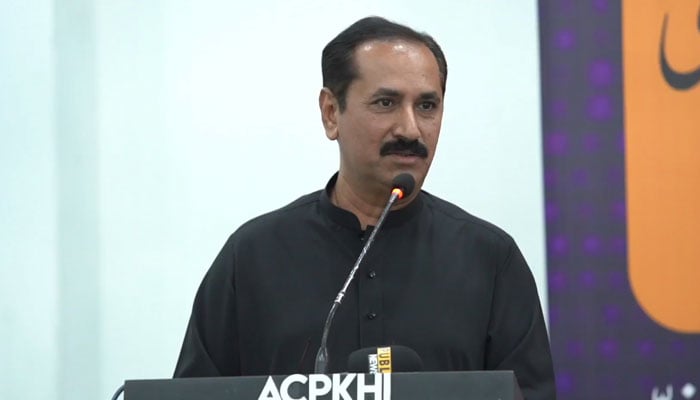
The Arts Council of Pakistan Karachi (ACP) recently organised a lecture by literary critic Dr Nasir Abbas Nayyar titled “Absence of Urdu Novel in Global Context: Fact or Fiction?” at the Haseena Moin Hall.
The session was presided over by veteran poet Zehra Nigah. In her presidential address, she remarked that Dr Nayyar’s talk reminded her of Qurratulain Hyder and the unforgettable novel Aangan by Khadija Mastoor. She credited ACP President Ahmed Shah for transforming the ACP into a hub where intellectual and literary discussions continued.
During his lecture, Dr Nayyar challenged the prevailing notion that Urdu novels were confined to the Urdu-speaking world and lack global presence. He emphasised that this belief stemmed from a limited understanding of three key concepts: presence, global context and the Urdu novel itself. According to him, “presence” must be both material and experiential — a text must not only exist but also contribute to and shape the dialogic space of consciousness.
He argued that the so-called global context was largely shaped by Euro-American ideologies. The universality propagated during the colonial era was built on European philosophies and institutional structures, and continued in new forms today, he said.
He pointed out the ideological nature of global recognition by referencing major literary awards. The Booker Prize, for instance, originally recognised writers from Commonwealth countries, Ireland and Zimbabwe. Although eligibility was broadened in 2014, it remained limited to English-language works published in the UK or Ireland.
Similarly, the Nobel Prize in Literature, awarded 121 times, had recognized only 25 to 30 non-Western writers, with Asian authors being the least represented. Quoting the Booker website, “It is the prize that transforms the winner’s career,” Dr Nayyar noted that these awards conferred not just honour but widespread popularity. In contrast, South Asian literature remained underrepresented in global discourse, even when taught in select institutions across Germany, France, the UK, Turkiye, Egypt and Iran.
Dr Nayyar cited the rare acknowledgement of Qurratulain Hyder by 2008 Nobel Laureate Jean-Marie Gustave Le Clézio. He mentioned a curated list of 615 greatest books of the world that included Toba Tek Singh by Saadat Hasan Manto, Basti by Intizar Hussain, and Aag Ka Darya by Qurratulain Hyder — highlighting that some Urdu works had indeed gained recognition, albeit sparsely.







-
 James Van Der Beek's Final Conversation With Director Roger Avary Laid Bare: 'We Cried'
 -
 Jaden Smith Walks Out Of Interview After Kanye West Question At Film Premiere
 -
 Michelle Obama Gets Candid About Spontaneous Decision At Piercings Tattoo
 -
 Why Halle Berry Wasn't Ready For Marriage After Van Hunt Popped Question? Source
 -
 Bunnie Xo Shares Raw Confession After Year-long IVF Struggle
 -
 Brooks Nader Reveals Why She Quit Fillers After Years
 -
 Travis Kelce Plays Key Role In Taylor Swift's 'Opalite' Remix
 -
 How Jennifer Aniston's 57th Birthday Went With Boyfriend Jim Curtis
 -
 JoJo Siwa Shares Inspiring Words With Young Changemakers
 -
 James Van Der Beek Loved Ones Breaks Silence After Fundraiser Hits $2.2M
 -
 Disney’s $336m 'Snow White' Remake Ends With $170m Box Office Loss: Report
 -
 Travis Kelce's Mom Donna Kelce Breaks Silence On His Retirement Plans
 -
 Premiere Date Of 'Spider-Noir' Featuring Nicolas Cage Announced
 -
 Pedro Pascal's Sister Reveals His Reaction To Her 'The Beauty' Role
 -
 Kate Middleton Proves She's True 'children's Princess' With THIS Move
 -
 Paul Anka Reveals How He Raised Son Ethan Differently From His Daughters