
NA body mulls over local govts powers
Constitution (Amendment) Bill aims to ensure meaningful devolution of political, administrative, and financial authority
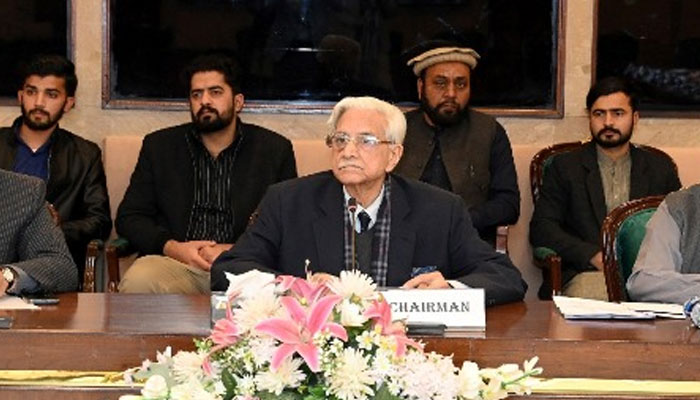
ISLAMABAD: The Standing Committee of National Assembly on Law and Justice, while discussing “The Constitution (Amendment) Bill, 2025” (Article 140-A), moved by MNA Jawed Hanif Khan, deliberated on the proposal to grant effective powers to local governments.
While members supported the bill’s intent in principle, the committee recommended issuing a fresh reminder through the Ministry of Law and Justice and the committee itself to urge political leaders to submit their opinions, enabling further progress on the matter. The Constitution (Amendment) Bill, 2025 aims to ensure a meaningful devolution of political, administrative, and financial authority, making local government institutions more viable and effective in line with the aspirations of the people of Pakistan.
The committee meeting was held on Monday at the Old PIPS Hall, Parliamentary Lodges, under the chairmanship of Mahmood Bashir Virk. During deliberations, the mover emphasized that although the 18th Amendment intended to devolve powers to the grassroots level, the absence of a functional local government system hinders the achievement of this objective.
The members agreed that while the bill’s goals were commendable, its success hinges on political will and consensus across party lines. The committee was informed that despite an earlier formal request to all parliamentary leaders for their input on the proposed amendment, no responses had been received. Consequently, the committee decided to issue a renewed call for feedback through the ministry and the committee to facilitate legislative progress.
The committee also considered several other bills. The Constitution (Amendment) Bill, 2024 (Articles 175-A and 215), moved by Asad Qaiser, seeks to ensure the appointment of High Court judges based on merit through a competitive examination system. The objective is to promote meritocracy and curb favouritism in judicial appointments. Additionally, the bill proposes that the term of the chief election commissioner be limited to one year. Upon completion of the term, a member of the election commission from each province following alphabetical order would be appointed as the next chief election commissioner.
The Constitution (Amendment) Bill, 2025 (Article 59), moved by Naveed Arif, aims to enhance representation of non-Muslim communities in the Senate. The Constitution (Amendment) Bill, 2024 (Articles 51 and 106), moved by Naveed Aamir, proposes increased representation for minorities in the National Assembly and Provincial Assemblies.
The committee noted with concern that, despite repeated inclusion on the agenda, the movers of these minority-related bills consistently failed to attend the meetings. Accordingly, the committee unanimously recommended that these bills should not be passed by the assembly. The committee also took up “The Code of Civil Procedure (Amendment) Bill, 2024” (Section 54-A), moved by Sofia Saeed Shah. However, discussion was deferred due to the mover’s illness.
During deliberations, it was also recalled that the Ministry of Law and Justice had previously committed itself to sharing a draft of related amendments to the Land Revenue Act. The ministry cited a short notice as the reason for the delay but assured the committee that the draft would be provided before the next meeting.
In conclusion, the committee condemned recent terrorist attacks in Balochistan, particularly the tragic school bus incident, and expressed sorrow over the loss of innocent lives. The committee extended condolences to the bereaved families.







-
 Jake Paul Criticizes Bad Bunny's Super Bowl LX Halftime Show: 'Fake American'
 -
 Prince William Wants Uncle Andrew In Front Of Police: What To Expect Of Future King
 -
 Antioxidants Found To Be Protective Agents Against Cognitive Decline
 -
 Hong Kong Court Sentences Media Tycoon Jimmy Lai To 20-years: Full List Of Charges Explained
 -
 Coffee Reduces Cancer Risk, Research Suggests
 -
 Katie Price Defends Marriage To Lee Andrews After Receiving Multiple Warnings
 -
 Seahawks Super Bowl Victory Parade 2026: Schedule, Route & Seattle Celebration Plans
 -
 Keto Diet Emerges As Key To Alzheimer's Cure
 -
 Chris Brown Reacts To Bad Bunny's Super Bowl LX Halftime Performance
 -
 Trump Passes Verdict On Bad Bunny’s Super Bowl Halftime Show
 -
 Super Bowl 2026 Live: Seahawks Defeat Patriots 29-13 To Win Super Bowl LX
 -
 Kim Kardashian And Lewis Hamilton Make First Public Appearance As A Couple At Super Bowl 2026
 -
 Romeo And Cruz Beckham Subtly Roast Brooklyn With New Family Tattoos
 -
 Meghan Markle Called Out For Unturthful Comment About Queen Curtsy
 -
 Bad Bunny Headlines Super Bowl With Hits, Dancers And Celebrity Guests
 -
 Insiders Weigh In On Kim Kardashian And Lewis Hamilton's Relationship