
The Kashmir flashpoint: A crisis rekindled amid rising tensions
India and Pakistan have remained locked in a bitter struggle since partition-primarily over Kashmir
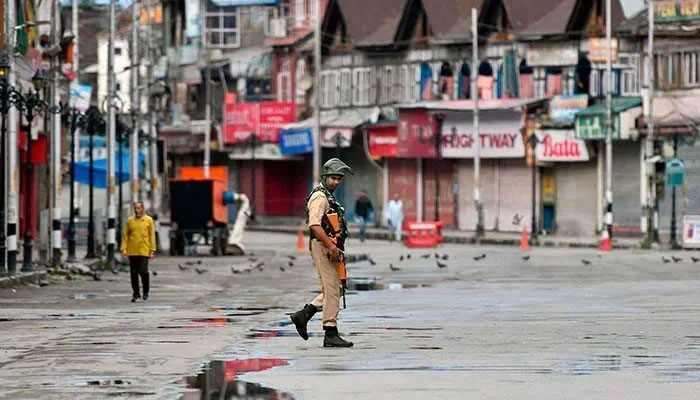
Peace and tranquility have never been the defining features of the Indian subcontinent. Often likened to two estranged brothers, India and Pakistan have remained locked in a bitter struggle since partition-primarily over one contentious issue: the region of Jammu and Kashmir.
India’s first Prime Minister, Jawaharlal Nehru, brought the Kashmir dispute to the United Nations and supported a resolution calling for a plebiscite to determine the will of the Kashmiri people. Speaking in the Indian Parliament, Nehru declared:
“The people of Kashmir are not sheep to be herded in any direction. They have their own rights. We brought the right of self-determination for them. Whether they choose India or Pakistan is their choice.”
Despite reiterating this position multiple times, India eventually deviated from its commitment. The Kashmir issue has since sparked numerous wars and skirmishes between the two nuclear neighbours-from 1948 to the present day.
Even after the fall of Dhaka in 1971 and the subsequent Simla Agreement, several confidence-building measures were initiated: the Samjhauta Express train service, the Lahore-Delhi bus, and even limited tourism and trade exchanges. During the tenures of Prime Ministers Atal Bihari Vajpayee and Manmohan Singh, significant progress was made under the Composite Dialogue framework. Disputes like Sir Creek and Siachen were nearly resolved at the bureaucratic level. However, domestic political opposition in India, especially within the Congress Party, prevented further breakthroughs.
On his historic visit to Lahore, Indian PM Vajpayee declared at the Governor House:
“We will not let war happen again.” The Lahore Declaration, following the Simla Agreement, was seen as a major diplomatic milestone.
Yet the Kargil conflict disrupted this progress. Later, during the Agra Summit in July 2001, Vajpayee met with Pakistan’s then-President General Pervez Musharraf. The agenda included Kashmir, cross-border terrorism, and economic cooperation. However, the talks collapsed-reportedly due to an off-the-record interview given by Musharraf and opposition from BJP hardliners.
Nevertheless, in January 2004, both leaders met again during the SAARC Summit. A joint statement revived the Composite Dialogue, agreed on confidence-building measures, and included Pakistan’s assurance to prevent its territory from being used for terrorism. Relations briefly improved: Pakistani delegations visited Jammu and Srinagar, journalists conducted open street interviews in Lal Chowk and Srinagar University, and tourism resumed.
Again this momentum halted with the rise of Narendra Modi in 2014. The fragile architecture of peace crumbled, taking away countless hopes with it.
Terrorism and blame: The Modi doctrine
Under Modi, a pattern emerged: following every terrorist incident, blame was swiftly placed on Pakistan. Fortunately, domestic insurgencies like those in Bengal and Andhra Pradesh-driven by Maoist and Naxalite groups-were not attributed to Pakistan.
Terrorism analysts observed a distinct strategic pattern under Modi’s leadership: orchestrated incidents designed to gain international sympathy while justifying aggressive action against Pakistan.
Notable attacks-Pathankot (2016), Uri (2016), and Pulwama (2019)-were each immediately followed by allegations against Pakistan. Most recently, in April 2025, a brutal attack occurred in Pahalgam, where 15 militants attacked tourists in the Baisaran Valley, killing 26 people. Although some claimed the killings were religiously motivated, the victims included Muslims, and Muslim locals were credited with saving many lives.
Within hours, India blamed Pakistan and took unilateral measures:
* India announced the suspension of the Indus Waters Treaty, a bilateral agreement brokered by the World Bank. However, the treaty cannot be suspended by one party alone. The World Bank later clarified there is no provision for unilateral suspension.
* Pakistani nationals in India were ordered to leave within 48-72 hours, creating humanitarian crises-cases of spouses being separated across borders.
* In Indian-administered Kashmir, a harsh crackdown followed, with mass arrests of youth and widespread human rights concerns.
Operation Sindoor: escalation and response
India launched Operation Sindoor, conducting air strikes on Bahawalpur in Pakistan’s Punjab. Civilian areas, including mosques and homes, were targeted-resulting in 13 civilian deaths and 37 injuries, including women, children, and the elderly.
Pakistan’s response was swift and calculated. Having prepared since the Balakot incident in 2019, the Pakistani military had fortified its readiness. Prime Minister Shehbaz Sharif granted full operational freedom to the armed forces.
According to The Guardian, Pakistan Air Force established aerial dominance using Chinese J-10C fighter jets and precision missile systems. Despite India’s possession of French Rafale jets, Israeli drones, and indigenous weapons, its air force was overwhelmed. In one key directive, Pakistani pilots were ordered: “Destroy any aircraft that violates our airspace.”
As Indian Rafales entered, Pakistan deployed cyber warfare tactics. The result: five Indian aircrafts-including a command plane-were neutralized. The remaining Rafales retreated and have not re-entered Pakistani airspace since.
In retaliation, India targeted several Pakistani bases, including Nur Khan Airbase, but Pakistan launched a second counter-strike. From April 14-16, JF-17 Thunder jets fired hypersonic missiles at India’s S-400 missile defense systems in Adampur, Jalandhar-a key military hub. Reports from BulgarianMilitary.com labeled the strike as “precise, effective, and devastating,” rendering one of India’s most expensive air defense systems inoperative.
Geopolitical fallout and global reaction
India is now appealing to the United Nations Security Council. However, with Prime Minister Modi under immense domestic pressure and international scrutiny, unpredictability looms large.
Key outcomes:
1. Technological myth shattered: India’s military prestige suffered a blow. Rafale jets and BrahMos missile credibility was undermined.
2. Strategic miscalculation: Operation Sindoor allowed India to strike first, but Pakistan’s countermeasures reversed the strategic advantage.
3. Market impact: Shares in Dassault Aviation (maker of Rafale) fell, while Chinese and Pakistani defense manufacturers saw an uptick. Pakistan has since received increased orders for J-10C aircraft.
4. Regional dominance challenged: India’s image as the region’s dominant power has diminished.
5. International diplomacy: The United States called for an immediate ceasefire and supported Pakistan’s demand to include the Kashmir issue in future peace talks. President Trump’s office reiterated this stance, and India has not issued a denial.
6. Political fallout: Modi’s position is weakened. Even allies and opportunists like Omar Abdullah have stated that Pakistan not only shattered India’s military myth but also reignited global attention on Kashmir.
Nasir Baig Chugtai is a seasoned journalist known for his in-depth analyses of South Asian geopolitic


