
Civil society activists hail appointment of Prof Noman Ahmed as acting NED VC
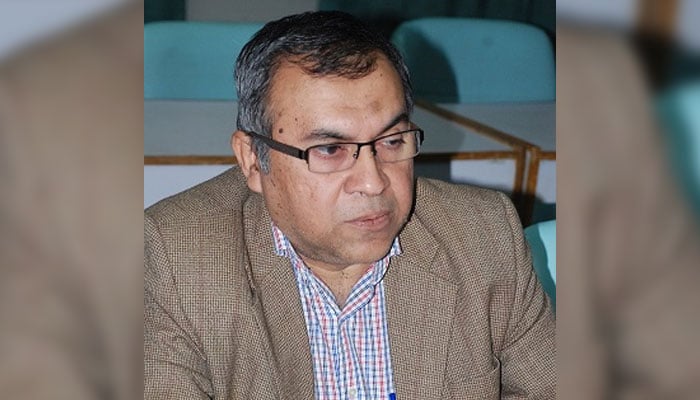
Civil society activists and human rights advocates from across Karachi gathered at a hotel on Saturday to honour Prof Dr Noman Ahmed on his recent appointment as the acting vice chancellor of the NED University of Engineering and Technology.
The reception, hosted by The Knowledge Forum, brought together prominent activists, academics and community leaders who paid glowing tribute to Dr Ahmed for his contributions to urban development and his longstanding support for civil society.
Speakers at the event underscored the urgent need for collective and sustained action to tackle Karachi’s deteriorating civic conditions and the growing climate crisis. “NED is a prestigious university that has played a pivotal role in shaping Karachi’s development—both through the technical expertise of its faculty and by creating opportunities for research and dialogue,” said a speaker. “It is critically important that such an institution is led by someone who not only understands the city’s complex realities, such as climate change and exclusionary development, but is also committed to action.”
The speaker added that with Prof Dr Ahmed, the NED University had a leadership that was deeply committed, nuanced and capable of nudging institutions towards a more pro-rights, pro-community and pro-environment direction.
Veteran human rights activist Anis Haroon, also a member from Sindh of the National Commission for Human Rights (NCHR), painted a grim picture of the city’s current state, citing prolonged power outages, skyrocketing inflation and worsening living standards.
“People who once ate a full loaf of bread now eat only a half. No city can prosper when its citizens are deprived of basic necessities,” she warned, adding that such economic strain could lead to further violence and instability.
Uzma Noorani, member of the Women’s Action Forum, reflected on the civil society’s legacy in Karachi, citing milestones such as the People's Resistance movement during the lawyers’ movement in 2007 and the Sahil Bachao Tehreek, which successfully challenged environmentally destructive development projects.
Amber Alibhai of the Shehri-CBE emphasised the importance of utilising technology and data to address urban challenges. “Civil society has built a robust body of data on Karachi’s issues over the past two decades. This is our strength. We must use this data to hold institutions accountable and push for citizen-centred reforms,” she said, criticising the government’s efforts to convert public parks into commercial spaces through public-private partnerships and limit public access to open spaces.
Environmental journalist Zofeen Ebrahim echoed the need for evidence-based approaches, noting that "Karachi's problems must be understood systematically — not dealt with haphazardly."
Kazi Khizar, vice chairperson of the Human Rights Commission of Pakistan, presented alarming statistics from Sindh’s education sector. He revealed that of 49,300 schools, 7,000 were without shelter, 18,000 operated in single rooms, and 10,000 had only two rooms.
Dr Raza Gardezi called out the fragmentation within the non-profit sector and urged the NGOs to unite and revisit their collective agenda. Yasir Hussain of the Climate Action Centre raised concerns over climate change impacts, particularly sea intrusion threatening agricultural land. He emphasised the need for monitoring the Climate Action Plan, particularly the design of its projects and how resources were allocated.
In his response, Dr Ahmed expressed gratitude to pioneering urban planners, including Dr Akhtar Hameed Khan, Arif Hasan, Tasneem Siddiqui and Perween Rehman. He emphasised the need for a permanent civil society platform beyond issue-specific initiatives to facilitate dialogue and catalyse civil society action on the city’s development challenges.
He recalled multiple initiatives by the civil society in the past, including collectives on the Lyari Expressway and others that facilitated the community’s voice in development plans. “It is important that civil society works in a coherent, long-term way so that it can use the capacities built over time for effective intervention in the city’s development.”
Pointing to the need for youth involvement in civil society’s work on the city’s development challenges, he stressed the need for civil society to broaden its approach towards youth and devise an engagement strategy for students.
“Students from not only social sciences department, but those from information technology also have meaningful solutions to contribute to the city’s challenges. Karachi’s civil society must think of ways to use their creative expressions and technical skills which are most certainly beneficial for civil society’s advocacy and resistance for the city development.”
The gathering highlighted both the challenges facing Karachi and the potential for unified civil society action to address the metropolitan area's complex urban problems through data-driven research, community and youth mobilisation.







-
 Kristi Noem Claims She Was ‘blindsided By ‘crossdressing’ News: Insider Talks Suspicion
 -
 Royal Expert Lifts Lid On Why Meghan Missed Queen Elizabeth II’s Final Moments
 -
 Lily Collins Marks Quiet Milestone As 14-month-old Daughter Tove Grows Fast
 -
 Cardi B Reveals Biggest Weakness And Fans Didn't See That Coming
 -
 World Autism Awareness Day: Celebrating Different Minds, Shaping A Shared Future
 -
 Hollywood Stars Hesitant To Work With Prince Harry, Meghan Markle: Here’s Why
 -
 Cher Makes Son Chaz Bono Question His Worth With 'cheap Power Move'
 -
 Brazil Approves Law Giving Separated Couples Joint Custody Of Pets
 -
 Princesses Beatrice And Eugenie Hit With Urgent Warning Over King Charles' Invitation
 -
 RAYE Unveils Why Her ‘every Blood Cell Is Exhausted’
 -
 From AI Self-preservation To ‘peer Preservation’: New Study Raises Alarm Over Hidden Risks
 -
 Princess Beatrice, Eugenie Receive Advice On Handling Andrew, Fergie Scandal
 -
 Inside Hugh Jackman And Deborra-lee Furness’ Troubles After Divorce: Why They Still Are Tied Together
 -
 European Space Agency To Negotiate With NASA On Future Lunar Missions
 -
 Hilary Duff's Psychic Sessions Get Creepy Because Of Ex Aaron Carter?
 -
 OpenAI Caught Funding Child AI Group Without Disclosure