
My imperfect postpartum
People sometimes gave me more respect, which is great part of our Pakistani culture
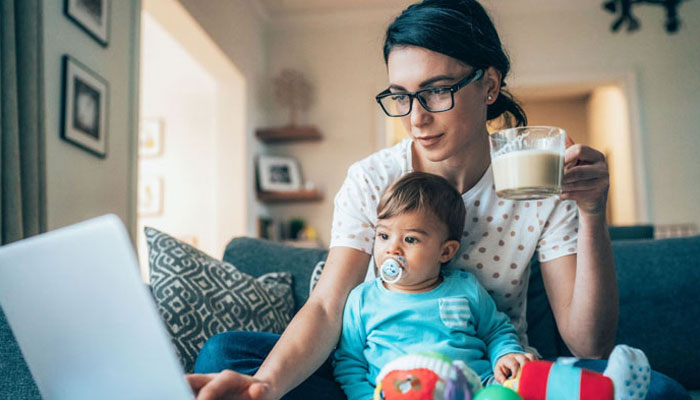
I became a mother earlier than most of my peers. When I went back to work, my daughter was just eight months old. She could recognise me. She would cry when I left, and honestly, sometimes so would I.
It wasn’t anything dramatic, but just sped up. A rushed goodbye in the morning, packing her things, half-prepping the lunch and driving off while feeding her oatmeal or omelette in the car. I’d drop her at my parents’ and then leave for work. I used to text midday asking for her photos or videos. I was breastfeeding and expressing milk during work hours and honestly it was awkward and always in hiding.
People sometimes gave me more respect, which is a great part of our Pakistani culture. We revere mothers, but it also puts you in a box. You’re seen as a mom first, not a human.
The postpartum blues were the worst. I had no glow, no maturity and honestly had the best family and spouse support anyone could have. Mostly, older women gave me a hard time, calling me a ‘banaspati’ (concocted, fake version) of a mom. I couldn’t verbalise that I didn’t feel fine inside. I felt like my body was rejecting me, and it took over a year to feel like myself again.
My social life basically disappeared. I didn’t have the time or the energy for it anymore. My workaround was to only meet friends outside the house because I had stopped inviting people in – both emotionally and physically. My home became my safe space, not something I kept ready to impress others.
I heard the judgment loud and clear. People think working moms don’t raise their kids right, that somehow your child is being deprived just because your mother is earning. It’s a lazy and cruel stereotype, but it is what it is. Over time, I have learned not to take things so seriously. I feel even getting bitter over it is a part of taking it seriously. Everyone has their flaws.
I was very lucky to have huge support from family and my spouse. And that’s something I’m genuinely grateful for. It’s one of the beautiful things about growing up in a collectivist culture that there’s often a safety net underneath you.
I tried coping in some ways, I joined some online mom groups, started writing poems in Urdu (something I had never done before and haven’t done since). I watched old Disney movies from my own childhood with my daughter. It comforted me and reminded me of who I was before all this change. I also became more active online. I still carry that with me today. Being present online gave me a sense of connection without needing to leave the house.
There were financial shocks too. I didn’t expect how expensive raising a child would be. My budget and my priorities changed. I had moments where I seriously questioned if staying home would have made more sense. But I also know I wouldn’t have been okay mentally if I weren’t working. There’s no perfect setup.
What really helped me was letting go of the idea of perfection. I outsourced birthday parties. I stopped trying to keep my house in perfect shape. My home was simple and minimal, and it still is. No fancy furniture or decoration and I couldn’t care less if the wall paint was getting old. There was a whole year where I had only two sarees, two shalwar kameez, and one pair of jeans with a shirt from the year before. I took all that money and spent more on food, protein powders, blood work, and vitamins than on clothes and decor, and I still do. I still don’t own a car because both my physical and mental health take a huge portion of my budget. These are investments for me.
I avoided people who thought being positive meant pretending things were fine all the time. Motherhood can be beautiful, but it can also be exhausting and lonely. You’re allowed to say and feel that.
One thing that helped was writing a page about who I am, not as a mom, not as a professional, not as a wife or daughter, not as someone with degrees – just me. What I liked, what I was good at, my views on morality and theology, etc.
If you’re in that phase right now, I won’t tell you it gets easier overnight. But time does change things. You get stronger in ways you didn’t expect. Some days will still be hard. But some days will feel lighter. And that’s enough.
And I’ll say it again: I was one of the privileged ones. I had support. If you don’t, and you’re still here trying, you’re doing something incredibly hard and incredibly brave.
The writer is an academic with a deep passion for education, philosophy and the cultural intricacies of human society. Her career is rooted in academic management, policymaking and research.







-
 'Buffy' Star Nicholas Brendon's Death Case Takes Massive Turn
 -
 FKA Twigs Takes Legal Stand Against Ex Shia LaBeouf
 -
 ‘Progressive’ Kate Middleton Snubs Outdated Royal Etiquette
 -
 Kylie Kelce Explains Why She Avoids Raising Kids With 'silver Spoon'
 -
 Meghan Markle Is Above Royal Family ‘empty Threats,’ Says Insider
 -
 Anne Hathaway Opens Up About 'defeated' Feeling As Working Mom
 -
 Shamed Andrew Should Testify In Epstein Case As ‘act Of Service’
 -
 What Really Happened Before Nicholas Brendon Was Found Dead At Home?
 -
 Sarah Ferguson Branded ‘most Famous Missing Person’ In UK Right Now
 -
 Why King Charles Does Not Need A Driving License? Expert Reveals
 -
 Did Graham Norton Really Sign NDAs For Taylor Swift’s Wedding?
 -
 ‘Polite’ King Charles Treats Staff Better Than ‘boorish’ Andrew
 -
 Princess Beatrice's Husband Raises Eyebrows With Deleted Instagram Post
 -
 Dua Lipa 'snubs' Priyanka Chopra
 -
 Will Taylor Frankie Paul Still Get Her 'Bachelorette' Salary?
 -
 'Harry Potter' Returns: First Glimpse Of HBO's New Series