
Experts concerned over weaponisation of narratives
Participants also discussed disinformation, technology-driven propaganda, and role of social media in fueling polarization
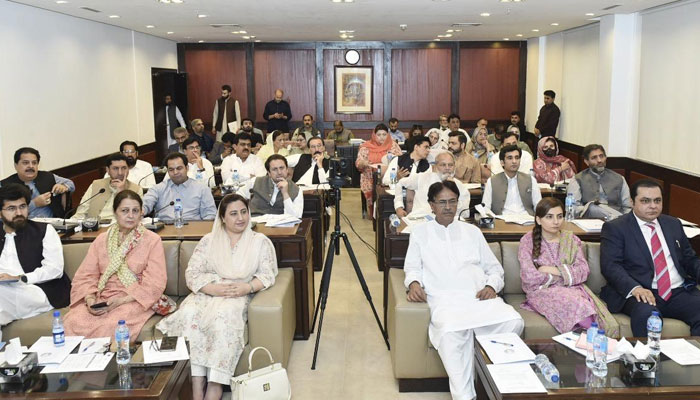
ISLAMABAD: Experts on Friday called for dialogue and structured discussions on de-escalation and cooperative diplomacy amid an era of disinformation and conflicts, as some expressed concern over weaponisation of narratives.
A consultative seminar focusing on conflict resolution, diplomacy, and the rule of law in Pakistan-United States relations was held at the Pakistan Institute for Parliamentary Services (PIPS) here. The event brought together parliamentarians, scholars and journalists to foster structured discussions on de-escalation, dialogue, and cooperative diplomacy in a world increasingly shaped by conflict, disinformation and identity-based politics.
Opening the session, Rida Qazi (advisor on Special Initiatives & PDU), underscored the need for creating formal, structured platforms to institutionalize diplomacy, bridging official and unofficial channels for dialogue. She stressed the urgency of engaging through mechanisms that balance traditional foreign policy with modern frameworks for peaceful conflict resolution.
Dr Joe Chitlik initiated the core discussion with a thematic presentation titled “The Art of Dialogue: Conflict Diplomacy in a Fractured World”. Drawing from her expertise in Alternative Dispute Resolution (ADR), Dr Chitlik explained the dangers of unchecked conflict, generational grievances, echo chambers, and identity politics. She advocated a culture of dialogue where disagreements are acknowledged without degenerating into destructive conflict.
The participants also discussed disinformation, technology-driven propaganda, and the role of social media in fueling polarization. Jam Saifullah and Zeeshan Khanzada expressed concern over the weaponization of narratives, particularly in South Asia, and urged stronger adherence to the international law.
The session also featured an exchange of views on the Indus Waters Treaty. Dr Chitlik noted the treaty’s ambiguity in dispute resolution mechanisms and highlighted the need for modern arbitration frameworks with defined timelines and third-party facilitation. She commended the constructive shift in Pakistan’s diplomatic posture, stating: “The international community has taken note of Pakistan’s restraint and resilience in the face of provocation. The choice to pursue dialogue over escalation has shaped a new narrative one where strength is defined by resilience and principle, not reaction.”
Responding to a question on structural imbalances and emerging global conflicts, Musadik Malik remarked: “In an increasingly polarized world, any country with integrity must resist hegemonic designs. Sustainable peace cannot be achieved through dominance, but through principled engagement.”







-
 Jake Paul Criticizes Bad Bunny's Super Bowl LX Halftime Show: 'Fake American'
 -
 Prince William Wants Uncle Andrew In Front Of Police: What To Expect Of Future King
 -
 Antioxidants Found To Be Protective Agents Against Cognitive Decline
 -
 Hong Kong Court Sentences Media Tycoon Jimmy Lai To 20-years: Full List Of Charges Explained
 -
 Coffee Reduces Cancer Risk, Research Suggests
 -
 Katie Price Defends Marriage To Lee Andrews After Receiving Multiple Warnings
 -
 Seahawks Super Bowl Victory Parade 2026: Schedule, Route & Seattle Celebration Plans
 -
 Keto Diet Emerges As Key To Alzheimer's Cure
 -
 Chris Brown Reacts To Bad Bunny's Super Bowl LX Halftime Performance
 -
 Trump Passes Verdict On Bad Bunny’s Super Bowl Halftime Show
 -
 Super Bowl 2026 Live: Seahawks Defeat Patriots 29-13 To Win Super Bowl LX
 -
 Kim Kardashian And Lewis Hamilton Make First Public Appearance As A Couple At Super Bowl 2026
 -
 Romeo And Cruz Beckham Subtly Roast Brooklyn With New Family Tattoos
 -
 Meghan Markle Called Out For Unturthful Comment About Queen Curtsy
 -
 Bad Bunny Headlines Super Bowl With Hits, Dancers And Celebrity Guests
 -
 Insiders Weigh In On Kim Kardashian And Lewis Hamilton's Relationship