SBP governor calls for simplified Sukuk process to deepen debt market
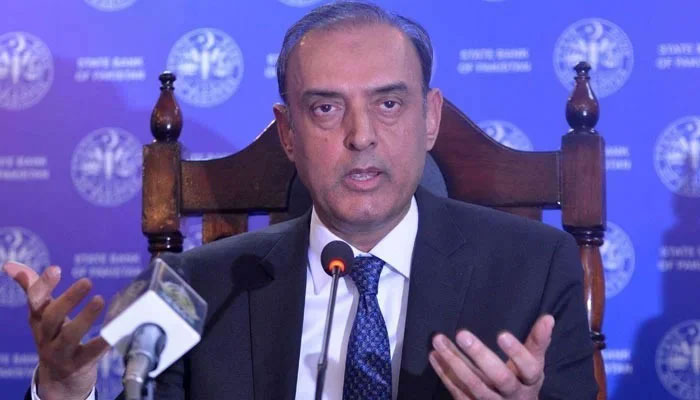
KARACHI: Pakistan’s central bank governor Jameel Ahmad on Tuesday emphasised the importance of simplifying the process for issuing new sukuk to help deepen the debt market and promote Islamic finance in the country.
The limited issuance of sukuk poses a major challenge to the promotion of Islamic finance, Ahmad said at the National Islamic Economic Forum conference 2025.“To overcome this hurdle, the banking industry, regulators and the government must work collaboratively to address the underlying issues. By doing so, they can facilitate the issuance of more sukuk, providing investors with new products that comply with Sharia principles,” he said.
This will help increase investment in the Islamic banking industry, leading to a greater share of Islamic banking within the overall banking sector, he added.“We are working to simplify the structure of sukuk, or Islamic bonds, and to ease the process of issuing new sukuk. This initiative aims to ensure that sukuk are not only Sharia-compliant but also meet the needs of the industry,” he said.
The central bank and the government are collaborating to transition public debt towards sukuk, he added.Ahmad’s comments followed the recent launch of Pakistan’s first sovereign domestic green sukuk, valued at Rs30 billion, on the Pakistan Stock Exchange. This sukuk aims to fund climate-resilient and renewable energy projects in the country.
Following the 26th constitutional amendment in October 2024, Pakistan’s economy and banking sector are required to be Sharia-compliant by 2028. The State Bank of Pakistan (SBP) Vision 2028 seeks to transform the conventional banking system into an Islamic banking system. This vision includes a detailed transformation plan, developed in consultation with all stakeholders.
He said that by March 2025, the Islamic banking assets reached Rs11.5 trillion, which accounted for 21.1 per cent of total banking assets. The Islamic banking deposits stood at Rs8.8 trillion, or 25.4 per cent of total banking deposits. The number of Islamic bank branches has also increased to over 8,000.
“While much work remains, we have made significant progress, and the share of Islamic banking is gradually increasing. However, Islamic banking institutions need to take additional measures to enhance their outreach,” Ahmad said.
Ahmad noted that Pakistan’s economy faced severe challenges in 2022-2023, primarily due to skyrocketing inflation and issues with the external account, influenced by high imports and debt payments. These two problems exerted considerable pressure on our economy. In response, the government and the SBP implemented several measures that have helped stabilise the economy. Inflation has eased to 0.3 percent in April, down from 0.7 percent the previous month, and it is expected to stabilise within the government’s medium-term target of 5-7 per cent. Interest rates, which had soared to a record high of 22 per cent, have now fallen to 11 per cent.
The external account has also shown improvement. During the fiscal year 2022, the current account deficit reached an all-time high of $17.5 billion. Thanks to various measures, it narrowed to $3.3 billion in FY23 and further reduced to $2.1 billion in FY24. Over the first ten months of the current fiscal year, Pakistan recorded a current account surplus of $1.9 billion. Consequently, foreign exchange reserves have started to improve. Even with external debt repayments, the SBP’s forex reserves -- which fell below $3 billion in early 2023 -- have risen to over $11 billion, achieved without taking loans.
“The positive impact on the economy will become evident in the coming days,” he said.He added that remittances from workers, which totalled $30.3 billion last year, are expected to reach nearly $38 billion in the current fiscal year. This increase of approximately $8 billion is driven by the hard work of our overseas workers and the freelancing community.
Global Islamic finance assets to surpass $7.5tr by 2028: Standard Chartered report
Global Islamic finance assets are expected to grow from $5.5 trillion in 2024 to $7.5 trillion by 2028, indicating the growing significance of Sharia-compliant finance globally, according to a report titled ‘Islamic Banking for Financial Institutions: Unlocking Growth Amidst Global Shifts’ published on Tuesday by Standard Chartered.
In 2024, according to the report, the Islamic finance industry surpassed $5 trillion in global assets -- a 12 per cent rise from 2023 and 43 per cent increase from 2020. Islamic banking accounts for over 70 percent of total Islamic finance assets, and assets projected to grow from $4 trillion in 2024 to $5.2 trillion by 2028. The Sukuk market is expected to expand from $971 billion to $1.5 trillion during this period.
CEO of Group Islamic Banking at Standard Chartered Khurram Hilal said: “Islamic finance is entering a new era defined by scale, sustainability and strategic integration. The projected 36 per cent increase in assets reflects strong fundamentals and global appetite for ethical and inclusive finance.”
The report provides financial institutions with insights covering the Islamic finance landscape and insights from the ‘Pulse of Islamic Banking’ client survey 2025. It examines growth drivers, regulatory developments and market expansion opportunities, whilst addressing challenges in regulation, liquidity and risk management. It also explores market oversight frameworks, innovation pathways, and environmental, social and governance (ESG) integration, supplemented by market spotlights featuring real-world solution case studies.







-
 How Princes William, Harry Were Caught In Early Royal Controversy Involving Charles
 -
 Prince Harry’s Absence Leaves Gap For Royal Family Among Young People
 -
 Karley Scott Collins Breaks Silence On Keith Urban Dating Rumours
 -
 Timothee Chalamet Is Still A 'normal Guy,' Says Kevin O'Leary
 -
 Henry Winkler Opens Up On His Special Bond With Adam Sandler: 'Filled With Warmth'
 -
 Bruce Springsteen Makes Strong Political Statement
 -
 Prince Harry Relationship With King Charles 'not Straightforward,' Says Expert
 -
 Truth Behind Jennifer Lopez's 'rude' Glambot Moment Laid Bare
 -
 Nicole Richie Still Loves This Makeup Trend From Her Teen Years
 -
 Meghan Markle Plans To Hide Behind Kids Over Return To UK
 -
 Dolly Parton Marks Major Milestone As State Governor Honors Her Legacy
 -
 Karley Scott Collins Reacts To Rumours Of Her Dating Keith Urban
 -
 Meghan Markle Sends Shockwaves With Promise Of Chaos: ‘Has The Power To Upset The Royals’
 -
 Jesy Nelson, Zion Foster Call It Quits Amid Twins' Heartbreaking Diagnosis: Source
 -
 What King Charles Told Princess Diana In Letter Before Wedding?
 -
 David Crosby Said This One Singer Had 'no Talent At All'