
Where things stand in the US-China trade war
BEIJING: The United States and China have agreed to slash tariffs on each other’s goods, easing a trade war that has upended global markets and supply chains worth hundreds of billions.
What has been announced?
Washington and Beijing announced on Monday they will cut import tariffs on each other’s goods by 115 percentage points for 90 days.
From Wednesday, the US will reduce duties on products from China to 30 per cent, and China will lower its levy on US imports to 10 per cent.
US President Donald Trump had previously slapped 145 per cent tariffs on most Chinese goods, with cumulative tolls on some products reaching a staggering 245 per cent.
Beijing had hit back with duties of 125 per cent on US goods.
The United States and China will also set up a mechanism for regular trade talks alternately in each country, or in an agreed third country, the joint statement said.
How did the talks go?
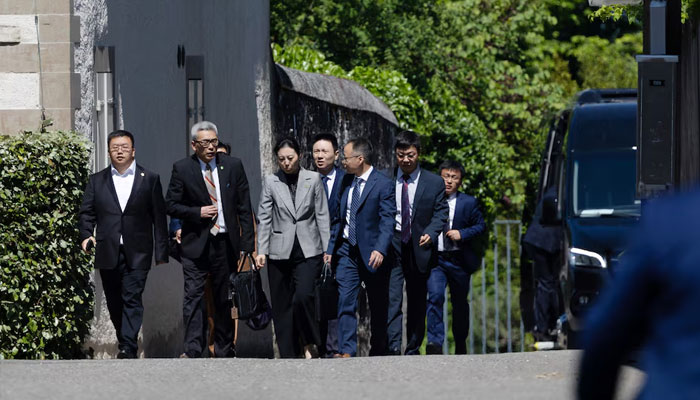
US Treasury Secretary Scott Bessent said discussions over the weekend with Chinese Vice Premier He Lifeng and international trade representative Li Chenggang had been “productive” and “robust”. He told reporters in Switzerland, where the talks took place, that “both sides showed a great respect”.
Beijing said the negotiations had yielded “substantial progress”, adding that the reductions served “the interest of the two countries and the common interest of the world”.
Its commerce ministry urged Washington to “keep working with China and completely correct the wrong practice of unilateral tariff rises”.
“It is hoped that the US will... maintain the healthy, stable and sustainable development of China-US economic and trade relations,” the ministry said.
How have markets reacted?
Global stock markets rallied on the announcement.
Tai Hui, Asia-Pacific chief market strategist at JP Morgan Asset Management, said the cuts were “larger than expected”, reflecting Washington and Beijing’s understanding of the impact of tariffs on global economic growth.
Wei Yao, chief Asia-Pacific economist at Societe Generale, said the reductions would bring “substantial relief” for both economies.
And ANZ Bank analysts predicted that “both sides will focus on setting up a trade template, and a final deal will be reached before the US’s 2026 mid-term election”.
However, Wang Wen, dean of the Chongyang Institute for Financial Studies at Renmin University of China, warned that the deal “does not mean the resolution of structural contradictions between China and the United States”.
Is the trade war over?
Far from it. The joint statement does not elaborate on what happens after the 90-day tariffs suspension.
“The US still has much higher tariffs on China than on other countries and still appears to be trying to rally other countries to introduce restrictions of their own on trade with China,” said Mark Williams, chief Asia economist at Capital Economics.
“In these circumstances, there is no guarantee that the 90-day truce will give way to a lasting ceasefire.”
The declaration also does not include sector-specific US tariffs on Chinese steel, aluminium and car imports.
China, meanwhile, has lodged complaints with the World Trade Organisation (WTO) against US “bullying” tactics.
And it has gone after US companies, scrapping orders for Boeing planes, probing Google for “anti-monopoly” violations, and adding fashion group PVH Corp -- which owns Tommy Hilfiger and Calvin Klein -- and biotech giant Illumina to a list of “unreliable entities”.
Beijing has also restricted exports of rare earth elements -- critical for making a wide range of products including semiconductors, medical technology and consumer electronics.


