
Business leaders disappointed by 100bps cut
KARACHI: The business community has described the 100 basis points (bps) cut in the policy rate by the central bank as falling short of expectations, despite a significant decline in inflation that, they say, justified a more substantial reduction.
The Monetary Policy Committee of the State Bank of Pakistan (SBP) reduced the policy rate by 100 bps to 11 per cent, effective May 6, 2025. While the move has been welcomed, particularly given sharply declining inflation driven by lower administered electricity prices and moderating food costs, it has been widely viewed as insufficient.
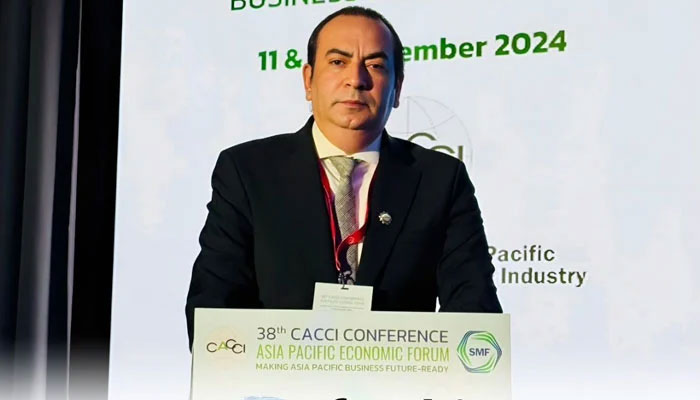
Atif Ikram Sheikh, president of the Federation of Pakistan Chambers of Commerce & Industry (FPCCI), said the business, industrial and trade sectors are disappointed with the monetary policy, which continues to maintain a high premium relative to the Consumer Price Index (CPI). The SBP’s decision fell far short of the 500bps cut proposed by the business community.
Sheikh pointed out that, according to government statistics, the CPI stood at just 0.3 per cent in April 2025, yet the policy rate remains at 11 per cent. “This reflects a premium of 1,070 basis points compared to inflation, which makes no economic sense,” he said. He explained that the FPCCI had called for a 500bps cut in a single step at Monday’s Monetary Policy Committee (MPC) meeting to align the policy rate with the goals of the Special Investment Facilitation Council (SIFC) and the prime minister’s vision for industrial development, import substitution and export growth.
Sheikh noted that the CPI is expected to remain between 0-3 per cent during May and June 2025. Therefore, he argued, the key policy rate should have been reduced to 7.0 per cent to meaningfully support economic growth. He also highlighted that international oil prices are forecast to stay low or stable in the coming months, a key factor in controlling inflation.
Muhammad Jawed Bilwani, president of the Karachi Chamber of Commerce & Industry (KCCI), described the SBP’s decision as a positive but inadequate step towards economic revival. Bilwani emphasised that the cut falls short of the business community’s expectations, which have long called for single-digit interest rates.
Ahmed Azeem Alvi, president of the SITE Association of Industry, also expressed disappointment, reiterating demands for deeper cuts. “A single-digit policy rate has been our long-standing demand, but it seems the business community is failing to make the government understand its importance,” he said.
Sheikh Umer Rehan, chairperson of the Pakistan Vanaspati Manufacturers Association (PVMA), welcomed the 100bps reduction but warned that while it offers some relief, it is insufficient to stabilise and revitalise Pakistan’s industrial sector.
Sheikh Muhammad Tehseen, president of the Federal B Area Association of Trade and Industries (FBATI), stressed that the policy rate should be reduced to single digits to improve export sector competitiveness and strengthen foreign exchange inflows. A lower rate would also boost local production, expand domestic business, generate government tax revenues and create jobs, he added.
Masood Pervaiz, president of the SITE Superhighway Association of Industry (SSHAI), said that while the reduction is better than nothing, it is unlikely to be enough to encourage industries to seek bank financing for production growth.
Meanwhile, Ahmed Chinoy, chairperson of the Pakistan Cloth Merchants Association (PCMA) and director of the Pakistan Stock Exchange, issued a statement reinforcing the business community’s stance. While acknowledging the SBP’s latest cut, Chinoy said it was below expectations. “We had anticipated a more aggressive cut to around 9.0 per cent, which would have significantly lowered borrowing costs, spurred private-sector credit growth, and provided stronger support to our manufacturing and export sectors,” he said.
Chinoy noted that while the 100bps reduction will marginally ease the cost of finance, it may not be sufficient to catalyse the investment and consumption needed for a robust recovery. He reiterated the business community’s call for further rate reductions in upcoming MPC meetings, clear forward guidance from the SBP to enable confident business planning, and complementary fiscal and structural reforms to enhance the impact of monetary easing. “The [PCMA] and broader business community stand ready to work with the [SBP] and other stakeholders to shape a policy environment that effectively addresses current challenges and propels Pakistan towards durable economic revival,” Chinoy said.






-
 King Charles Holds Emergency Meeting After Andrew Arrest: 'Abdication Is Not Happening'
 -
 Amazon Can Be Sued Over Sodium Nitrite Suicide Cases, US Court Rules
 -
 'Vikings' Star Mourns Eric Dane's Death
 -
 Patrick Dempsey Reveals Eric Dane's Condition In Final Days Before Death
 -
 'Heartbroken' Nina Dobrev Mourns Death Of Eric Dane: 'He'll Be Deeply Missed'
 -
 Andrew Mountbatten-Windsor’s Arrest: What Happened When A Royal Was Last Tried?
 -
 Alyssa Milano Expresses Grief Over Death Of 'Charmed' Co-star Eric Dane
 -
 Prince William, Kate Middleton Camp Reacts To Meghan's Friend Remarks On Harry 'secret Olive Branch'
 -
 Daniel Radcliffe Opens Up About 'The Wizard Of Oz' Offer
 -
 Channing Tatum Reacts To UK's Action Against Andrew Mountbatten-Windsor
 -
 Brooke Candy Announces Divorce From Kyle England After Seven Years Of Marriage
 -
 Piers Morgan Makes Meaningful Plea To King Charles After Andrew Arrest
 -
 Sir Elton John Details Struggle With Loss Of Vision: 'I Can't See'
 -
 Epstein Estate To Pay $35M To Victims In Major Class Action Settlement
 -
 Virginia Giuffre’s Brother Speaks Directly To King Charles In An Emotional Message About Andrew
 -
 Reddit Tests AI-powered Shopping Results In Search