
Pakistan’s diabetes expenditure rises to Rs760bn amid surge in cases
Pakistan’s per-person spending on diabetes care remains one of the lowest in the world
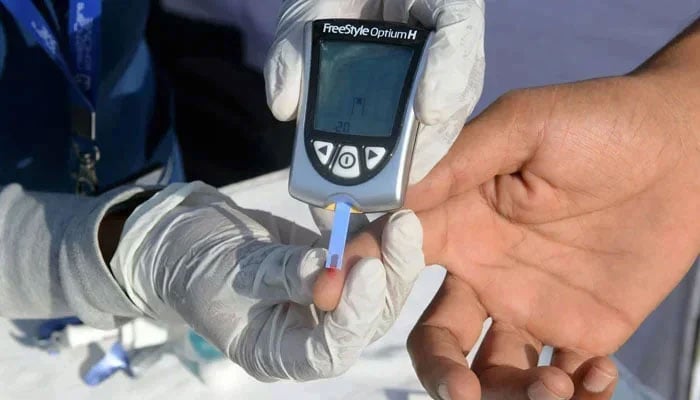
KARACHI: Pakistan’s annual spending on diabetes care has risen from 2.6 billion dollars to 2.7 billion dollars over the past four years, according to the latest International Diabetes Federation (IDF) Diabetes Atlas 2025, meaning the country is now spending around Rs760 billion each year on managing diabetes -- a huge burden on the healthcare system and the economy.
The rise in expenditure comes as the number of diabetics continues to surge, the latest IDF report reveals, showing that Pakistan now has 34.5 million adults aged between 20 and 79 living with diabetes, making it the country with the fourth-highest number of diabetics in the world after China, India, and the United States.
The situation is expected to worsen dramatically, with projections indicating that the number of diabetics in Pakistan could rise to 70.2 million by 2050 if urgent action is not taken.
Despite this alarming increase, Pakistan’s per-person spending on diabetes care remains one of the lowest in the world. The average expenditure is just 79 dollars per diabetic patient annually, leaving many without proper treatment and pushing thousands into catastrophic healthcare costs.
The IDF report also shows that Pakistan has the highest age-standardised diabetes prevalence rate globally, standing at 31.4 percent. This means that nearly one in every three adults in the country is living with the disease. In comparison, the global prevalence rate is significantly lower.
A major concern highlighted by the report is the high percentage of undiagnosed diabetes cases. About 26.9 percent of Pakistan’s diabetics — nearly 9.3 million people — are unaware that they have the disease. This silent burden increases the risk of severe complications such as heart disease, kidney failure, amputations, and blindness, further straining an already overburdened health system.
Diabetes is also a major cause of deaths in the country, accounting for an estimated 230,000 fatalities annually. Additionally, the IDF Atlas warns about the growing incidence of hyperglycaemia in pregnancy in Pakistan, with one in five live births now affected by high blood sugar levels during pregnancy, putting both mothers and babies at risk of long-term health problems.
Renowned diabetologist and Secretary General of the Diabetes Association of Pakistan (DAP), Prof. Dr. Abdul Basit, said that although Pakistan now ranks first in the world for diabetes prevalence, both the government and private sectors are actively working to minimise the burden of the disease.
He said that in this regard, the government has rolled out a PC-1 worth Rs6.8 billion to support a national screening and diagnosis programme for adult Pakistanis to detect diabetes and related non-communicable diseases at an early stage.
Prof. Basit emphasised that the economic burden of diabetes can only be reduced through early screening, timely diagnosis, and the strengthening of primary healthcare. “Patients should be screened and treated at the primary care level, and multiple strategies must be employed, including the promotion of lifestyle medicine, reduction in the consumption of sugary drinks and ultra-processed foods, and improvement in maternal and child health by working with multiple stakeholders,” he said.
He also pointed out that under efforts led by the DAP, four Pakistani organisations have now been officially recognised by the International Diabetes Federation (IDF), including the Primary Care Diabetes Association, the Pakistan Endocrine Society, the National Association of Diabetes Educators of Pakistan (NADEP), and the Dilawar Hussain Foundation.
He also welcomed the election of Ms. Irum Ghafoor as the first elected Vice President of the International Diabetes Federation (IDF) from Pakistan, terming it a major achievement for the country and a positive sign for improving diabetes care and management nationwide.
It is worth mentioning here that some private sector organisations are also running projects, such as Discovering Diabetes, which is helping to identify undiagnosed patients and link them to diabetes care centres and clinics across the country.







-
 King Charles Lands In The Line Of Fire Because Of Andrew Mountbatten-Windsor
 -
 Denise Richards Doubles Down On Abuse Claims Against Ex Husband Aaron Phypers Amid Show Return
 -
 Russia Set To Block Overseas Crypto Exchanges In Sweeping Crackdown
 -
 Gwyneth Paltrow Reveals Deep Personal Connection With Kate Hudson
 -
 Prince Harry, Meghan Markle’s Game Plan For Beatrice, Eugenie: ‘Extra Popcorn For This Disaster’
 -
 OpenAI To Rollout AI Powered Smart Speakers By 2027
 -
 Is Dakota Johnsons Dating Younger Pop Star After Breakup With Coldplay Frontman Chris Martin?
 -
 Hilary Duff Tears Up Talking About Estranged Sister Haylie Duff
 -
 US Supreme Court Strikes Down Trump’s Global Tariffs As 'unlawful'
 -
 Kelly Clarkson Explains Decision To Quit 'The Kelly Clarkson Show'
 -
 Inside Hilary Duff's Supportive Marriage With Husband Matthew Koma Amid New Album Release
 -
 Daniel Radcliffe Admits To Being Self Conscious While Filming 'Harry Potter' In Late Teens
 -
 Director Beth De Araujo Alludes To Andrew's Arrest During Child Trauma Talk
 -
 'Harry Potter' Alum Daniel Radcliffe Gushes About Unique Work Ethic Of Late Co Star Michael Gambon
 -
 Video Of Andrew 'consoling' Eugenie Resurfaces After Release From Police Custody
 -
 Japan: PM Takaichi Flags China ‘Coercion,’ Pledges Defence Security Overhaul