
Money, power, violence in high-stakes Philippine elections
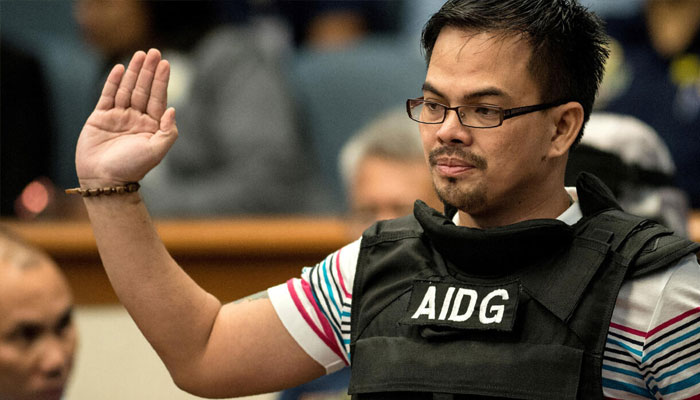
MANILA: Philippines election hopefuls like mayoral candidate Kerwin Espinosa have to ask themselves whether the job is worth taking a bullet. The country´s elections commission, Comelec, recorded 46 acts of political violence between January 12 and April 11, including the shooting of Espinosa. At a rally this month, someone from the crowd fired a bullet that went through his chest and exited his arm, leaving him bleeding but alive. Others have been less lucky. A city council hopeful, a polling officer and a village chief were among those killed in similar attacks in the run-up to mid-term elections on May 12. Comelec said “fewer than 20” candidates have been killed so far this campaign season, which it notes is a drop. “This is much lower, very low compared to the past,” commission spokesperson John Rex Laudiangco told AFP, citing a tally of about 100 deaths in the last general election. Analysts warned that such violence will likely remain a fixture of the Philippines´ political landscape. The immense influence of the posts is seen as something worth killing for. Holding municipal office means control over jobs, police departments and disbursements of national tax funds, said Danilo Reyes, an associate professor at the University of the Philippines´ political science department. “Local chief executives have discretion when it comes to how to allocate the funding, which projects, priorities,” he said. Rule of law that becomes weaker the farther one gets from Manila also means that regional powerbrokers can act with effective impunity, said Cleve Arguelles, CEO of Manila-based WR Numero Research. “Local political elites have their own kingdoms, armed groups and... patronage networks,” he said, noting violence is typically highest in the archipelago nation´s far north and south. “The stakes are usually high in a local area where only one family is dominant or where there is involvement of private armed groups,” Arguelles said. “If you lose control of... city hall, you don´t just lose popular support. You actually lose both economic and political power. In the absence of strong institutions to mediate disagreements, Reyes said, “confrontational violence” becomes the go-to.
Espinosa was waiting for his turn to speak at a campaign stop in central Leyte province on April 10 when a shooter emerged from the crowd and fired from about 50 metres (164 feet) away, according to police. Police Brigadier General Jean Fajardo told reporters this week that seven police officers were “being investigated” as suspects.







-
 Hilary Duff’s Son Roasts Her Outfit In New Album Interview
 -
 Alexandra Daddario, Andrew Form Part Ways After 3 Years Of Marriage
 -
 Eric Dane Rejected Sex Symbol Label
 -
 Avan Jogia Says Life With Fiancee Halsey Feels Like 'coming Home'
 -
 Kate Middleton's Role In Handling Prince William And Harry Feud Revealed
 -
 Tucker Carlson Says Passport Seized, Staff Member Questioned At Israel Airport
 -
 David, Victoria Beckham Gushes Over 'fiercely Loyal' Son Cruz On Special Day
 -
 Taylor Swift Made Sure Jodie Turner-Smith's Little Girl Had A Special Day On 'Opalite' Music Video Set
 -
 Eric Dane Says Touching Goodbye To Daughters Billie And Georgia In New Netflix Documentary
 -
 Channing Tatum Reveals What He Told Daughter After Violent Incident At School
 -
 King Charles Lands In The Line Of Fire Because Of Andrew Mountbatten-Windsor
 -
 Denise Richards Doubles Down On Abuse Claims Against Ex Husband Aaron Phypers Amid Show Return
 -
 Russia Set To Block Overseas Crypto Exchanges In Sweeping Crackdown
 -
 Gwyneth Paltrow Reveals Deep Personal Connection With Kate Hudson
 -
 Prince Harry, Meghan Markle’s Game Plan For Beatrice, Eugenie: ‘Extra Popcorn For This Disaster’
 -
 OpenAI To Rollout AI Powered Smart Speakers By 2027