
Pakistan needs diversified trade approach
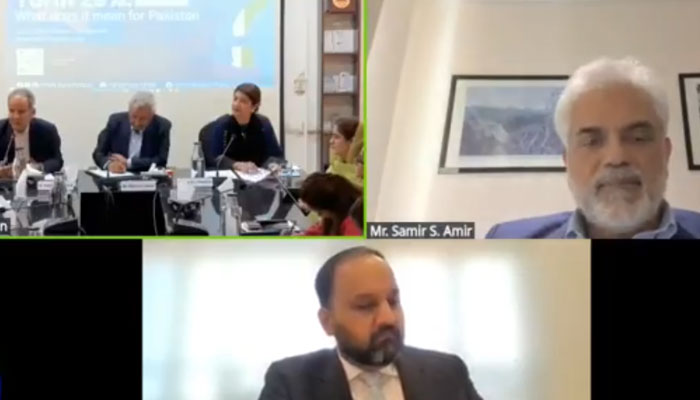
Islamabad:Dr Manzoor Ahmed, a veteran in trade and customs, tracing the history of US tariff policy has warned that the current global environment requires bold recalibration.
Dr Manzoor was addressing policy seminar on ‘Tariff 29%: what does it mean for Pakistan?’ organised here by Sustainable Development Policy Institute (SDPI). Dr Manzoor said that Pakistan's narrow textiles dominated export base leaves it vulnerable. Our over-reliance on protectionist policies and outdated SROs must be revisited. We need free and preferential trade agreements, especially with the US, He stressed that Pakistan’s exports make up only 10% of GDP, in stark contrast to Vietnam’s 100% and that international trade contributes over 40% of Pakistan’s revenue highlighting the urgency for reforms.
Dr Sajid Amin Javed, deputy executive director, SDPI, emphasised the critical timing of the dialogue to assess whether the tariff is a threat or an opportunity and what needs to be done to mitigate immediate impacts while preparing for long-term structural shifts.
He added that the 29% tariff, part of the Trump administration’s broader reciprocal tariff regime affecting over 180 countries, is especially damaging for Pakistan, whose exports to the US account for 19% of its total exports, with textiles alone making up over 70% of that share. Although lower than tariffs on Bangladesh (36%) and Vietnam (46%), Pakistan's rate is higher than India's 27%, making the trade environment highly competitive.
Dr. Aadil Nakhoda of IBA highlighted the escalating trading costs and the lack of priority for textile products in US trade talks, calling for modernisation and technological integration in Pakistan’s exports. He said that Vietnam’s electronics sector is an example. Pakistan must shift towards a broader export mix including agriculture, services and technology.
M Hassan Shafqaat, CEO, Pakistan Textile Council, called the tariff regime both a threat and a potential opportunity. He suggested we must negotiate with the US, provide compensation where needed and explore relocating production from countries hit harder by tariffs to Pakistan. Plastics, leather and automobiles are sectors that can attract foreign investment in manufacturing.
He also recommended tagging products as ‘Originated in US’ to reduce duties intensifying diplomatic efforts, engaging institutions like the WTO and forming new regional alliances. Lastly, he advised exploring the US tariff order’s annexed duty-free lists for potential benefits.
Samir S Amir of Pakistan Business Council noted inefficiencies in Pakistan’s manufacturing sector, citing high yarn waste in towel production and low per-unit apparel prices. Muhammad Suleman Khan, Director, Tariff Policy, Ministry of Commerce, assured that the government is actively evaluating the impact and working on strategic responses.


