
Minister promises resolution of medical devices’ registration deadlock
HDAP Chairman notes Drap had halted registration process, citing need for federal cabinet approval
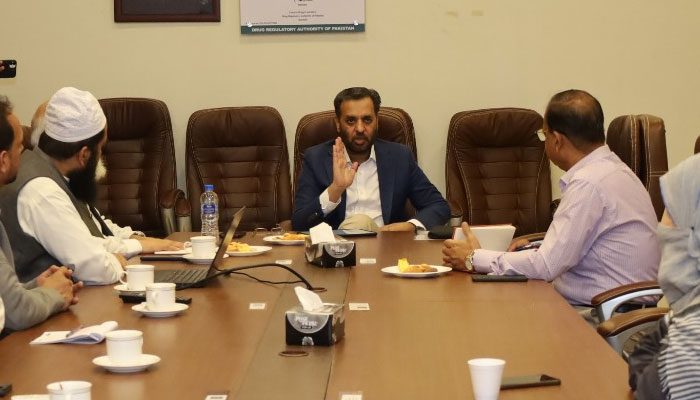
KARACHI: Federal Health Minister Syed Mustafa Kamal has assured the Healthcare Devices Association of Pakistan (HDAP) of resolving the deadlock over the registration of medical devices within next few days, raising hopes for an end to the crisis that has disrupted the supply of critical healthcare equipment across the country.
Describing the issue as a “complex and long-standing challenge”, the minister pledged taking urgent administrative steps to prevent further delays in medical devices registration process and to ensure uninterrupted access to essential health technologies in both public and private healthcare facilities.
The assurance came during a high-level meeting at the Central Drug Testing Laboratory in Karachi, where Kamal met with a delegation of the HDAP office-bearers. The delegation was led by HDAP’s former chairman Masood Ahmed and included current Chairman Syed Omer Ahmed, Senior Vice Chairman Shahan Irshad, former chairman Dr Zaffar Hashmi, and former vice chairman Abid Maniyar.
During the meeting, the HDAP representatives outlined the mounting regulatory difficulties faced by the medical devices sector, particularly the urgent requirement for an extension in the exemption period under the Medical Devices Rules (MDR) 2017.
“The Drug Regulatory Authority of Pakistan (Drap) claims to have processed hundreds of registration applications, but the certificates are not being issued, which has led customs authorities to withhold shipments,” the HDAP representatives informed the minister.
They further told him that the Drap had earlier asked the HDAP not to submit registration applications for Class A and B medical devices due to a shortage of human resources and insufficient capacity to handle a large number of applications.
“The Drap had also promised us that registration deadlines would be extended to support the industry, but they are now backtracking on those commitments,” said HDAP Chairman Omer Ahmed.
The delegation warned that failure to extend the deadline could spark a national health crisis, with over 7,000 registration applications still pending. Ahmed noted that the Drap had halted the registration process, citing the need for federal cabinet approval. He, however, added that the lack of clarity and progress had left the market in limbo, impacting importers and healthcare service providers alike.
He stressed that delays in processing could result in serious shortages of life-saving equipment used in diagnostics, surgeries, ICUs, and patient monitoring, especially in hospitals across the country.
The HDAP team also raised concerns about the “lack of transparency” in Drap’s regulatory operations, pointing out that recent Medical Device Board (MDB) meetings had not been followed by the publication of agendas or minutes. They also challenged the Drap’s claims of expedited processing, highlighting that application turnaround times still average between three to four years, with little sign of acceleration.
The delegation urged the government to align the country’s regulatory framework with global best practices, citing the European Union’s MDR/IVDR transition period, which has been extended through 2027–28. They proposed adopting a more pragmatic approach that includes acceptance of international certifications such as CE and FDA approvals, and recognition of Letters of Authorisation (LoAs), to simplify the registration process.
The minister appreciated the HDAP’s input and acknowledged the industry’s critical role in sustaining the country’s healthcare infrastructure. He assured the delegation that the matter would be addressed on a fast-track basis and that all necessary steps would be taken to ensure the continued supply of vital medical devices.
Reiterating support for the health ministry, the HDAP delegation pledged to work in collaboration with both the Ministry of National Health Services and the Drap in order to create a regulatory environment that not only meets global standards but also fosters local manufacturing and supports long-term policy development. The association also expressed willingness to help enhance institutional capacity and transparency in future regulatory efforts.
As Pakistan continues to grapple with healthcare and economic challenges, stakeholders see resolution of this regulatory bottleneck as vital to ensuring uninterrupted medical care and protecting public health across the country.




-
 Camila Mendes Reveals How She Prepared For Her Role In 'Idiotka'
 -
 China Confirms Visa-free Travel For UK, Canada Nationals
 -
 Inside Sarah Ferguson, Andrew Windsor's Emotional Collapse After Epstein Fallout
 -
 Bad Bunny's Star Power Explodes Tourism Searches For His Hometown
 -
 Jennifer Aniston Gives Peek Into Love Life With Cryptic Snap Of Jim Curtis
 -
 Prince Harry Turns Diana Into Content: ‘It Would Have Appalled Her To Be Repackaged For Profit’
 -
 Prince William's Love For His Three Children Revealed During Family Crisis
 -
 Murder Suspect Kills Himself After Woman Found Dead In Missouri
 -
 Sarah Ferguson's Plea To Jeffrey Epstein Exposed In New Files
 -
 Prince William Prepares For War Against Prince Harry: Nothing Is Off The Table Not Legal Ways Or His Influence
 -
 'How To Get Away With Murder' Star Karla Souza Is Still Friends With THIS Costar
 -
 Pal Reveals Prince William’s ‘disorienting’ Turmoil Over Kate’s Cancer: ‘You Saw In His Eyes & The Way He Held Himself’
 -
 Poll Reveals Majority Of Americans' Views On Bad Bunny
 -
 Wiz Khalifa Thanks Aimee Aguilar For 'supporting Though Worst' After Dad's Death
 -
 Man Convicted After DNA Links Him To 20-year-old Rape Case
 -
 Royal Expert Shares Update In Kate Middleton's Relationship With Princess Eugenie, Beatrice