
PTI’s dilemma
Some believe internal discord is deliberate strategy by Imran himself to prevent any alternative leadership from emerging
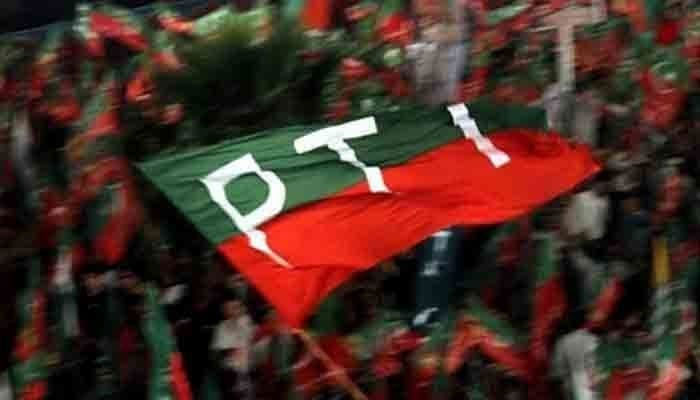
The PTI faces a crisis of credibility, coherence and internal unity as infighting among its ranks threatens to erode what remains of its political capital. The recent move by the party’s Internal Accountability Committee (IAC) to investigate former Khyber Pakhtunkhwa finance and health minister Taimur Saleem Jhagra has opened a Pandora’s box of accusations, denials and political intrigue that goes far beyond an isolated case of alleged mismanagement. The IAC has accused Jhagra of serious financial irregularities, including a staggering Rs36 billion reportedly withdrawn from the Pension and Gratuity Account — money that was apparently never recovered. The report also flags governance failures, irregular appointments, and procurement violations. Jhagra, for his part, has rejected all charges, calling the inquiry politically motivated and a smear campaign orchestrated by rival factions within the party.
This feud, now spilling into the public domain, is being seen as a sign of a deeper malaise in the PTI’s ranks: a party consumed more by internal power struggles than by the cause it claims to champion. What makes the situation more damning is that this is not the first time allegations of corruption have surfaced against PTI leaders. From the Bus Rapid Transit (BRT) Peshawar fiasco and the Malam Jabba scandal to the Billion Tree Tsunami project and the Usman Buzdar-Farah Gogi-Bushra Bibi nexus — the party has faced repeated corruption allegations. Yet, action has remained elusive. Critics argue, and rightly so, that the PTI’s much-vaunted anti-corruption stance has always been more rhetorical than real. The party’s selective accountability and protection of its own raise serious questions about its commitment to transparency and good governance. Even the party’s internal democratic processes have come under scrutiny. When the controversial intraparty elections were flagged by the chief election commissioner, Imran Khan chose to attack the institution rather than hold his own party members accountable. Such reactions only reinforce the notion that the PTI is unwilling — or perhaps unable — to introspect or course-correct. Adding to the party’s troubles is the perception that its current leadership is more focused on jostling for power than securing the release of its incarcerated founder. Some believe the internal discord is a deliberate strategy by Imran Khan himself to prevent any alternative leadership from emerging. Others suggest the power vacuum has been hijacked by self-interested players unwilling to relinquish the perks and privileges of leadership.
Whatever the truth may be, this disunity has rendered the PTI a fragmented and ineffective opposition force. It is no surprise then that efforts to revive a grand opposition alliance — akin to the Pakistan Democratic Movement (PDM) — have stalled. If the largest opposition party is unable to put its house in order, it undermines any chance of mounting a meaningful challenge to the ruling coalition. In fact, it plays directly into the hands of the government, which now faces little resistance from an opposition distracted by its own dysfunction. The PTI must confront an uncomfortable reality: it cannot continue to brandish the banner of reform while mirroring the very practices it once decried. If it is to remain politically relevant, the party must undergo genuine accountability, resolve internal power struggles, and prioritise a unified strategy — one that goes beyond slogans and actually addresses the expectations of its supporters. In its current form, the PTI is a cautionary tale of what happens when rhetoric overtakes reform, and ambition trumps accountability. It is time for the party to rethink its strategy.







-
 Kylie Kelce Explains Why She Avoids Raising Kids With 'silver Spoon'
 -
 Meghan Markle Is Above Royal Family ‘empty Threats,’ Says Insider
 -
 Anne Hathaway Opens Up About 'defeated' Feeling As Working Mom
 -
 Shamed Andrew Should Testify In Epstein Case As ‘act Of Service’
 -
 What Really Happened Before Nicholas Brendon Was Found Dead At Home?
 -
 Sarah Ferguson Branded ‘most Famous Missing Person’ In UK Right Now
 -
 Why King Charles Does Not Need A Driving License? Expert Reveals
 -
 Did Graham Norton Really Sign NDAs For Taylor Swift’s Wedding?
 -
 ‘Polite’ King Charles Treats Staff Better Than ‘boorish’ Andrew
 -
 Princess Beatrice's Husband Raises Eyebrows With Deleted Instagram Post
 -
 Dua Lipa 'snubs' Priyanka Chopra
 -
 Will Taylor Frankie Paul Still Get Her 'Bachelorette' Salary?
 -
 'Harry Potter' Returns: First Glimpse Of HBO's New Series
 -
 Ryan Gosling Credits His Kids For Key Detail In New Role
 -
 Prince William, Kate Middleton Mark 'historic Moment'
 -
 Why Roberts Pattinson Says Couples 'ruin' Their Big Day Amid Suki Waterhouse Wedding Rumors?