
Prof Syed Haroon Ahmed, pioneer in psychiatry, passes away
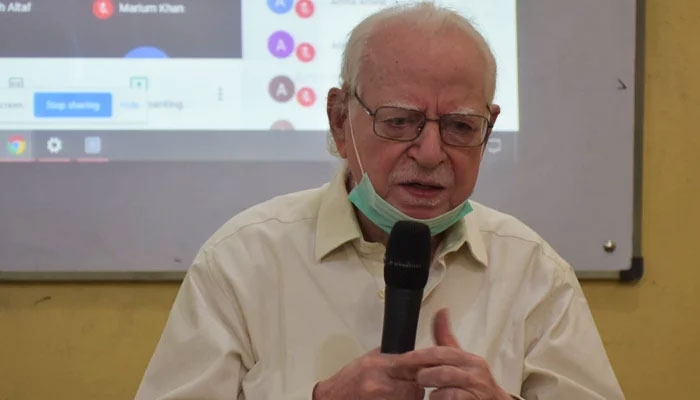
Prof Syed Haroon Ahmed breathed his last on Thursday at the age of 93. According to Pakistan Association for Mental Health (PAMH) President Dr Syed Ali Wasif, Prof Ahmed was a pioneer in psychiatry, a dedicated mentor and a tireless advocate for mental health.
Born in 1931 in the historic city of Jaunpur, Uttar Pradesh, Ahmed embarked on his eternal journey on April 3, 2025, after a prolonged illness following a post-Covid stroke. He leaves behind his beloved family, dear friends, countless well-wishers and an enduring legacy that transformed psychiatric care in Pakistan.
From an early age he was committed to progressive thought and social change. In 1950 he founded the Democratic Students Federation, marking the beginning of a lifelong dedication to advocacy. After earning his MBBS in 1953 he pursued advanced psychiatric training at the Maudsley Hospital, UK.
Upon returning to Pakistan, he played a pivotal role in shaping modern psychiatry. As a senior psychiatrist at the Jinnah Hospital’s Ward 20 he contributed significantly to the development of psychiatric care.
He co-founded the Pakistan Psychiatric Society in 1972, and in 1965 had established the PAMH, a milestone that enabled him to extend care to those most in need.
In 1995 PAMH launched the Institute of Behavioural Sciences in Karachi, a premier psychiatric facility offering state-of-the-art treatment and academic training. Prof Ahmed was also a pioneer of community psychiatry, championing the concept with the slogan ‘Mental Health at the Doorstep of the Community’.
Beyond his contributions to mental health, he was a fervent advocate for peace and human rights. As president of the International Physicians for the Prevention of Nuclear War, he was one of the few courageous voices to campaign against Pakistan’s nuclear armament in 1998.
His dedication to human rights was further reflected in his long-standing association with the Human Rights Commission of Pakistan. One of his most significant contributions was in mental health law reform. Recognising the outdated nature of Pakistan’s psychiatric legislation, he spearheaded efforts to replace the archaic Lunacy Act, 1912.
His perseverance led to the passage of the Sindh Mental Health Act, 2013, the first law in Pakistan to provide safeguards for individuals with psychiatric illnesses, including those accused under blasphemy laws. His relentless advocacy ensured its enactment, leaving an indelible mark on the country’s legal framework.
He is survived by his devoted wife Anis Haroon, his children Nadia, Adnan and Irfan, and a vast network of friends, disciples, mentees, and psychiatrists who continue his mission in Pakistan and across the world. His life was a testament to service, compassion and justice. While his absence leaves an irreplaceable void, his legacy will continue to illuminate the path for generations to come.







-
 24 Dead In Bangladesh After Bus Plunges Into River During Ferry Boarding
 -
 Dana Carvey Recalls Doing 'SNL' Creator Lorne Michaels' Impersonation: 'My First Reaction Is Terror'
 -
 Everything We Know About Taylor Swift And Travis Kelce Honeymoon Plans
 -
 Metformin’s Hidden Brain Pathway Uncovered After 60 Years
 -
 How Dogs Became Man’s Best Friend 15,800 Years Ago: New Study Reveals
 -
 Prince Harry And Meghan Markle Respond To Major Meta And YouTube Ruling
 -
 Why Josh Duhamel Believes His Fans Will Be 'alienated' If He Talks Politics
 -
 Melania Trump Appears With Humanoid Robot At White House
 -
 ‘Addictive By Design’: Meta, YouTube Found Liable In Historic Verdict
 -
 Bruce Willis' Mom Marlene Makes Another Family Amid Son's Battle With Dementia
 -
 Roblox Safety Warning For Parents: Developer Says Kids Need 24/7 Monitoring
 -
 Chelsea Handler Explains Why She Dates Younger Men
 -
 Chappell Roan's Security Guard Takes 'full Responsibility' For His Interaction With Jorginho's Daughter?
 -
 Rosalía Cuts Concert Short Over Sudden Illness, Fans Shocked
 -
 'Buffy' Star Nicholas Brendon's Death Case Takes Massive Turn
 -
 FKA Twigs Takes Legal Stand Against Ex Shia LaBeouf