
PSA criticises lack of consultation on net metering regulation
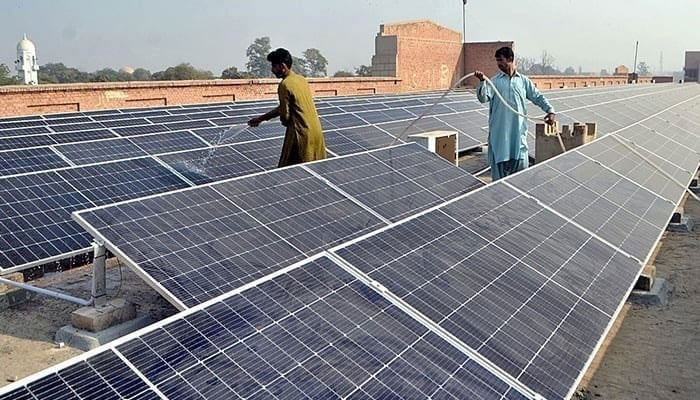
LAHORE: The Pakistan Solar Association (PSA) has warned that the introduction of new net metering regulations will significantly impact the solar industry, particularly affecting the residential and small to medium-sized enterprise (SME) sectors in Pakistan.
The new tariff regime for solar net metering is expected to change the dynamics of renewable energy adoption, with a shift towards hybrid, battery-powered systems over on-grid installations, said Chairman of PSA Waqas Moosa on Monday.
The proposed amendments to the Net Metering Regulations aim to extend the payback period for on-grid systems to approximately three years, compared to the current average of 1.5 years. In contrast, hybrid systems that integrate solar and battery technology -- particularly those using advanced lithium-ion batteries -- already offer a payback period of under three years, he explained. With continuous advancements in battery technology, this period is likely to shorten even further.
“As a result, we anticipate a significant increase in the number of customers opting for solar and battery solutions in the near future,” Moosa added.
However, he cautioned that this shift could have long-term negative consequences for the financial health of the country’s power sector. With a substantial gap between the export rate of Rs 10 per unit and the Rs 50-60 savings from storing excess solar energy in batteries for personal use, more consumers will be incentivised to invest in battery storage. As self-storage gains popularity, an increasing number of users may choose to remain off-grid for extended periods, reducing demand for distribution companies (Discos), the PSA warned. This transition could lead to higher electricity prices for the remaining consumers, as fixed costs would be spread across a shrinking number of grid-connected units.
“This scenario will further burden lower-income consumers, whom the proposed changes claim to protect,” Moosa maintained. He also criticised the unilateral nature of the decision, arguing that implementing such changes without consulting stakeholders -- particularly industry players -- could destabilise the market. The supply of equipment cannot be adjusted overnight, he pointed out, which could result in financial losses for traders holding on-grid equipment while driving up prices for hybrid systems and battery stocks due to sudden demand shifts. “Such volatility is never beneficial for any industry, and ultimately, consumers bear the cost of artificially induced inefficiencies,” he said.
Moosa stressed that in other countries, similar regulatory changes are announced with at least six months’ advance notice to allow the market to adapt. “Pakistan should follow the same approach to ensure a smooth transition rather than imposing drastic amendments without adequate preparation,” he asserted.
He also condemned the government’s marketing campaign, which portrays net metering customers in a negative light and blames them for the power sector’s challenges. “This is misleading at best and a deliberate misdirection from the real structural flaws in the power sector,” he said. The campaign fails to acknowledge the significant benefits of net metering customers, including hidden savings for Discos, environmental advantages, reduced reliance on fossil fuels, and increased business competitiveness due to lower energy costs, he added.
Furthermore, Moosa highlighted that rooftop solar investments are entirely private, made without government assurances, unlike independent power producers (IPPs), whose sovereign-backed returns place a continuous financial burden on the economy, ultimately paid by the people.
The PSA called on the Ministry of Energy (Power Division) to immediately withdraw the misleading campaign that unfairly blames net metering customers for the power sector’s problems.
The association urged the National Electric Power Regulatory Authority (NEPRA) to adopt a balanced approach in determining export unit rates under the revised net metering regulations and to engage stakeholders -- including industry representatives and consumers -- before implementing any major policy changes.
The PSA is a non-profit, non-governmental trade body registered with the Directorate General of Trade Organisations, Government of Pakistan. With over 500 members from various segments of the solar industry, including installers, EPC companies, importers, and traders, it is the largest representative body for the solar sector in the country.


