
Petitioners told to approach anti-encroachment tribunal for restoring Khajji Ground
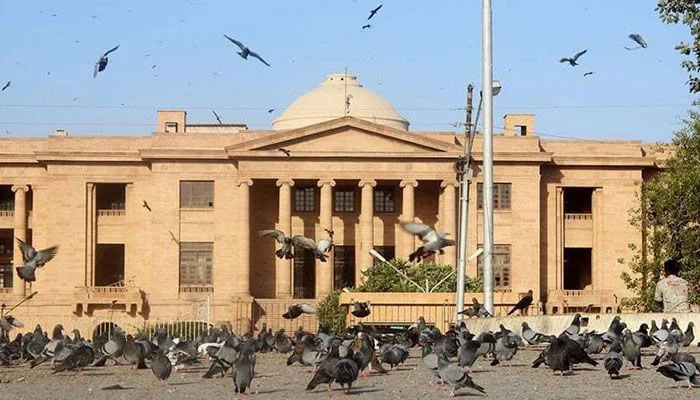
The Sindh High Court (SHC) on Friday directed a petitioner to approach the anti-encroachment tribunal for the removal of encroachments and garbage from the Khaji Ground in the Gulbahar area.
The petitioners had submitted in the petition that the Khajji Ground was developed by the local administration in the late 1990s after the city witnessed a worst law and order situation.
They submitted that the ground was a well-known football and cricket ground and park for the locals but the same had now been misused for dumping of garbage. They submitted that two schools were next to the ground and dumping of garbage had created an unhealthy atmosphere for the students who were constantly troubled by odour caused by the garbage.
A counsel for the North Nazimabad Town Municipal Corporation submitted that garbage had been removed from the ground and development works carried out with the collaboration of the World Bank for the restoration of the amenity land. He said the issue of shortage of funds was resolved through the court orders and assured that the restoration of the park process shall be completed soon.
The counsel said the TMC had no power to remove a police station from the premises of the playground. The high court after hearing the arguments of the counsel disposed of the petition with a direction to the petitioner to approach the anti encroachment tribunal for the removal of encroachments from the amenity land of the Khajji Ground.
Sound system law
The SHC dismissed a petition seeking initiation of action against officials of the police, Defence Housing Authority (DHA) and Cantonment Board Clifton (CBC) over their inaction to enforce the sound system law.
The petitioner, Samira Mohammadi, said the provincial police chief, the DHA administrator and the CBC had failed to implement the Sindh Sound System (Regulation) Act, 2015. She said the law had been violated by private persons residing in the vicinity of her residence in DHA Phase-I, adding that despite the transgression being brought to the notice of the respondents, no action was taken.
A division bench of the high court headed by Justice Agha Faisal observed that the sections 5, 6, 7 and 8 of the Sindh Sound System (Regulation) Act 2015 provided a mechanism in instances of infringement.
The high court observed that the petitioner remained at liberty to seek appropriate remedy and no case was made out for a direct recourse to writ jurisdiction. The SHC observed that the petition had been found to be misconceived and dismissed the same.


