
Auto industry boosts localisation, faces key challenges
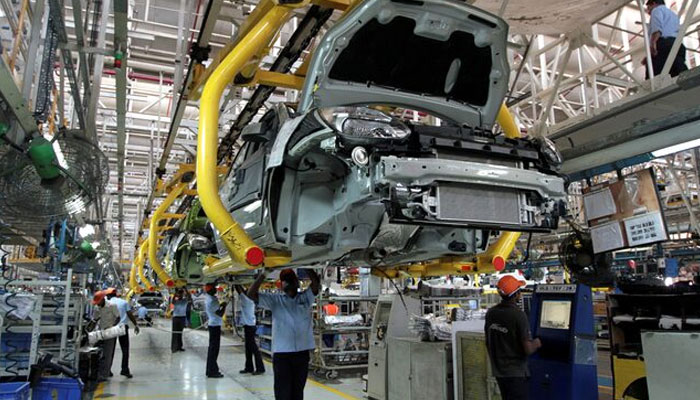
KARACHI: Pakistan’s automotive industry is experiencing a major shift towards localisation, reducing import dependency and driving economic growth. The localisation rate for cars and light commercial vehicles (LCVs) has reached 55 per cent by 2024, said CEO of Indus Motor Company Ali Asghar Jamali and Director-General of Pakistan Automotive Manufacturers Association (PAMA) Abdul Waheed Khan in a press release on Thursday.
Since the 1990s, localisation initiatives have injected $5 billion into the economy and created 2.5 million jobs. Khan emphasised that, despite these gains, challenges persist, particularly due to the absence of essential industries like steel and chemicals. With strategic policies, he said, Pakistan could position itself as a key regional automotive hub.
Jamali highlighted the role of over 300 local vendors in fostering investment from original equipment manufacturers (OEMs), boosting efficiency through lean manufacturing and just-in-time logistics. This expansion has also created a skilled workforce, leading to increased overseas employment and remittances.
Government policies have played a crucial role, particularly the 2007 auto policy, which provided incentives for local production and technology transfers. The results are visible in vehicle pricing -- while a locally assembled sedan with 20 per cent localisation cost $20,185 in 1993, a similar model with 64 per cent localisation in 2024 was priced at $15,996, excluding exchange rate impacts.
However, Pakistan’s automotive sector faces hurdles. The country still imports essential raw materials like steel, plastic, rubber, and aluminium, raising costs. High customs duties on completely knocked down (CKD) units -- ranging from 32 per cent to 46 per cent -- make local production less competitive compared to India’s 15 per cent flat duty.
Khan noted that boosting vehicle exports remains another challenge. While some progress has been made, a lack of government support in duty rebates and export incentives limits further expansion. Establishing a framework to promote exports could help Pakistan develop as an international automotive supplier.
Looking ahead, the rise of hybrid electric vehicles (HEVs) presents a major opportunity. To remain competitive, manufacturers must invest in advanced localisation, and Khan urged the government to prioritise R&D incentives in future auto policies. Strengthening infrastructure -- especially steel and resin production -- could further reduce reliance on imports and enhance local supply chains.






-
 Prevent Cancer With These Simple Lifestyle Changes
 -
 Experts Reveal Keto Diet As Key To Treating Depression
 -
 Inter Miami Vs Barcelona SC Recap As Messi Shines With Goal And Assist
 -
 David Beckham Pays Tribute To Estranged Son Brooklyn Amid Ongoing Family Rift
 -
 Jailton Almeida Speaks Out After UFC Controversy And Short Notice Fight Booking
 -
 Extreme Cold Warning Issued As Blizzard Hits Southern Ontario Including Toronto
 -
 Lana Del Rey Announces New Single Co-written With Husband Jeremy Dufrene
 -
 Ukraine-Russia Talks Heat Up As Zelenskyy Warns Of US Pressure Before Elections
 -
 Lil Nas X Spotted Buying Used Refrigerator After Backlash Over Nude Public Meltdown
 -
 Caleb McLaughlin Shares His Resume For This Major Role
 -
 King Charles Carries With ‘dignity’ As Andrew Lets Down
 -
 Brooklyn Beckham Covers Up More Tattoos Linked To His Family Amid Rift
 -
 Shamed Andrew Agreed To ‘go Quietly’ If King Protects Daughters
 -
 Candace Cameron Bure Says She’s Supporting Lori Loughlin After Separation From Mossimo Giannulli
 -
 Princess Beatrice, Eugenie Are ‘not Innocent’ In Epstein Drama
 -
 Reese Witherspoon Goes 'boss' Mode On 'Legally Blonde' Prequel