
‘Kabul support to terrorist groups hurdle to Afghanistan’s economic potential’
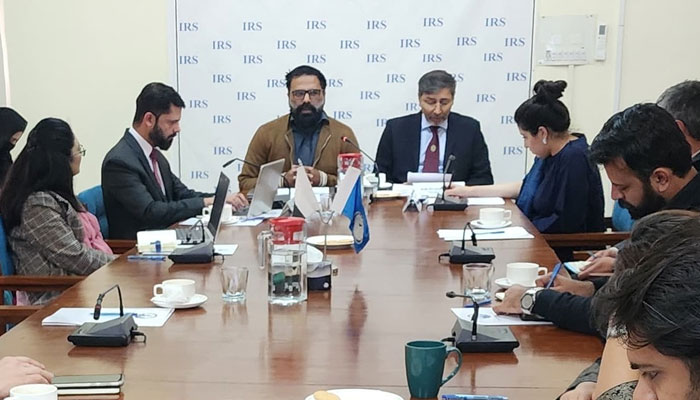
Islamabad:Salman Javed, Director-General, Pak-Afghan Youth Forum, has said that Afghanistan needs to address the security concerns not only of traders and investors but also of its neighbouring countries to be able to fully tap into its potential of regional economic connectivity.
Mr Javed was speaking at a roundtable discussion organised here by Institute of Regional Studies (IRS). Mr Javed called for looking at Pak-Afghan economic ties through the context of the whole gamut of relations between the two countries such as security, diplomatic relations as well as people-to-people interactions. He suggested using the complex interdependence theory of international relations as enunciated by Robert O Keohane and Josep S Nye for a better understanding of the Pak-Afghan relations. In complex interdependence, problems in one area like economics can affect other areas like security or social issues, he said adding that no single issue is more important than another as they are all linked.
Mr Javed underscored the Taliban government’s support to various terrorist groups as the single major obstacle to better diplomatic and economic relations between the two countries. Listing some other obstacles to trade between Pakistan and Afghanistan, he mentioned anti-smuggling and import restrictions, border closures, tariff hikes, etc. He said that while certain mega projects like the Turkmenistan-Afghanistan-Pakistan-India (TAPI) pipeline and Central Asia-South Asia transmission line (CASA-1000) projects were underway between the bordering countries of Afghanistan, they were still far from completion.
He mentioned the establishment of the Pak-Afghan Joint Chambers of Commerce and Industry (PAJCCI) in 2011 as a very positive development. He added that creation of border markets and special economic zones (SEZs) along the Pak-Afghan border were some other good ideas.
He mentioned that trade facilitation through simplified customs procedures and digitisation of border trade, expansion of regional preferential trade agreements, physical infrastructure development, creation of border markets and SEZs on both sides of the border under PAJCCI, activation of Khyber Pass Economic Corridor (KPEC) which was approved in December 2019, diversification of trade and investment areas into mining, agriculture and energy sectors, engaging other active regional players like Uzbekistan, utilising multilateral forums like Organisation of Islamic Conference (OIC), Shanghai Cooperation Organisation (SCO), and Economic Cooperation Organisation (ECO) could all be instrumental in tapping into the full potential of economic activities.







-
 Caitlin O’Connor Says Fiance Joe Manganiello Has Changed Valentine’s Day For Her
 -
 Rachel Zoe Sends Out Message For Womne With Her Post-divorce Diamond Ring
 -
 James Van Der Beek's Final Conversation With Director Roger Avary Laid Bare: 'We Cried'
 -
 Jaden Smith Walks Out Of Interview After Kanye West Question At Film Premiere
 -
 Why Halle Berry Wasn't Ready For Marriage After Van Hunt Popped Question? Source
 -
 Michelle Obama Gets Candid About Spontaneous Decision At Piercings Tattoo
 -
 Bunnie Xo Shares Raw Confession After Year-long IVF Struggle
 -
 Brooks Nader Reveals Why She Quit Fillers After Years
 -
 Travis Kelce Plays Key Role In Taylor Swift's 'Opalite' Remix
 -
 How Jennifer Aniston's 57th Birthday Went With Boyfriend Jim Curtis
 -
 JoJo Siwa Shares Inspiring Words With Young Changemakers
 -
 James Van Der Beek Loved Ones Breaks Silence After Fundraiser Hits $2.2M
 -
 Disney’s $336m 'Snow White' Remake Ends With $170m Box Office Loss: Report
 -
 Travis Kelce's Mom Donna Kelce Breaks Silence On His Retirement Plans
 -
 Premiere Date Of 'Spider-Noir' Featuring Nicolas Cage Announced
 -
 Pedro Pascal's Sister Reveals His Reaction To Her 'The Beauty' Role