
Experts split over new provinces, governance reforms
Legal expert Riasat Ali Azad criticised lack of rule of law, contrasting it with UK’s governance system
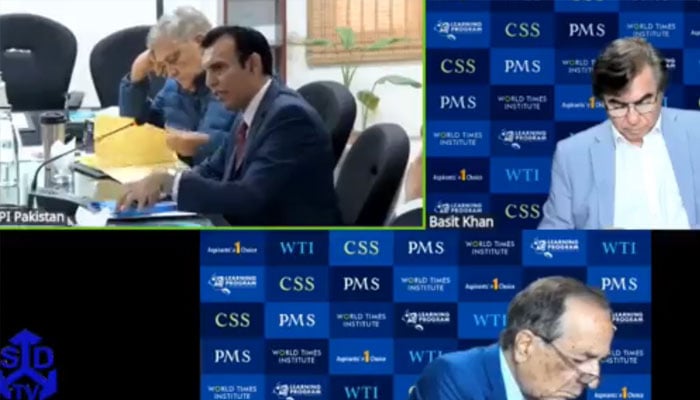
ISLAMABAD: A multi-stakeholder roundtable conference on Thursday sparked an intellectual debate on the formation of new provinces, governance failures and economic policies in Pakistan.
Experts from various fields, including law, economics, journalism, and politics, presented conflicting views on whether new administrative units are the solution to Pakistan’s governance crisis or if the real issue lies with institutional strengthening and elite dominance? The conference, organized by SDPI (Sustainable Development Policy Institute), saw participation from legal experts, former bureaucrats, senior journalists and economists.
Educationist Aamir Mehmood presented a detailed investigative report on Pakistan’s governance structure, discussing the current administrative framework and the need for decentralization. Col (retd) Inam-ur-Raheem, a senior lawyer, strongly advocated creating new provinces, stating that the existing provincial structure is ineffective. He argued that smaller, more manageable administrative units would ensure better governance, rule of law, and accountability. In contrast, senior journalist Zahid Hussain challenged this notion, saying, “The real issue is not the number of provinces but who holds actual power.” He stressed that Pakistan’s governance problems cannot be solved unless decision-making authority shifts to those with genuine public mandates. He pointed out that while India successfully created two new provinces in the last five years without unrest, Pakistan remains entangled in bureaucratic hurdles and political resistance.
Legal expert Riasat Ali Azad criticised lack of rule of law, contrasting it with the UK’s governance system.
He criticised the 26th Amendment, stating that it has weakened judicial independence and disrupted the balance of power. He condemned the victimization of judges for speaking out and warned that nations without the rule of law eventually collapse.
Former FBR commissioner Shahid Zaheer emphasized that no administrative changes will matter if Pakistan does not prioritize its people’s welfare. He called for investment in clean drinking water, quality education, and healthcare to build a strong foundation.
He stressed the need for taxation reforms to hold the elite accountable and redirect funds towards income-generating projects and a green economy.
Senior economist Dr Nadeem-ul-Haq painted a grim picture of Pakistan’s economic situation, arguing that the country is trapped in a colonial bureaucratic mindset. He declared, “The IMF sees us as an emergency case, laughing at our economic mismanagement.”
He controversially suggested that Pakistan does not even need a judiciary. He called for a free-market economy, term limits in politics, and an end to bureaucratic control.







-
 ChatGPT Caricature Prompts Are Going Viral. Here’s List You Must Try
 -
 James Pearce Jr. Arrested In Florida After Alleged Domestic Dispute, Falcons Respond
 -
 Cavaliers Vs Kings: James Harden Shines Late In Cleveland Debut Win
 -
 2026 Winter Olympics Snowboarding: Su Yiming Wins Bronze And Completes Medal Set
 -
 Trump Hosts Honduran President Nasry Asfura At Mar-a-Lago To Discuss Trade, Security
 -
 Cuba-Canada Travel Advisory Raises Concerns As Visitor Numbers Decline
 -
 Anthropic Buys 'Super Bowl' Ads To Slam OpenAI’s ChatGPT Ad Strategy
 -
 Prevent Cancer With These Simple Lifestyle Changes
 -
 Air Canada Flight Diverted St John's With 368 Passengers After Onboard Incident
 -
 Experts Reveal Keto Diet As Key To Treating Depression
 -
 Inter Miami Vs Barcelona SC Recap As Messi Shines With Goal And Assist
 -
 David Beckham Pays Tribute To Estranged Son Brooklyn Amid Ongoing Family Rift
 -
 Jailton Almeida Speaks Out After UFC Controversy And Short Notice Fight Booking
 -
 Extreme Cold Warning Issued As Blizzard Hits Southern Ontario Including Toronto
 -
 Lana Del Rey Announces New Single Co-written With Husband Jeremy Dufrene
 -
 Ukraine-Russia Talks Heat Up As Zelenskyy Warns Of US Pressure Before Elections