
Tribal issues
Recent clashes between Sawand and Sundrani tribes in Kashmore and Ghotki left 29 people dead
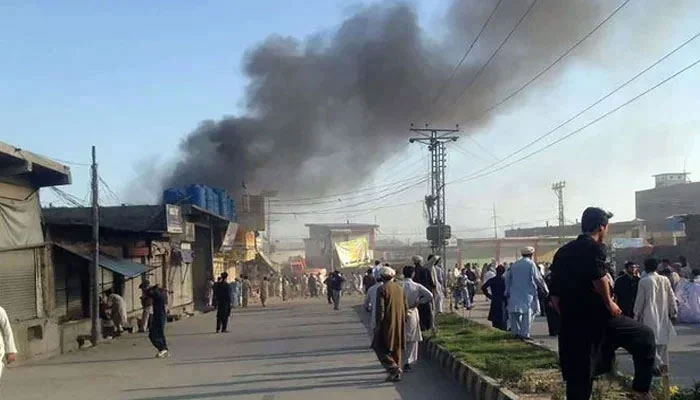
Tribal feuds in Upper Sindh have turned the region into a battlefield, claiming hundreds of innocent lives and exposing the alarming absence of the writ of the law.
The recent violent clashes between the Sawand and Sundrani tribes in Kashmore and Ghotki left 29 people dead, while earlier 101 individuals were killed in a brutal feud between the Sabzoi and Sundranis in the Kashmore district.
These conflicts, often ignited by disputes over land, honour and water channels, and other petty issues ultimately end up in jirgas – traditional tribal courts – where justice is reduced to mere financial transactions. In these cases, jirgas imposed nearly Rs97 million in blood money, effectively transforming murder into a mathematical settlement of human lives.
The entire northern Sindh region remains trapped in unbridled tribal warfare, raising serious concerns. Various tribes, including the Mahars, Jatois, Narejos, Solangis, Bhayos, Marfanis, Jalbanis, Katohars, Brohis, Shaikhs, Kakepotros, Jakhranis, Jagiranis, Domkis and Shars, have been embroiled in long-standing enmities that have destabilised the region.
Statistics paint a grim picture of escalating violence: in Shikarpur alone, 195 people were killed and 53 injured in tribal conflicts in 2024. Over 2,569 accused remain absconding in these murder cases. In Larkana and Jacobabad, 39 people lost their lives. In Sukkur division, 80 people were killed, and 53 were injured in recent months. Over 1,226 accused involved in tribal killings in Sukkur, Khairpur, and Ghotki remain at large. Despite these alarming figures, law enforcement remains weak and ineffective, further emboldening feudal lords and tribal militias.
The primary reason behind the persistence of these feuds is the deep-rooted feudal system, which continues to dominate Sindh’s rural landscape. Tribal chieftains wield immense influence, not only over their clans but also over local administration and the police. In most cases, victims of violence do not approach the police; instead, they first seek guidance from their tribal leaders, who then decide whether the matter should be taken to law enforcement or resolved through a jirga. These feudal lords, kn–own as waderas, thrive on sustaining conflicts, ensuring that they remain the ultimate power brokers in their respective territories.
Dr Tariq Sawand, whose brother Professor Dr Ajmal Sawand was killed in a tribal feud in Kashmore last year, highlights this failure: “If police acted promptly and responsibly upon the lodging of an FIR, these feuds would rarely escalate. But when victims are denied justice, they are left with no option but to take the law into their own hands for revenge.”
The November 2024 jirga in Sukkur is a stark example of the parallel justice system that continues to operate despite being declared unconstitutional by Pakistan’s Supreme Court. The jirga imposed Rs22 million in blood money on the warring Mahar and Jatoi clans, determining that Rs2.5 million should be paid for the murder of a man, Rs5 million for the murder of a woman, and Rs2 million for the abduction of a woman during the clashes.
This raises a fundamental question: where does the law of the land stand in the face of such feudal courts? What does it say about a country with a constitution, a judiciary and law-enforcement institutions when an informal system holds greater influence than any court of Pakistan?
The rise in tribal feuds, the unhindered operations of jirgas, and the continued absence of justice show a dismal state of affairs. As investigative journalist Nisar Khokhar aptly puts it, “When a vacuum is created due to the absence of state authority, it is always filled by non-state actors.” This vacuum has been occupied by heavily armed tribal militias, feudal overlords and parallel justice systems, undermining the very foundations of Pakistan’s legal framework.
The people of Sindh cannot be left at the mercy of power-hungry feudal lords, where human life is reduced to a mere financial settlement. The state must assert its authority, dismantle jirgas, and restore public confidence in law enforcement and the judiciary.
If the government, police, and judiciary continue to remain silent spectators, Sindh will continue to bleed – one tribal feud at a time.
The writer is a senior superintendent of police in the Sindh Police.


