
Strategic, governance-driven policy emphasised for better Pak-Afghan ties
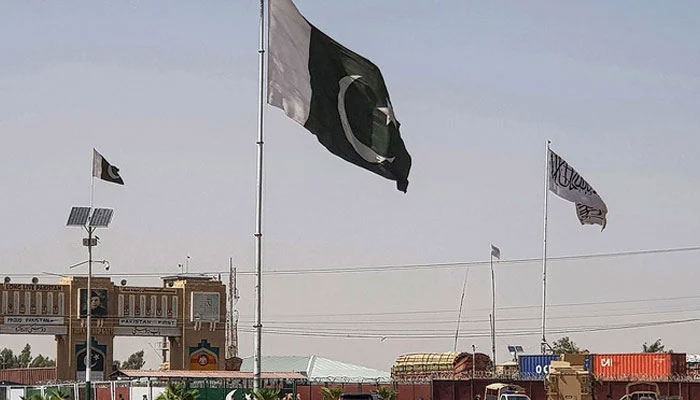
Islamabad:Restructuring Pakistan-Afghanistan relations requires a departure from short-term policy fixes toward a comprehensive, strategic, and governance-driven approach, panellists said during a roundtable on Monday.
They insisted that since the erosion of the rule of law and the spread of divisive rhetoric fuelled mistrust and instability, that approach must prioritise mutual recognition of sovereignty, the rejection of polarising narratives, the restoration of the rule of law, public ownership in law enforcement, and institutional integrity.
The event, titled ‘Geopolitical Imperatives: Redefining Pakistan-Afghanistan Relations in a Post-Taliban Era,’ was organised by the Institute of Policy Studies here. The speakers included IPS chairman Khalid Rahman, defence analyst Brigadier (r) Said Nazir, policy adviser at GIZ Noorul Ain Naseem, associate professor at the University of Tromso, Norway, Dr Farhat Taj, former ambassadors Syed Abrar Hussain and Ayaz Wazir, expert on ex-FATA affairs Dr Lutfur Rehman, and other academics, former officials and policy experts.
Khalid Rahman emphasised that the blame game was counterproductive and didn't resolve longstanding Pak-Afghan issues. He said poor governance lied at the heart of bilateral challenges, and without addressing this fundamental issue, policy measures would remain ineffective.
‘Projecting a positive narrative, focused on mutual strengths, is critical.’ Rehman urged both countries to prioritise good governance, institutional stability, and a well-defined national narrative to foster regional stability and cooperation
In a keynote speech, Pakistan’s former special representative on Afghanistan Asif Durrani argued that geopolitical challenges in Pak-Afghan relations, such as the complex tribal dynamics, cross-border trade issues, and refugee management, cannot be managed through conventional diplomacy or a garrison approach.
"A governance-driven approach rooted in mutual recognition of sovereignty and an inclusive understanding of regional complexities is needed for lasting stability in all dimensions of this bilateral relationship," he said.
The former envoy identified the erosion of the rule of law, amplified by the war economy of the 1990s that disrupted centuries-old trade and communal ties, as a key destabilising factor in Pak-Afghan relations.
He warned that governance failures, corruption, and mismanagement in areas like refugee policies, border security, and transit trade had further deepened lawlessness, making institutional restructuring imperative.
"To restore stability, there is an urgent need for institutional reforms, strengthening law enforcement through an empowered police force, and fostering public ownership of governance mechanisms." Durrani also highlighted the detrimental impact of political narratives that fuel mistrust, with visible implications in people-to-people contact and economic cooperation.






-
 King Charles Holds Emergency Meeting After Andrew Arrest: 'Abdication Is Not Happening'
 -
 Amazon Can Be Sued Over Sodium Nitrite Suicide Cases, US Court Rules
 -
 'Vikings' Star Mourns Eric Dane's Death
 -
 Patrick Dempsey Reveals Eric Dane's Condition In Final Days Before Death
 -
 'Heartbroken' Nina Dobrev Mourns Death Of Eric Dane: 'He'll Be Deeply Missed'
 -
 Andrew Mountbatten-Windsor’s Arrest: What Happened When A Royal Was Last Tried?
 -
 Alyssa Milano Expresses Grief Over Death Of 'Charmed' Co-star Eric Dane
 -
 Prince William, Kate Middleton Camp Reacts To Meghan's Friend Remarks On Harry 'secret Olive Branch'
 -
 Daniel Radcliffe Opens Up About 'The Wizard Of Oz' Offer
 -
 Channing Tatum Reacts To UK's Action Against Andrew Mountbatten-Windsor
 -
 Brooke Candy Announces Divorce From Kyle England After Seven Years Of Marriage
 -
 Piers Morgan Makes Meaningful Plea To King Charles After Andrew Arrest
 -
 Sir Elton John Details Struggle With Loss Of Vision: 'I Can't See'
 -
 Epstein Estate To Pay $35M To Victims In Major Class Action Settlement
 -
 Virginia Giuffre’s Brother Speaks Directly To King Charles In An Emotional Message About Andrew
 -
 Reddit Tests AI-powered Shopping Results In Search