
China urged to lead Asia’s shift to renewable energy
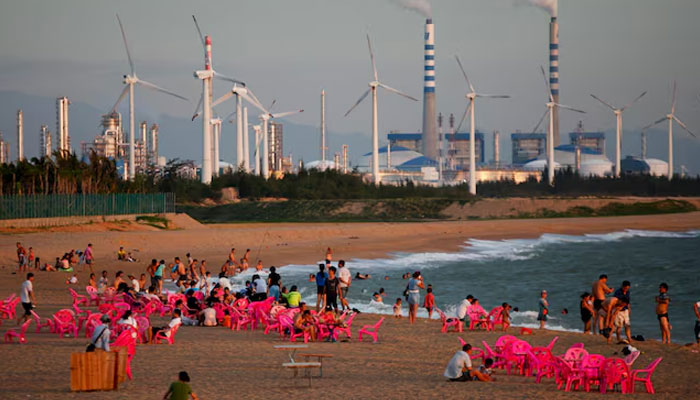
KARACHI: Civil society groups from Pakistan, Bangladesh, Indonesia, the Philippines and India have called on China to lead Asia’s transition from fossil fuels to renewable energy (RE), emphasising the region’s energy access challenges and vulnerability to the climate crisis.
Leaders of Asian movements noted that China, as the world’s largest producer and supplier of renewable energy technologies, particularly solar and wind, is uniquely positioned to spearhead this transition. A statement issued by the Policy Research Institute for Equitable Development (PRIED) on Saturday underscored China’s potential role in accelerating the shift.
“China is in a vital and unique position to lead Asia’s rapid and just transition from fossil fuels to 100 per cent renewable energy systems,” said Lidy Nacpil, coordinator of the Asian Peoples’ Movement on Debt and Development. “China produces over 70 per cent of the global supply of solar and wind technology and has significantly reduced their costs. It also boasts one of the highest growth rates in the RE share of its electricity mix and has substantial financial resources to support investments in a just energy transition. However, it still needs to phase out coal power in its domestic energy production, presenting both a challenge and an opportunity for China to take on a more active leadership role in Asia and globally.”
Pius Ginting, coordinator of Action for Ecology & People’s Emancipation (AEER) in Indonesia, highlighted the importance of integrating renewables into energy systems and providing significant financing to enable a just transition. “Harmful fossil fuels must be rapidly phased out,” he said. “China’s investment in Indonesia’s nickel industry, which relies on coal power plants with a capacity of about 9,000MW, is harmful to both Chinese and Indonesian workers.”
Ian Rivera, coordinator of the Philippine Movement for Climate Justice, urged China to establish strategic partnerships with sub-national governments in developing countries to accelerate renewable energy development. “This would drive energy transitions aligned with the Paris Agreement commitments,” he added.
Sharif Jamil, head of Waterkeepers Bangladesh, called for greater technology transfer and financial support from leading renewable energy producers like China. “Bangladesh has immense potential for renewable energy,” he said. “China should rapidly scale up renewable energy financing and equipment supply, with stronger bilateral engagement to ensure a smooth transition to sustainable power production and economic growth.”
“Renewable energy is not just a solution to the climate crisis,” said Badar Alam, CEO of PRIED in Pakistan. “By converting untapped solar and wind energy resources into impactful projects, we can transform energy systems to empower communities, drive economic growth, and end our dependence on fossil fuels.”


