
Halfway to stability: Pakistan’s economic outlook for 2025
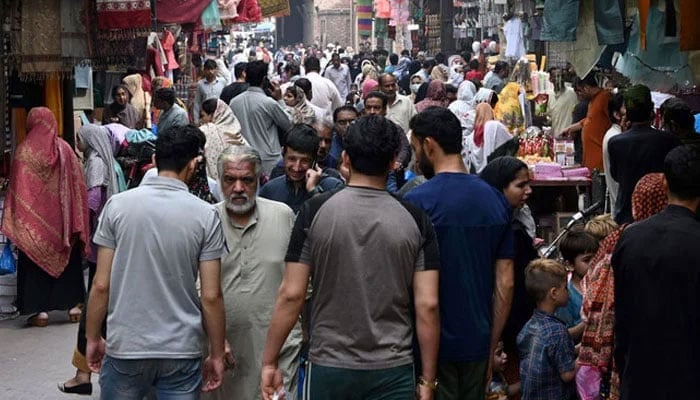
LAHORE: Proponents of the current Pakistan regime and its critics are analysing economic statistics through their respective lenses. While macroeconomic indicators suggest a potentially positive trend, the critical question remains whether these improvements are sustainable and inclusive.
The performance of the economy in 2025, and whether it is heading in the right direction, depends on several factors, including structural reforms, policy consistency and the global economic environment. Both the current government and its predecessor caretaker administration deserve credit for steering the economy away from the brink of sovereign default. However, there is still much work to be done; the job is only half complete.
Policymakers must address structural challenges -- such as the informal economy, governance inefficiencies and income inequality -- to ensure that short-term gains translate into long-term benefits for the population. Without these interventions, temporary improvements may not result in sustainable prosperity.
From a statistical perspective, the economy’s performance in the first quarter of this fiscal year has been underwhelming. Agriculture, which is vital to the economy, employing a significant portion of the population and contributing substantially to GDP, has grown by just over 1.0 per cent. The nominal growth of agriculture in Q1 suggests production challenges, including water shortages, climate issues (such as floods or droughts), and inefficient farming practices. This has reduced rural incomes and the supply to agro-industries, further pushing up food prices. Nominal growth in the sector likely signals higher prices rather than real growth in output, pointing to cost-push inflation in inputs like fertilisers, fuel, and seeds.
On the positive side, interest rates have declined by 9.0 per cent in the past five months. A reduction in interest rates typically aims to stimulate borrowing and investment, but it may also lead to higher demand-side inflation if supply-side bottlenecks remain unaddressed.
A sharp decline in inflation suggests easing price pressures, likely driven by controlled monetary policies, lower global commodity prices, or reduced domestic demand. While this is positive, it may take time to have a significant impact on household budgets.
Rising reserves provide stability against external shocks, boost investor confidence, and strengthen the currency. If reserves increase through sustainable means, such as export earnings and remittances, this is a healthy sign. Growth in exports reflects improved competitiveness or global demand, but sustaining this growth requires consistent policies, energy availability, and an improved business climate.
While reduced imports have improved the trade balance, it may also indicate a slowdown in economic activity or import restrictions that could stifle industrial growth, particularly for sectors reliant on imported inputs. This may explain the negative growth in large-scale manufacturing.
There is often a lag between macroeconomic improvements and their effects on the average citizen, particularly when the economy is recovering from a severe downturn. Improvements in indicators like inflation and reserves can take time to trickle down due to structural inefficiencies, poor governance, and persistent inequalities. Enhancing governance must be the government’s priority to ensure that ordinary citizens experience the benefits of improved macroeconomic conditions.
Lower inflation will eventually reduce living costs. Increased exports could create job opportunities as industries expand. Declining interest rates may boost consumer credit and housing affordability. If the government maintains economic stability, ensures food security and implements pro-poor policies, a noticeable impact on ordinary citizens may be expected by mid-to-late 2025. Structural reforms, particularly in taxation, energy and agriculture, will be essential to magnify these benefits.






-
 Hilary Duff’s Son Roasts Her Outfit In New Album Interview
 -
 Alexandra Daddario, Andrew Form Part Ways After 3 Years Of Marriage
 -
 Eric Dane Rejected Sex Symbol Label
 -
 Avan Jogia Says Life With Fiancee Halsey Feels Like 'coming Home'
 -
 Kate Middleton's Role In Handling Prince William And Harry Feud Revealed
 -
 Tucker Carlson Says Passport Seized, Staff Member Questioned At Israel Airport
 -
 David, Victoria Beckham Gushes Over 'fiercely Loyal' Son Cruz On Special Day
 -
 Taylor Swift Made Sure Jodie Turner-Smith's Little Girl Had A Special Day On 'Opalite' Music Video Set
 -
 Eric Dane Says Touching Goodbye To Daughters Billie And Georgia In New Netflix Documentary
 -
 Channing Tatum Reveals What He Told Daughter After Violent Incident At School
 -
 King Charles Lands In The Line Of Fire Because Of Andrew Mountbatten-Windsor
 -
 Denise Richards Doubles Down On Abuse Claims Against Ex Husband Aaron Phypers Amid Show Return
 -
 Russia Set To Block Overseas Crypto Exchanges In Sweeping Crackdown
 -
 Gwyneth Paltrow Reveals Deep Personal Connection With Kate Hudson
 -
 Prince Harry, Meghan Markle’s Game Plan For Beatrice, Eugenie: ‘Extra Popcorn For This Disaster’
 -
 OpenAI To Rollout AI Powered Smart Speakers By 2027