
Why not to exclude women from Pakistan’s economy
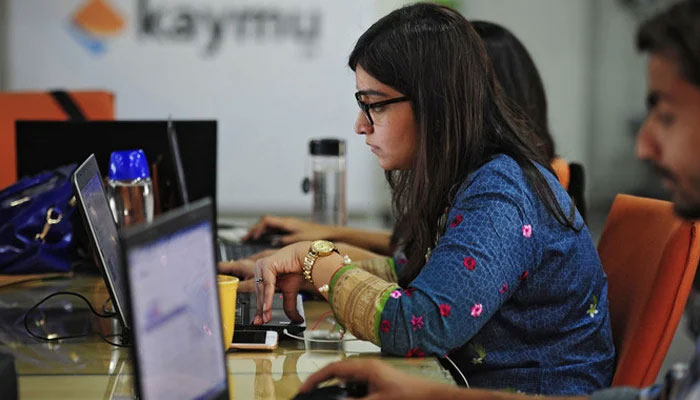
LAHORE: Excluding women from Pakistan’s economic mainstream is perpetuating poverty, as it becomes increasingly difficult for traditional sole male earners to sustain the same quality of life they could afford six years ago.
With wages growing at less than half the rate of high average inflation, costs for essentials such as food, education, healthcare and housing often outstrip income growth. As a result, families are forced to compromise on discretionary spending and, at times, even on basic necessities to manage rising expenses.
Studies consistently show that working women prioritise their earnings on children’s education and health, underscoring their focus on family welfare and future security. However, it is common for male family heads to take control of working women’s income without their consent, a practice tantamount to economic coercion or even modern-day slavery.
This deprives women of financial autonomy and the right to benefit from their labour. To combat this, policies are needed that guarantee women control over their earnings, along with financial literacy programmes and awareness campaigns that challenge patriarchal norms and promote gender equality within households.
Despite cultural similarities, gender discrimination is more pronounced in Pakistan than in India or Bangladesh, where social norms uphold a system granting men dominant roles in political leadership, moral authority, social privilege and property control.
While Pakistan has historically lagged in providing women with equal access to education and formal employment, Bangladesh has made significant progress, particularly in the garment sector. Advocacy and policies in India and Bangladesh have advanced gender equity, while Pakistan has faced weaker political commitment on this front.
To improve conditions for women in domestic and agricultural roles, legal reforms are crucial. Formal recognition of domestic work and unpaid agricultural labour as valid employment, along with legal frameworks for wage protection and social security, are essential.
Additionally, vocational training should be provided to offer alternative income-generating opportunities for women in these sectors.
Women’s economic contributions in China have grown significantly, reaching $4.5 trillion in 2024 from $350 million in 2000, fuelled by higher participation in high-growth sectors, education, and entrepreneurship.
In India, women’s economic contribution is increasing through greater workforce participation, especially in technology, health and retail. However, the female economy in India, while expanding, remains fragile, with equality largely experienced by affluent urban women.
In 2010, approximately 134 million working women in India earned $280 billion; today, over 300 million working women contribute more than $1 trillion.
In Pakistan and Bangladesh, women’s contributions are comparatively lower due to restricted economic participation and fewer high-wage employment opportunities.
The disparities in women’s economic contributions across these countries result from differing policies, social norms, educational access and targeted government initiatives to promote women’s employment.




-
 Camila Mendes Reveals How She Prepared For Her Role In 'Idiotka'
 -
 China Confirms Visa-free Travel For UK, Canada Nationals
 -
 Inside Sarah Ferguson, Andrew Windsor's Emotional Collapse After Epstein Fallout
 -
 Bad Bunny's Star Power Explodes Tourism Searches For His Hometown
 -
 Jennifer Aniston Gives Peek Into Love Life With Cryptic Snap Of Jim Curtis
 -
 Prince Harry Turns Diana Into Content: ‘It Would Have Appalled Her To Be Repackaged For Profit’
 -
 Prince William's Love For His Three Children Revealed During Family Crisis
 -
 Murder Suspect Kills Himself After Woman Found Dead In Missouri
 -
 Sarah Ferguson's Plea To Jeffrey Epstein Exposed In New Files
 -
 Prince William Prepares For War Against Prince Harry: Nothing Is Off The Table Not Legal Ways Or His Influence
 -
 'How To Get Away With Murder' Star Karla Souza Is Still Friends With THIS Costar
 -
 Pal Reveals Prince William’s ‘disorienting’ Turmoil Over Kate’s Cancer: ‘You Saw In His Eyes & The Way He Held Himself’
 -
 Poll Reveals Majority Of Americans' Views On Bad Bunny
 -
 Wiz Khalifa Thanks Aimee Aguilar For 'supporting Though Worst' After Dad's Death
 -
 Man Convicted After DNA Links Him To 20-year-old Rape Case
 -
 Royal Expert Shares Update In Kate Middleton's Relationship With Princess Eugenie, Beatrice