
‘Govt fails to improve disaster risk management’
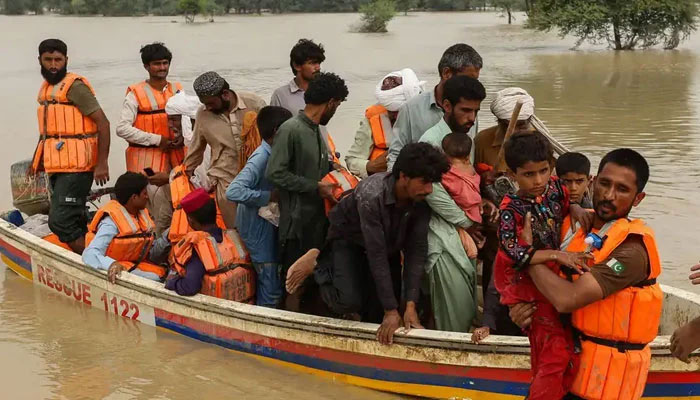
Islamabad:A survey findings released on the occasion of National Disaster Management Day shows that the government has failed to improve disaster risk management across the country despite having massive management structure and elaborate legal, financial support base as well as state of the art policies/plans at the federal level. The reason identified by the findings is that the state bureaucracy has frustrated every attempt to establish disaster management structures at the local or community level.
This is a crux of Pattan-Coalition 38 survey research that was conducted during the last ten days. The survey report says that the reading various sections of the National Disaster Management Authority (NDMA) website shows that is lacks extremely vital elements such as the participation of disaster-prone communities in planning and implementation for disaster risk reduction. It terms this highly important that the website highlights that the National Disaster Management Act, Policy and Plan acknowledge the importance of community participation. However, the NDMA’s detailed Roles and Responsibility Matrix for Implementation of NDMP-III conspicuously ignores its importance and limits it just to top-down ‘community awareness’ though as priority number one in the matrix.
The survey shows that NDMA and PDMAs had even failed to perform this role as more than two-thirds of respondents of the surveyed location said they did not get any early warning or alerts, while 97% of respondents claimed that they did not receive any kind of assistance, training or awareness from any of the government department.
The survey was conducted in 32 disaster-prone locations across 20 districts in KP, Punjab, Sindh, and Islamabad. Well-trained enumerators conducted 503 face-to-face interviews using a structured questionnaire by including 310 male and 193 female respondents. The survey results indicate that a majority of 475 households in the targeted communities faced emergencies during the recent monsoon season. Additionally, 471 respondents reported that their villages or neighbourhoods experienced significant damages and losses due to river floods, hill torrents, heavy rainfall, urban flooding, poor drainage systems, and landslides.
The affected communities encountered various kinds of challenges and losses. According to the survey, 342 respondents reported damages to their homes, 329 reported crop losses, 260 households experienced damage to household appliances, 225 households lost livestock, 160 reported business losses, 174 reported grain and fodder losses, and 158 reported infrastructure damage including roads, schools, hospitals, religious/worship places, and electricity and gas lines. Nearly, 24 per cent of the respondents reported observing casualties and/or injuries during the recent monsoon, attributed to heavy rainfall and flash flooding.
More than two-thirds of the respondents (68%) did not receive any early warning. Those who received the early warning messages complained about the lack of proper understanding of the messages. A large proportion, 97% of the respondents, indicated that they were never consulted for contingency planning or received any training to deal with an emergency or disaster.
A significantly large portion of the respondents (42%) indicated that the local governments do not exist in their region and where exist, they lack functioning capacities due to the unavailability of funds and authority. Eighteen per cent (18%) of respondents blamed the local MPs for the losses, while 15% pointed fingers at the provincial government. About one-third criticized the federal government and its agencies for the devastating floods and losses.
The majority of the respondents are not familiar with government institutions responsible for mitigating disaster risks such as NDMA, PDMAs, DDMAs, FFC, and PDM. However, 68% of the respondents were familiar with Rescue 1122.
The survey results emphasise the establishment of elected local governments in all provinces to manage the risks and disasters by making them financially, administratively and politically autonomous. This is also important to enable the integration of the communities in national disaster risk reduction policies and plans. The survey also points out the need for effective communication strategies by the relevant authorities to inform the public about impending natural disasters which is also given top priority in the National Disaster Management Policy.







-
 Ernie Anastos' Chicken Blooper Resurfaces As Popular News Anchor Dies
 -
 Bryce Huff Shocks NFL With Retirement At 27 To Start Company Fighting Lithium Battery Fires
 -
 USS Gerald R. Ford Fire: Two Injured After Fire Breaks Out On US Navy Aircraft Carrier
 -
 US: New Survey Shows One-third Of Americans Cut Back On Other Expenses To Cover Healthcare In 2025
 -
 Adobe's Longtime CEO To Exit Role As AI Disruption Shakes Software Industry; Shares Fall 22%
 -
 Cillian Murphy Recalls Acting Advice That Shaped His Career
 -
 Whistler Ski Resort Rockfall Shuts Peak Express Lift As Crews Assess Damage On Whistler Peak
 -
 Surprising Stowaway: Sly Red Fox Travels From England To US On Cargo Ship
 -
 King Charles Picks To Stay Miles Away From Meghan, Prince Harry Antics
 -
 Dakota Johnson In Not Rush To Find Perfect Man After Chris Martin Split
 -
 William And Kate Trigger Huge Fan Reaction With London's Iconic River Visit
 -
 Kanye West's Concert In Madrid Faces Scam Rumours As Fake Tweet Goes Viral
 -
 Prince William, Kate Middleton Step Into Centuries-old London Tradition
 -
 Princess Diana Felt The ‘burden’ Of Prince William As King, Insider Reveals
 -
 Andrew Private Deal 'protects' Beatrice & Eugenie's Royal Homes Despite His Bombshell Scandal
 -
 Eminem Reacts To DJ Lord Sear's Death: 'Made The World A Better Place'