
China megacities ease homebuying rules to boost property market
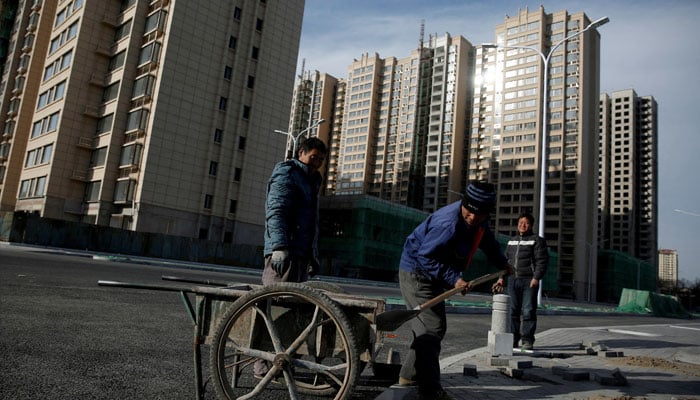
BEIJING: Three Chinese megacities on Monday eased restrictions on buying homes and Beijing’s central bank said it would ask financial institutions to lower mortgage rates, as the country seeks to pull itself out of a housing slump.
The measures are the latest in a raft of pledges out of Beijing since last week aimed at kickstarting the world’s number-two economy.The teetering property sector has long accounted for around a quarter of gross domestic product and experienced dazzling growth for two decades.
But a years-long housing slump has become a major impediment to growth as the country’s leadership eyes a target of around five per cent this year -- an objective analysts say is optimistic given the many headwinds the economy faces.
Late on Sunday, three of the country’s biggest cities said they would make it easier for people to buy homes in measures that would come into effect on September 30.The southern megacities of Guangzhou and Shenzhen -- home to a combined 37 million people -- said homebuyers would no longer be vetted for their eligibility to purchase a home.
In central Guangzhou, where purchasers were previously barred from owning more than two homes, there will no longer be any restrictions on how many a person can buy, the city said.And in the eastern economic powerhouse of Shanghai -- the country´s richest city -- authorities said they would lower the minimum down payments on a home to 15 per cent from 20 per cent.
Looming ‘macro challenge’
The swath of announcements came as China’s central bank said Sunday it would ask financial institutions to cut interest rates on existing home loans in a bid to “lower financial burdens on property owners”, Xinhua said.
Yan Yuejin, deputy director of E-house China R&D Institute in Shanghai, told AFP the moves were driven by “pressure” in the property market.“Fewer people are buying property these days,” he said.
Getting the property market moving again, Yan said, was key to boosting lagging domestic consumption -- another major drag on growth. China’s leadership last week unveiled a raft of measures to boost the economy in one of its biggest drives in years to kickstart growth.
But they also warned the economy was being plagued by “new problems”.Markets have rallied in Hong Kong and mainland China on the announcements amid hopes of greater support.On Monday, property developers were among the big winners, with Kaisa rocketing almost 60 per cent, Sunac up more than 16 per cent and Fantasia piling on more than 30 per cent.
However, analysts warned the “bazooka” stimulus was likely still not enough to boost the property market and one was sceptical that Monday’s new measures would do much to help.“From a macro perspective these policies are not that important, as these cities account for a small share of the national property market,” Zhiwei Zhang, president and chief economist at Pinpoint Asset Management, said in a note.
“The key policy to address the macro challenge remains... fiscal,” he said.Highlighting the uphill task for the government, official data showed Monday that manufacturing contracted for a fifth consecutive month in September.
The Purchasing Managers’ Index -- a key barometer of industrial output -- stood at 49.8 points, the National Bureau of Statistics announced.Still, it does represent a slight improvement from August´s 49.1 points and above the 49.5 forecast in a survey by Bloomberg.
A figure above 50 indicates an expansion in manufacturing activity, while below that is a contraction.“In this environment, a meaningful cyclical recovery would require sizeable fiscal stimulus,” Capital Economics’ Assistant Economist Gabriel Ng said in a note.






-
 Kanye West Banned: Keir Starmer Blasts Wireless Festival For Giving Slot To Controversial Rapper
 -
 Prince William Earns Praise For ‘no-nonsense’ Approach Amid Andrew Drama
 -
 NASA Clarifies Video Of Nutella Jar On Artemis II
 -
 Prince Harry, Meghan Markle's New Plans Regarding Australia Revealed
 -
 Offset Hospitalized: Everything To Know From Police Statements To Fears For His Family
 -
 Richard Gadd Breaks Silence On 'Baby Reindeer' Lawsuit Drama
 -
 Penny Lancaster Pokes Fun At Time With Rod Stewart
 -
 Kim Kardashian 'targeted Slapping' Video Sparks Hilarious Reactions
 -
 Where Will Andrew Mountbatten-Windsor Be Buried Once He Passes Away?
 -
 Meghan Markle Receives Support As Bizarre Easter Egg Criticism Backfires
 -
 Can Aging Be Reversed? First Human Trials Set To Begin
 -
 Kanye West Blocked From UK As Explosive Decision Announced
 -
 Minimal Upgrades For IPhone 18 And Air 2 Leak: A Letdown For Apple Fans?
 -
 Kate Middleton Sends Strong Message To Meghan Markle After 'shameless Stunts'
 -
 Arnold Schwarzenegger's Biggest Fear Triggers As He Gets Ready To Play Dream Role
 -
 Universal Music Faces Massive $64 Billion Takeover Bid