
Judicial capture
In a democracy, which we claim we are, courts ensure that governance does not degenerate into a tyranny of the majority
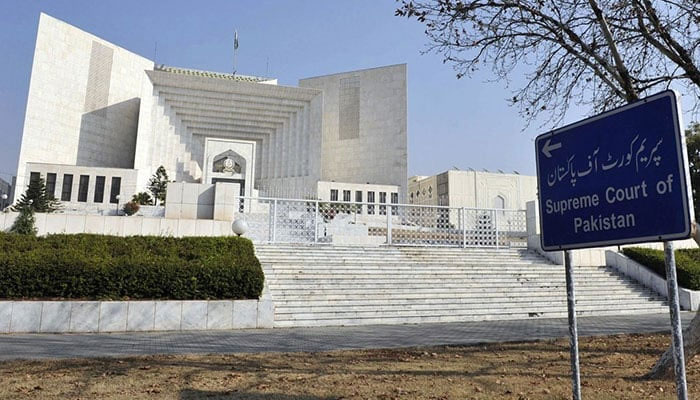
The established cornerstone of democracy is separation of powers. Within it, a judicial system can only deliver if it is guided solely by legal principle and not politics or personal interests.
In a democracy, which we claim we are, courts ensure that governance does not degenerate into a tyranny of the majority. This is not judicial activism or overreach. It is an imperative mandated by the constitution.
Pakistan’s superior courts have evolved from a taken-for-granted government corollary to an entity that is, despite all odds, trying to uphold the constitution. A compromised or subservient court can never ever fill this crucial role.
How can one forget the deferential judgment in the Maulvi Tamizuddin case or the ones in the Zafar Ali Shah and Begum Nusrat Bhutto cases where military takeovers were rubber-stamped by the Supreme Court? Could there be a graver injustice than sending the late Zulfiqar Ali Bhutto, a democratically elected prime minister, to the gallows?
Chief Justice Faez Isa’s 48-page judgment in the Bhutto reference read that “the trial and Appellate Courts, which conducted the trial and heard the appeal, were not true courts under the constitution. The country was captive to martial law and so too were its courts.”
This is the heart of the matter. Captive courts, irrespective of the captor, are not true courts under the constitution. They mete out gross injustice and decimate the foundations of a nation. Such courts callously authorized the judicial murder of an elected prime minister and permanently scarred the body politic of Pakistan.
K L Scheppele is a professor of sociology and international affairs at Princeton University. He asserts that, unlike autocrats of yore, their democratic counterparts today come to and retain power not with bullets but with laws. He terms it Autocratic Legalism.
Professors Rosalind Dixon and David Landau are leading global experts on comparative constitutional law and democracy. Their contention is that a key feature of recent attacks on democracy is their legalistic veneer. Rather than military coups, authoritarians now rely heavily on legal mechanisms and constitutional change. They reshape the constitutional order in their favour.
The ignominious forerunner to the, for now, scuttled Constitutional Package was cutting off the National Assembly’s electricity and masked individuals entering the premises to arrest lawmakers. There were also reports of missing members and coercion to garner votes to bulldoze the bill.
Parliaments derive their power and legitimacy from transparency and the support of their electorate. The tactics on display along with the ignorance of government lawmakers to the contents and whereabouts of the constitution-altering bill’s draft spoke of a putsch at judicial capture rather than the claimed benign democratic exercise.
Institutional reforms are a laudable exercise only when done to increase efficiency in public service. An iota of doubt about the intent of reformers wrecks the whole exercise. With dissenting media already subjected to criminal liability, this bill (of doubtful origin) was not an innocuous amendment.
A strategized document, it targeted many crucial things under the ambit of the superior judiciary. Apart from this, the bill also sought to tweak Article 63A to garner votes cast against the party line.
Constitutional courts, like the one proposed in the bill, are adjudicative structures to interpret the constitution. However, international precedents prove that when the political system itself appears to be at odds with the constitution or looked upon as an unrepresentative one, a constitutional court becomes, if anything, a liability.
One does not have to be a political scientist to gauge that the legislation and executive measures of the last two years have nothing to do with the people. It has been a relentless barrage of actions and knee-jerk reactions to down and out the opposition for good. The latest attempt has been berated by senior lawyers as “mala fide following the SC verdict on reserved seats”. Another termed it as “a creature of an unrepresentative legislature”.
In their zeal, our reclusive policymakers forgot that our survival is dependent on IMF handouts. Our frantic efforts to secure another $7 billion lifeline may have been jeopardized by this latest foray. The last thing the IMF needs is more divisive legislative and constitutional changes that have the potential to derail an already precariously poised governance system.
Research by eminent political scientists Professors Anna Luhrmann and Staffan Lindberg proved that 70 per cent autocratization episodes between 1994 and 2017 were brought about by political leaders who gradually undermined democratic institutions. They also contend that, between 1973 and 2018, there were twice as many executive takeovers than military ones.
The foremost indicator of these autocratization episodes was the adoption of legal mechanisms to override judicial review. This included court packing -- increasing the number of superior judges. Procedural rules were also enacted that affected the neutrality of the courts. This led to a coerced abdication of the judiciary’s role as guardians of the constitution.
It is an established fact that in this day and age, the main threat to democracy is no longer a military coup but would-be democrats with hegemonic designs. It is our duty to resist them. As the US Judge Learned Hand said in 1944: “Liberty lies in the hearts of men and women; when it dies there, no constitution, no law, no court can save it.”
The writer is a freelance contributor. He can be reached at: miradnanaziz@gmail.com


