
Sindh, Balochistan on same page on fisheries, Indus River issues
Two provincial governments have developed a census of opinion on controversial issues about fisheries sector, and distribution of Indus River water among provinces
KARACHI: The governments of Sindh and Balochistan have lately shown a rare unity on the two important water-based sectors whose issues directly affect large portions of the population in the two neighbouring provinces.
The two provincial governments have developed a census of opinion on the controversial issues about the fisheries sector, and the distribution of the Indus River water among the provinces.
To develop a consensus on the thorny issue of the distribution of the Indus River water in the country, the Sindh irrigation minister had visited Quetta to meet his counterpart in the Balochistan government.
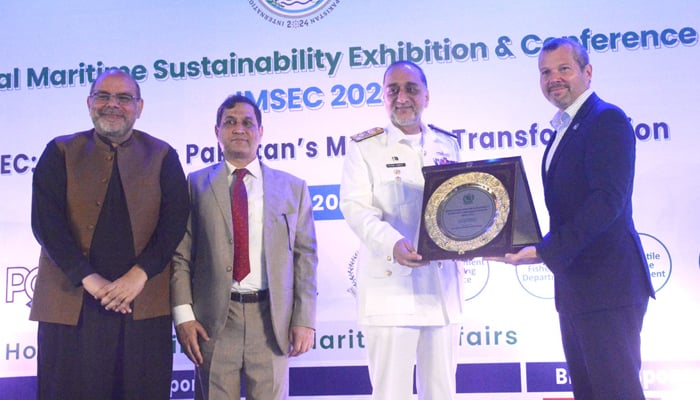
As for discussing the issues related to the fisheries sector, a delegation from Quetta had come to Karachi to meet the relevant authorities of the Sindh government.The talks on the fisheries sector had been held on the sidelines of the International Maritime Conference. The event was organised at a hotel in Karachi.
International Maritime Organisation Secretary General Arsenio Dominguez had especially graced the occasion, and inspected several ports and shipping sector establishments of Pakistan, including the world-famous Gadani ship-breaking yard on the coast of Balochistan.
Sustainability of the fisheries, shipping and ports sector was the theme of the maritime conference in Karachi, so the same was the focus when the relevant authorities of the two provinces held talks on the related matters.
In the negotiations on fisheries-related issues, Sindh’s side was led by Adviser to the Chief Minister on Fisheries & Livestock Najmi Alam. He was assisted by Fisheries & Livestock Secretary Dr Kazim Hussain Jatoi, Marine Fisheries Director General Dr Ali Muhammad Mastoi, Marine Fisheries Director Asim Karim and Karachi Fish Harbour Managing Director Safdar Hussain Rizvi.
The Balochistan government was represented in the talks by their Parliamentary Secretary on Fisheries Barkat Ali Rind. He was assisted by Fisheries Secretary Javed Ahmed Shehwani, Fisheries Technical Director Dr Alauddin and Fisheries Officer Saleem Rind.
The two sides agreed that the fisheries authorities of the two provinces would meet every two months to cordially resolve their mutual issues. The meeting noted that the trawlers in the maritime jurisdiction of Balochistan had still been using the harmful Gujjo nets for overfishing, and that the provincial government would take punitive action against such erring fishermen.
The fisheries departments of the Sindh and Balochistan governments also agreed to beef up the legislative framework in place in the two provinces, having Pakistan’s coastal belt to protect and conserve marine life.
The meeting agreed to install a vessel monitoring system to track the movements of fishing launches. The two provincial governments will launch a crackdown on illegal fishing activities and exchange information with each other about the launches involved in such unlawful acts along the coasts of Sindh and Balochistan.
The adviser to the Sindh CM on fisheries told the delegation from Balochistan that the Sindh government was going to impose a ban on the harmful practice of bottom trawling to protect marine life.
He said the Sindh government would pass new legislation if there was any such requirement to protect the fisheries and the marine life along Sindh’s coast.Earlier, Sindh Irrigation Minister Jam Khan Shoro had visited Quetta to meet his counterpart in the Balochistan government, Sadiq Umrani, to develop consensus on the controversial issue of the proposed amendments to the Indus River System Authority (Irsa) Act.
In the joint media talk after their meeting, the two irrigation ministers announced that both the Sindh and Balochistan governments had unanimously decided to oppose the proposed amendments to the Irsa Act.
Shoro told the media that the Sindh Assembly had recently passed a resolution to oppose the likely move of the federal government to amend the Irsa Act. He said that all the other concerned political parties in Sindh had also rejected the proposed amendments.
He expressed gratitude to the Balochistan CM and cabinet for endorsing the stance of the Sindh government on the issue. He opined that amending the Irsa Act would be an attempt to trample upon the concept of provincial autonomy enshrined in the constitution. He said that the two provinces would foil the Centre’s attempt to amend the Irsa Act.
The Balochistan irrigation minister told the media that after Sindh, the Balochistan government had also rejected the proposed amendments to the Irsa Act. He said the Balochistan Assembly would also pass a resolution on this issue. “Sindh and Balochistan have a consensus on this issue.”







-
 Data Breach: UK Lawmakers Question Lloyds Banking Group Over Account Glitch Exposing Customer Details
 -
 Meghan Markle Adds Sweet Princess Lilibet Touch To New 'As Ever' Collaboration
 -
 Lil Wayne Expands 'Tha Carter' 20th-anniversary Tour And Fans Share Priceless Reactions
 -
 Zendaya, Tom Holland Prioritizing Baby Plans In 2026
 -
 'Dune: Part Three' Trailer: Denis Villeneuve Gets Candid About Bold Time Jump In Third Film
 -
 Ryan Gosling Discusses New Film 'Project Hail Mary' In Latest Interview
 -
 Sarah Michelle Geller Reflects On Overwhelming Death Of Robin Williams
 -
 After Ending Speculation About Sean Penn, Zelenskiy Shows Up At Buckingham Palace With King Charles
 -
 Sarah Ferguson Meets True Friend After Enough Humiliation: 'Defending Her So Fiercely'
 -
 Lewis Hamilton Ready To Make Major Sacrifice For Kim Kardashian
 -
 Trump's Younger Allies Face Health Issues Months After President's Examination
 -
 Meghan Markle Supports Prince Harry's Plans About Archie, Lilibet Meeting With King Charles, William
 -
 Sarah Ferguson Finally Flies To America As Whereabouts Revealed
 -
 Prince William Offers Royal Support To Greg James On Tandem Bike
 -
 White House Says US Seeking Fertilizer From Venezuela: Will The New Change Strengthen Relationships?
 -
 Leonardo DiCaprio Brings Girlfriend To Oscars, Gets Linked To Greta Thunberg