
NAB verdict
NAB has long been criticized for its selective application of justice
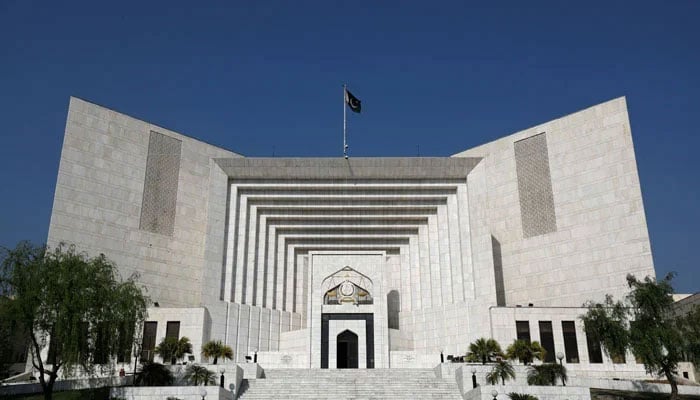
The Supreme Court (SC) has approved the intra-court appeals filed by the federal government and restored the amendments made to the National Accountability Ordinance, 1999 via the National Accountability (Amendment) Act, 2022, sparking a fresh wave of legal and political discourse. These amendments, introduced through the National Accountability (Amendment) Act, 2022 by the PDM government, were initially struck down by a three-member bench in response to a petition filed by PTI founder Imran Khan. Nine out of ten amendments were declared ‘null and void’ by the court in September 2023, raising questions about the role of accountability in Pakistan and whether the law had been altered to benefit those in power. While many legal experts and political analysts hailed the amendments as a necessary step in curbing NAB’s draconian powers, some have been sceptical, suggesting the changes were designed to protect the leadership of the ruling coalition from scrutiny. The SC’s latest ruling, which asserts that Imran Khan’s petition failed to prove the amendments were unconstitutional, signals a broader question about the role of accountability in Pakistan’s political landscape.
NAB has long been criticized for its selective application of justice. Originally created by General Pervez Musharraf to pressure politicians into submission, the bureau has morphed into a tool for political engineering over the years. The law, designed to combat corruption, has often been weaponized against political opponents, making it more about vendettas than fairness. From politicians to bureaucrats, businessmen to journalists, NAB’s dragnet has often ensnared individuals with little evidence, and the anti-graft body’s track record has raised serious concerns about due process and the protection of individual rights, with multiple courts condemning its practices. One of the key issues that has plagued NAB is its lack of impartiality. During Imran Khan’s tenure as prime minister, NAB was frequently accused of targeting opposition members while turning a blind eye to government allies. The selective nature of these investigations gave rise to the perception that NAB was a political tool, not a body working towards the eradication of corruption. The calls for reform were loud and clear, yet no significant steps were taken until the PDM government came into power. This is why the amendments introduced in 2022 were seen as long overdue by many. The revisions curtailed NAB’s overreach and placed checks on its ability to arrest individuals without sufficient evidence. However, the timing of the amendments, shortly after Imran’s ouster, gave critics ample ammunition to accuse the government of tailoring the law to shield its own leadership. The reality though is that the flaws in the original NAB law were systemic, and these changes, while perhaps benefiting certain individuals, were necessary to prevent future misuse of power.
The real question Pakistan must grapple with is why a law as widely criticized as the original NAB ordinance survived for so long. Despite the PPP’s repeated calls for reform during their tenure, the PML-N was reluctant to act. Both parties had the opportunity to dismantle or reform the law but failed to do so, allowing it to be used to their detriment when political fortunes shifted. The cycle of abuse continued, with NAB being used as a cudgel to weaken the opposition rather than strengthen governance. Yet, while these amendments may reduce the likelihood of NAB being used as a political tool, questions remain about accountability for the body itself. Former NAB chairman Justice (r) Javed Iqbal, under whose leadership the bureau became increasingly controversial, remains untouched by the accusations against him. For true justice to prevail, the reforms to NAB must be accompanied by accountability for those who led the institution astray. The future of accountability in Pakistan depends not just on laws but on the integrity of those who enforce them.


