
Afghan Taliban, UN say committed to engagement after morality law outcry
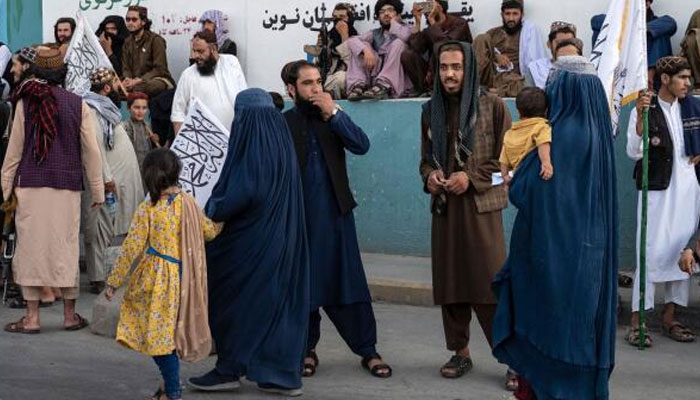
KABUL: A Taliban government spokesman has said the Afghan authorities were committed to engagement with the international community after a new morality law sparked tense exchanges over women´s rights.
The United Nations and the European Union have warned that the law -- requiring women to cover up completely and not raise their voices in public -- could damage prospects for engagement with foreign nations and international organisations.
Deputy government spokesman Hamdullah Fitrat was responding to comments by a spokesman for the UN secretary-general assuring continued engagement with the Taliban authorities after Afghanistan´s morality ministry said it would no longer cooperate with the UN mission in the country, UNAMA, over criticism of the law.
Fitrat said the authorities were “committed to positive interactions with all the countries and organisations in accordance with Islamic law”, in a voice message to journalists on Saturday.
“Interaction is the only way to achieve solutions to problems and for the progression and expansion of relations,” he said, urging nations and organisations to engage positively with the Taliban authorities.
Since taking power in 2021, no state has recognised the Taliban government but it has made diplomatic inroads recently, including attending UN-hosted talks on Afghanistan in Qatar.
On Friday, the spokesman for UN Secretary-General Antonio Guterres said, “We will continue to engage with all stakeholders in Afghanistan, including the Taliban”.
“We have always done so following our mandate and I would say impartially and in good faith, always upholding the norms of the UN, pushing the messages of human rights and equality,” said Stephane Dujarric.
“We would urge the de facto authorities to, in fact, open more avenues for diplomatic engagement,” he added.
Earlier on Friday, the morality ministry had said it would no longer cooperate with UNAMA over its criticisms of the “Law on the Promotion of Virtue and the Prevention of Vice”, which was ratified last week.
The law, which includes rules on many aspects of Afghans´ lives according to the Taliban´s strict interpretation of Islamic law, sparked concern among Afghans, various countries, human rights advocates, UN agencies and the EU.
UNAMA head Roza Otunbayeva said last week that the law offered “a distressing vision for Afghanistan´s future”, adding that it could set back cooperation efforts, a warning echoed by the EU.
The Taliban government has consistently dismissed international criticism of its policies, including restrictions on women that the UN has labelled “gender apartheid”.
Chief government spokesman Zabihullah Mujahid has said the law is “firmly rooted in Islamic teachings” that should be respected and understood, adding rejection of the law showed “arrogance”.







-
 Kylie Kelce Explains Why She Doesn't Like Losing Control
 -
 King Charles Decides To Skip Easter Message
 -
 King Charles ‘ridiculous’ Pranks On Staff Spilt By Butler
 -
 Jamie Lee Curtis Recalls 'harshest' And 'most Beautiful' Week Of Her Life
 -
 Prince Harry Talks About ‘hard Days’ As He Discusses Social Media
 -
 Camila Morrone: Dua Lipa 'lookalike' Hits New Heights After Netflix Series
 -
 Blake Lively Lawsuit Against Justin Baldoni Takes Dramatic Turn After Judge's Ruling
 -
 Royal Maundy Service 2026: King Charles And Queen Camilla In Pictures
 -
 Chris Pratt Shares Sad Update About 'Jurassic World'
 -
 Gucci Mane Robbery, Kidnapping: DoJ Makes Statement On Pooh Shiesty And Big30 Involvement
 -
 Why King Charles Gave Meghan Markle ‘ultimate Refusal’
 -
 Pam Bondi, Dubbed Trump's Ghislaine Maxwell, Gets Fired
 -
 King Charles Breaks Silence On Trump Claim About UK Government
 -
 Meryl Streep 'chuffed' After Surprising Family Link To Anna Wintour Revealed
 -
 Meghan Markle’s Plans To Move With Prince Harry: Insider
 -
 Jamie Lee Curtis Embraces New Role In Life: 'Greatest Lessons, Hardest Days'